

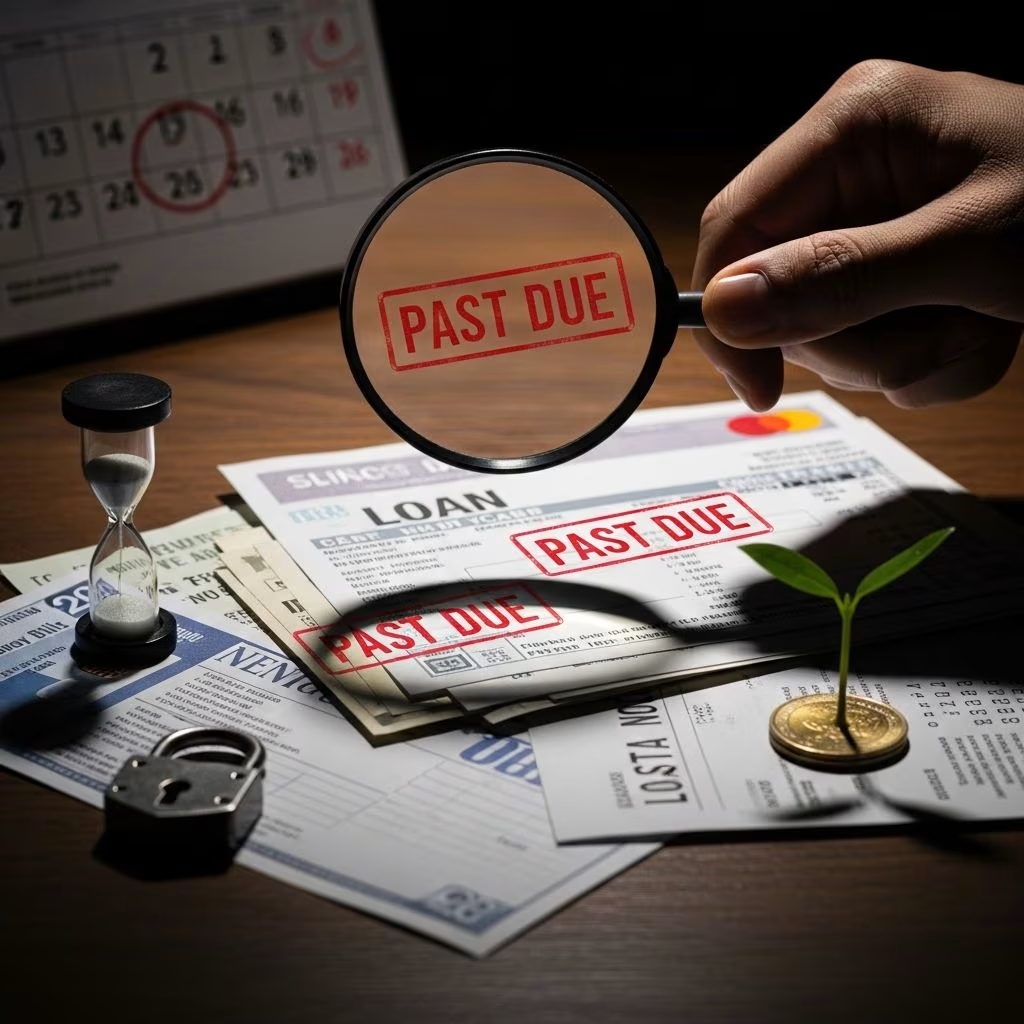
The best defense against late fees is a proactive offense. Late fees can range from $25 to $39 or more, adding up quickly and hurting your credit score. This guide outlines a bulletproof system to avoid them entirely, while providing steps to remove them if they slip through. By automating payments, setting reminders, and building redundancies, you can protect your wallet effortlessly.
Pay Bills Immediately Upon Receipt
Don’t let bills pile up on your desk or counter. Sort them with the soonest due date on top, but pay each one the day it arrives. Yes, you’ll forfeit the ‘float’—that brief period your money earns minimal interest in your account—but it’s negligible compared to a $30 late fee, which erases years of such interest.
- Why it works: Immediate payment eliminates forgetfulness and ensures funds are allocated before unexpected expenses arise.
- Pro tip: Use a dedicated bill-paying spot, like a wall file or digital folder, to centralize incoming mail.
Switch from checks to electronic payments for speed and reliability. Mailed checks can get lost, delaying payment and triggering fees. Online transfers or apps arrive instantly and provide confirmation.
Automate Your Bill Payments
Automation is the most reliable way to dodge late fees. Nearly every recurring bill—mortgage, utilities, insurance, subscriptions—offers auto-pay options. Link your bank or credit card, and payments post automatically on due dates.
- Benefits: No manual effort, zero risk of forgetting, and often perks like discounts from providers.
- Caveats: Review variable bills (e.g., credit cards, phone) manually first for accuracy. Automate fixed ones like rent or loans confidently.
For example, set up auto-pay for health insurance and select utilities, but handle credit cards online after scrutinizing charges. This hybrid approach balances convenience and oversight.
| Bill Type | Recommended Auto-Pay? | Why? |
|---|---|---|
| Mortgage/Rent | Yes | Fixed amount, high fee risk |
| Utilities | Yes (most) | Recurring, predictable |
| Credit Cards | Partial (minimum) | Variable balance; pay full manually |
| Phone/Internet | Manual review | Potential billing errors |
Consumer Financial Protection Bureau data shows automated payments reduce late fees significantly, as they bypass human error. Pair with credit cards for utilities to earn rewards while avoiding postal costs and building credit history.
Sign Up for Email and Text Reminders
Most billers send free email or text alerts days before due dates. Enroll via account portals or apps. Tools like Mint or YNAB amplify this with aggregated notifications across accounts.
- Get dual alerts: one from the provider, one from your budgeting app.
- Customize frequency: daily leading up to due date for high-stakes bills.
These nudges act as your first line of defense, prompting action even if automation fails.
Build Redundancy with Calendar Reminders
Emulate aviation safety with backup systems. Input all due dates into Google Calendar, Outlook, or iCal as recurring events, set 3-5 days early.
- Not just credit cards: Include insurance premiums, library fines, rental returns, gym memberships—anything with penalties.
- Example: Credit card due 11th? Set reminder for 7th with notes: ‘Review statement, pay full.’
- Advanced: Color-code (red for urgent) and share family calendars for household bills.
Readers report calendar reminders transformed their habits, especially freelancers with irregular income.
Other Smart Habits to Avoid Late Fees
- Pay from checking, not savings: Avoid overdraft fees; keep a buffer.
- Budget monthly income for next month’s bills: Ensures funds availability regardless of payday.
- Use credit cards strategically: Charge budgeted amounts, auto-pay full balance for rewards without fees.
- Track via apps: Mint, PocketGuard flag due dates and anomalies.
For digital credit, providers must disclose late penalties clearly, per World Bank guidelines. Always confirm terms upfront.
How to Get Rid of Late Fees If They Happen
Mistakes occur. Act fast: Call the creditor immediately. If you’re a long-term customer with a clean history, request a one-time waiver politely.
- Be accountable: ‘I apologize for the oversight; it won’t happen again.’
- Highlight loyalty: ‘I’ve been with you 5 years without issues.’
- Escalate nicely: Ask for a supervisor if denied.
- Commit to prevention: Mention your new auto-pay or calendar setup.
Success rate is high for first offenses. Credit card issuers often waive as goodwill. Document calls for disputes if needed.
Frequently Asked Questions (FAQs)
Q: Can automating payments hurt my credit score?
A: No, on-time auto-payments boost your score. Just ensure sufficient funds to avoid NSF fees.
Q: What if a bill amount changes unexpectedly?
A: Set auto-pay for minimums on variable bills, then pay remainder manually after review.
Q: Do late fees affect my credit report?
A: Yes, after 30 days for revolving credit; pay promptly to minimize impact.
Q: Are there legal limits on late fees?
A: Varies by state/provider; credit cards capped at $40 by CARD Act, but others aren’t.
Q: How do I handle one-time fees like library fines?
A: Calendar all return dates; pay online immediately upon notice.
Long-Term Strategies for Fee-Free Finances
Build an emergency fund covering 3-6 months’ essentials to buffer surprises. Review bills quarterly for autopay discounts or errors. Teach family members shared responsibility via joint apps.
Late fees erode wealth silently—$300/year average per household. Implement these steps to reclaim that money for savings or fun. Start with three bills today: automate, remind, calendarize.
References
- Consumer Financial Protection Bureau – Automated Payments and Consumer Protections — CFPB. 2023-05-15. https://www.consumerfinance.gov/rules-policy/final-rules/protecting-consumers-payment-processing/
- World Bank Focus Note: Consumer Protection in Digital Credit — World Bank. 2017-08-01. https://documents1.worldbank.org/curated/en/341801505110857009/txt/119214-BRI-PUBLIC-Focus-Note-Consumer-Protection-in-digital-Credit-Aug-2017.txt
- CARD Act of 2009: Credit Card Accountability and Disclosure — U.S. Congress (via Federal Reserve). 2009-05-22 (ongoing enforcement). https://www.federalreserve.gov/consumerinfo/creditcardrules.htm
- GAO Report: Consumer Protections for Credit Card Late Fees — U.S. Government Accountability Office. 2024-02-14. https://www.gao.gov/products/gao-24-106332
- FTC Consumer Advice: Avoiding Late Fees — Federal Trade Commission. 2025-01-10. https://consumer.ftc.gov/articles/avoiding-late-fees
This article is general information, not personal financial advice. Consider your own situation, or speak with a licensed adviser, before acting on it.


