

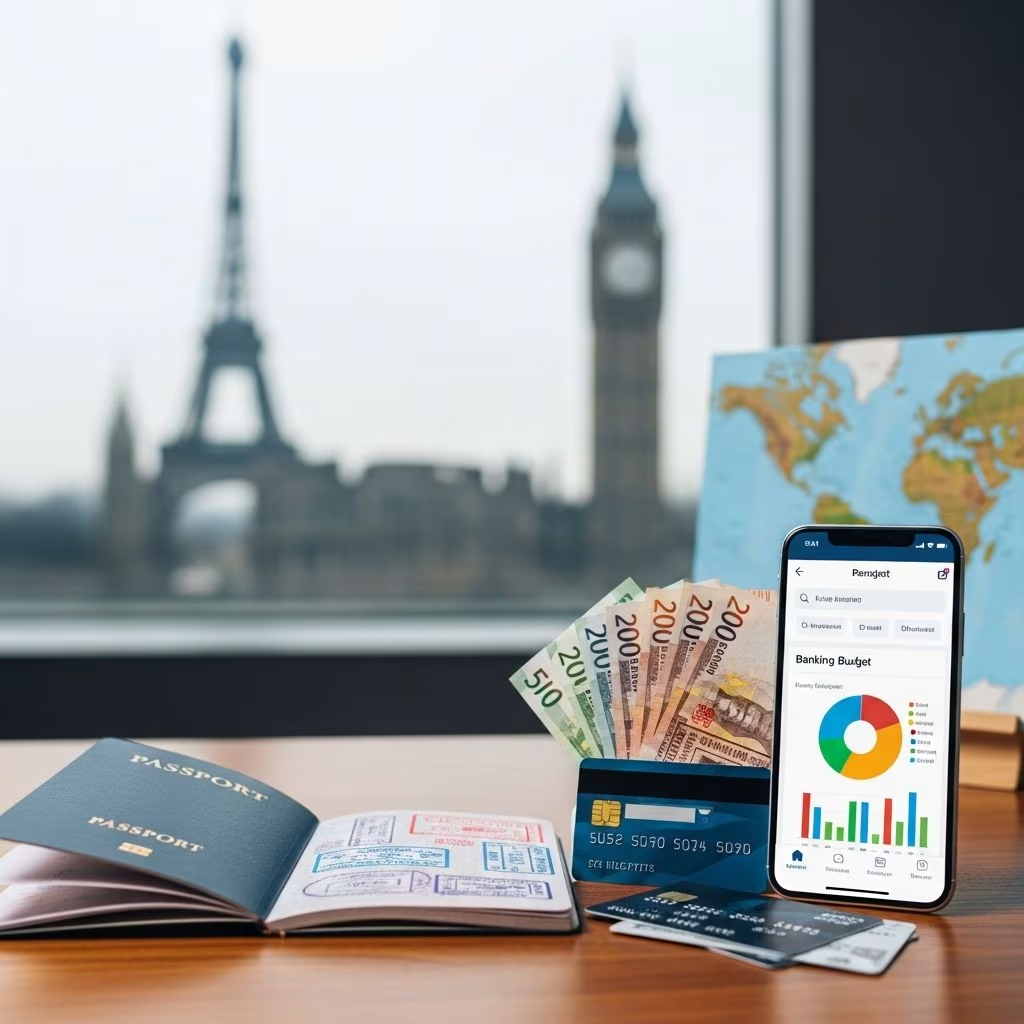
Studying abroad offers unparalleled opportunities for personal growth, cultural immersion, and academic enrichment. However, without proper financial planning, even the most exciting adventure can turn stressful. This guide breaks down the key expenses you’ll encounter, provides region-specific budget estimates, and explains the best ways to access your money overseas without incurring excessive fees. Whether you’re heading to Europe, Asia, or Latin America, smart budgeting ensures you focus on experiences rather than money worries.
Understanding Your Total Study Abroad Costs
The total cost of studying abroad varies widely based on destination, program length, and lifestyle. Program fees often cover tuition, housing, and some meals, but you’ll need to budget for airfare, visas, daily living expenses, and personal spending. On average, expect $10,000–$25,000 for a semester, excluding tuition if exchanged through your home university. Always review your program’s budget sheet to distinguish included vs. out-of-pocket costs.
Key categories include:
- Program Fees: Tuition, accommodation, and on-site support—typically $8,000–$15,000 per semester.
- Travel Costs: Round-trip airfare ($800–$2,200 depending on region).
- Pre-Departure Essentials: Passport ($165), visa ($50–$600), immunizations.
- Living Expenses: Meals, transport, entertainment—$1,000–$2,500 monthly.
- Miscellaneous: Books ($100–$375), personal travel, emergencies.
Pre-Departure Expenses: Get Ready Before You Go
Before boarding your flight, budget for one-time costs that can add up quickly. These are non-negotiable and often overlooked by first-time study abroaders.
| Expense | Estimated Cost (USD) | Notes |
|---|---|---|
| Passport | $165 | Required for all international travel; renew early. |
| Student Visa | $50–$600 | Varies by country; includes processing fees. |
| Immunizations/Health Screenings | $100–$500 | Check CDC requirements for your destination. |
| Airfare | $800–$2,200 | Book early for deals; factor in baggage fees. |
| Travel Insurance | $200–$500 | Covers health, theft, and trip cancellation. |
Pro tip: Use a cost comparison worksheet to stack your home university expenses against abroad costs. This reveals hidden savings, like cheaper meals overseas.
Weekly and Monthly Living Expenses by Region
Living costs differ dramatically by continent. Use these estimates to build a realistic monthly budget, adjusting for your lifestyle. Overestimate by 20% for safety.
| Region | Books & Supplies | Weekly Personal Expenses | Airfare (RT) | Weekly Meals | Monthly Total Estimate |
|---|---|---|---|---|---|
| Africa | $100 | $100–$125 | $1,500–$2,000 | $100 | $1,800–$2,325 |
| Asia | $100–$200 | $100–$125 | $1,300–$1,500 | $90–$150 | $1,590–$1,975 |
| Europe | $100–$375 | $100–$175 | $1,200–$1,500 | $50–$175 | $1,450–$2,225 |
| Latin America | $100 | $100–$125 | $775–$1,500 | $35–$50 | $1,010–$1,750 |
| Pacific | $300 | $100–$175 | $1,800–$2,200 | $75–$150 | $2,275–$2,825 |
For 2026, specific hotspots like Australia (AUD 1,560–2,320/month), Canada (CAD 1,380–2,020/month), and the UK (£1,020–1,770/month) reflect rising rents and inflation. London and Sydney command premiums for housing.
Creating a Realistic Budget Plan
Start budgeting early using the 50/30/20 rule adapted for students: 50% needs (rent, food), 30% wants (travel, fun), 20% savings/emergencies.
- Calculate Fixed Costs: Rent, utilities, tuition payments.
- Estimate Variables: Groceries, transport, leisure—track with apps like Google Sheets.
- Categorize Expenses: Pre-departure, housing, food, transport, entertainment.
- Build a Buffer: Set aside 10–20% for surprises like medical visits or lost luggage.
- Review Funding Sources: Financial aid, scholarships, family support, part-time work.
Sample Monthly Budget Template (Adjust for Currency):
| Category | Australia (AUD) | Canada (CAD) | UK (£) |
|---|---|---|---|
| Rent (Shared) | 800–1,200 | 700–1,100 | 500–900 |
| Utilities/Internet | 150–200 | 150–200 | 100–150 |
| Food/Groceries | 350–500 | 300–450 | 200–350 |
| Transport | 60–120 | 80–120 | 70–120 |
| Miscellaneous | 200–300 | 150–250 | 150–250 |
| Total | 1,560–2,320 | 1,380–2,020 | 1,020–1,770 |
Funding Your Study Abroad Adventure
Leverage existing resources before seeking new ones. Financial aid often applies abroad, and scholarships abound for international programs.
- Financial aid/loans from your home university.
- Scholarships: Check ISEP, program-specific awards.
- Personal savings or family contributions.
- Part-time work: Many countries allow 20 hours/week for students.
- Crowdfunding via GoFundMe for unique stories.
Visa proof of funds for 2026: Australia (AUD 29,710/year), Canada (CAD 22,895/year), UK (£1,483/month London).
How to Access Your Money Abroad
ATMs offer the best exchange rates, but fees can eat 5–10% of withdrawals. Notify your bank of travel dates to avoid card blocks.
Credit Cards: Convenience with Caveats
Use no-foreign-transaction-fee cards like Capital One Venture or Chase Sapphire Preferred. Pay in local currency to avoid dynamic currency conversion scams. Rewards points can offset costs.
Debit Cards and ATMs: Cost-Effective Cash
Bank of America or Charles Schwab debit cards reimburse ATM fees worldwide. Withdraw larger amounts less frequently to minimize charges.
Prepaid Travel Cards: Controlled Spending
Options like Wise or Revolut offer low-fee multi-currency accounts. Load funds in advance and convert at interbank rates.
Money Transfers: For Larger Sums
Services like Wise (formerly TransferWise) beat banks for sending money to yourself or others—fees under 1% vs. 5%+.
| Method | Pros | Cons | Best For |
|---|---|---|---|
| Credit Card | Rewards, fraud protection | Interest if not paid off | Daily purchases |
| Debit/ATM | Direct access to cash | ATM fees | Cash needs |
| Prepaid Card | Low fees, budgeting | Loading limits | Controlled spending |
| Wire Transfer | Secure for big amounts | High fees | Initial funding |
Money-Saving Tips for Study Abroad
Stretch your dollars with these strategies:
- Student Discounts: ISIC card for transport, museums (up to 50% off).
- Groceries Over Eating Out: Shop markets; cook communal meals.
- Public Transport: Get student passes; walk or bike.
- Free Activities: University events, hiking, local festivals.
- Exchange Rates: Monitor apps like XE; time big purchases.
- Group Travel: Share rideshares, accommodations for weekend trips.
Track spending daily with apps like Mint or Trail Wallet to stay under budget.
Frequently Asked Questions (FAQs)
Q: How much should I budget monthly for study abroad?
A: $1,000–$2,800 depending on region; use tables above and add 20% buffer.
Q: What’s the cheapest way to get cash abroad?
A: Fee-reimbursing debit cards like Schwab or ATM networks of your bank.
Q: Do financial aid and scholarships apply abroad?
A: Yes, most do; confirm with your advisor and apply early.
Q: How do I prove funds for a student visa in 2026?
A: Australia: AUD 29,710/year; Canada: CAD 22,895/year; UK: £1,136–1,483/month. Show bank statements for 28 days.
Q: Should I use credit cards abroad?
A: Yes, no-fee ones for purchases; avoid cash advances.
Proper budgeting transforms study abroad from a financial gamble into a rewarding investment. Start planning today!
References
- Budgeting & Expenses for Study Abroad — WorldStrides. 2025. https://worldstrides.com/en-us/higher-ed/funding/budgeting-expenses
- Cost of Living & Budget Plan for International Students 2026 — GoodLuck Services. 2025-09-01. https://goodluck.services/cost-of-living-and-budget-plan-for-students-2026/
- How to Budget for Study Abroad — Go Overseas. 2024. https://www.gooverseas.com/blog/how-to-budget-for-study-abroad
- Create a Budget for Study Abroad — ISEP Study Abroad. 2025. https://www.isepstudyabroad.org/planning/finances/budgeting
- Planning & Budgeting — UVA Education Abroad. 2025. https://educationabroad.virginia.edu/planning-budgeting
This article is general information, not personal financial advice. Consider your own situation, or speak with a licensed adviser, before acting on it.


