

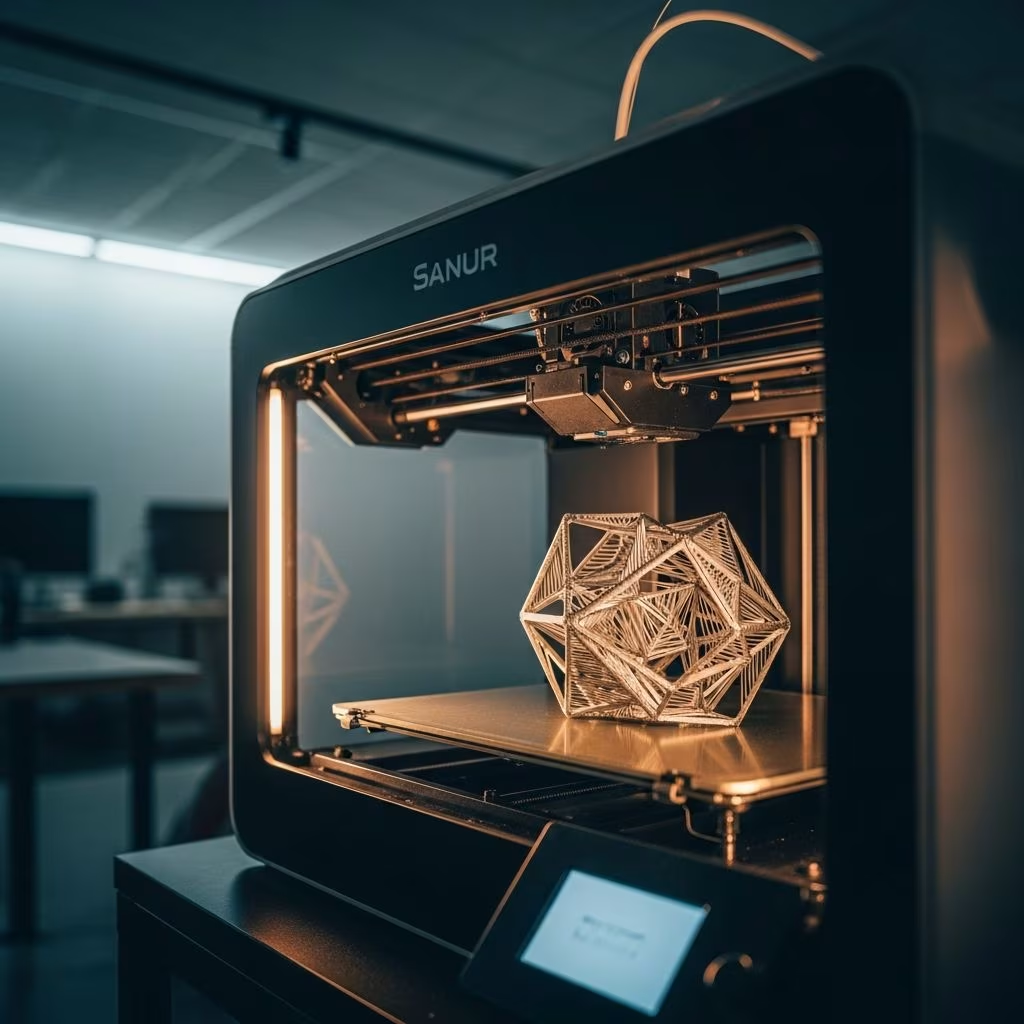
3D printing has evolved from a niche technology into an accessible tool for homes, workshops, and businesses. With affordable desktop printers now available, owning one opens doors to innovation, savings, and creativity. This article outlines eight compelling reasons to get a 3D printer, drawing on its versatility in prototyping, customization, repairs, and more.
1. Faster Prototyping
One of the standout advantages of 3D printing is its ability to accelerate prototyping. Traditional methods like injection molding require expensive tooling and weeks of lead time for design changes. In contrast, 3D printers produce prototypes in hours, allowing real-time iterations based on physical testing.
This speed is invaluable for inventors, engineers, and hobbyists. Businesses can test concepts swiftly, reducing development time and positioning themselves ahead of competitors. For example, designers can go from digital blueprint to tangible model overnight, fostering a cycle of rapid innovation.
During supply chain disruptions, such as the COVID-19 pandemic, 3D printing enabled quick production of prototypes for medical devices and PPE without relying on global logistics. The layer-by-layer additive process minimizes setup, making it ideal for iterative design where adjustments are frequent.
2. Customization at Your Fingertips
3D printing excels in personalization, allowing users to create one-of-a-kind items without the costs of mass production. From custom phone cases to tailored prosthetics, the technology supports small batch sizes and intricate modifications seamlessly.
Consumers gain power through on-demand manufacturing, ensuring product availability for unique needs. Businesses differentiate by offering bespoke products with lightning-fast order fulfillment, shortening production cycles and enhancing customer satisfaction.
In everyday life, this means printing personalized gifts, accessories, or tools fitted precisely to your body or space. The endless possibilities for customization unleash creativity, turning standard designs into personalized masterpieces.
3. Cost Savings on Repairs and Replacements
Instead of buying expensive replacements, a 3D printer lets you fabricate parts on demand. Broken appliance knobs, toy pieces, or gadget components can be replicated from scans or models, saving hundreds over time.
Libraries and makerspaces offer public printers for $1–$5 per print, but owning one eliminates fees and wait times. For orthodontics or prosthetics, 3D printing sidesteps high costs—custom aligners or limbs become affordable DIY projects.
- Appliance parts: Print gears or handles for under $5.
- Toys: Replace lost Lego pieces or action figures.
- Gadgets: Custom mounts for phones or drones.
This extends product lifespans, reducing waste and promoting a repair culture over disposable consumerism.
4. Perfect for Complex Designs
Traditional manufacturing struggles with intricate geometries, often requiring multiple steps or compromises. 3D printing thrives on complexity, building layer by layer to create lattices, organic shapes, and internal structures impossible otherwise.
In aerospace and healthcare, this enables lightweight yet strong components, like honeycomb internals that cut weight without sacrificing durability. The precision minimizes post-processing and waste, making complex parts cost-effective even for small runs.
For hobbyists, it means printing detailed models, jewelry, or mechanical assemblies with moving parts—all from a single print. This design freedom drives innovation across fields, from architecture to custom tools.
5. Strong and Lightweight Parts
3D printing produces components that balance strength and minimal weight through optimized internal geometries. Lattice structures mimic bone—strong yet porous—ideal for drones, bikes, or prosthetics.
In transportation, lighter parts reduce energy use during operation, yielding massive savings. Titanium or aluminum prints from recycled materials amplify efficiency, especially where raw material costs dominate.
Desktop printers using PLA or advanced filaments create durable parts for real-world use, outperforming uniform solids in performance while using less material.
6. Boosts Creativity and Innovation
With a 3D printer, barriers to creation vanish. Tinkerers print everything from Legos to car parts, fueling crafts, repairs, and inventions. Designers experiment freely, unbound by production limits.
This fosters a maker mindset: scan, modify, print. Communities share models online, accelerating collective innovation. From custom guitars to educational tools, 3D printing democratizes invention.
7. Sustainability and Less Waste
Unlike subtractive manufacturing, which scraps excess material, 3D printing uses only what’s needed, slashing waste by up to 90%. Recycled filaments and biodegradable options further green the process.
On-demand local production cuts shipping emissions, supporting sustainable practices. Lightweight designs reduce transport energy downstream. Businesses adopt it for eco-conscious manufacturing, aligning technology with environmental goals.
8. Accessibility and Life-Changing Applications
3D printing restores independence for those with disabilities. Custom mobility aids, like printed trainers for children or chin-operated levers for sewing machines, are modular and iterable.
Wheelchair attachments—ramps, button pressers, holders—tailor devices to individual needs, boosting dignity and functionality. In crises, it supplies critical parts locally, bypassing disrupted chains. Affordable printers make these solutions accessible worldwide.
Cost Comparison: 3D Printing vs. Traditional Methods
| Aspect | 3D Printing | Traditional (e.g., Injection Molding) |
|---|---|---|
| Prototype Time | Hours | Weeks |
| Setup Cost | Low (filament only) | High (tooling $10k+) |
| Minimum Quantity | 1 | 1000+ |
| Waste | Minimal | High |
| Complexity Handling | Excellent | Limited |
This table highlights why 3D printing disrupts manufacturing for small-scale and custom needs.
Frequently Asked Questions (FAQs)
Q: Is a 3D printer worth the investment for beginners?
A: Yes, entry-level printers start under $300 and pay off through savings on replacements, prototypes, and custom items. Public access exists, but ownership unlocks unlimited use.
Q: What materials can I print with?
A: Common filaments include PLA (eco-friendly), ABS (durable), PETG (flexible), and advanced options like nylon or metal composites for specialized strength.
Q: How long does it take to learn 3D printing?
A: Basics take days; proficiency in weeks with free software like Tinkercad or Fusion 360. Communities offer models and tutorials.
Q: Can 3D printers make functional parts?
A: Absolutely—gears, tools, prosthetics, and enclosures perform reliably with proper materials and settings.
Q: What’s the environmental impact?
A: Positive: less waste, local production reduces shipping, recyclable materials available. Energy use is low for plastics.
References
- What are the Benefits of 3D printing — Allprintheads. 2023. https://www.allprintheads.com/blogs/news/what-are-the-benefits-of-3d-printing
- The Positive Economic Effects of 3D Printing — 3D Printers Depot. 2023. https://3dprintersdepot.com/blogs/news/the-positive-economic-effects-of-3d-printing
- 3D printing guarantees efficiency: myth or not? — PRé Sustainability. 2023. https://pre-sustainability.com/articles/3d-printing-guarantees-efficiency-myth-or-not/
- When 3D printing makes life livable again — Bambu Lab Blog. 2024. https://blog.bambulab.com/when-3d-printing-makes-life-livable-again/
- The Unprecedented Role of 3D Printing Technology in… — NIH (PMC). 2022-10-01. https://pmc.ncbi.nlm.nih.gov/articles/PMC9572282/
- Hot Today | Wise Bread — Wise Bread. N/A. https://www.wisebread.com/popular/img%20src?page=661
- 5 Surprising Ways a 3D Printer Can Save You Money — Wise Bread. N/A. https://www.wisebread.com/5-surprising-ways-a-3d-printer-can-save-you-money
This article is general information, not personal financial advice. Consider your own situation, or speak with a licensed adviser, before acting on it.


