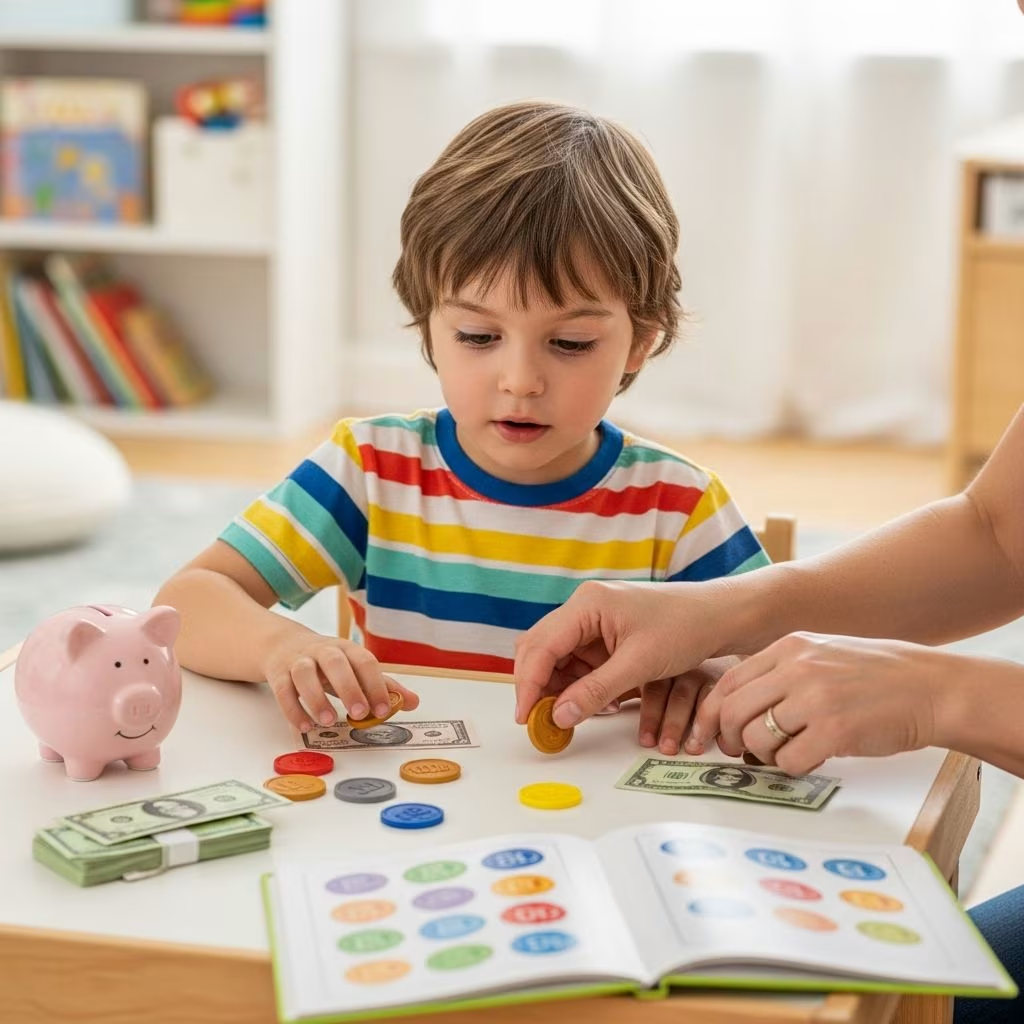
Teaching 5-year-olds about money might seem premature, but starting early lays the foundation for financial literacy. These young minds are sponges for knowledge, and introducing basic concepts now can prevent future money struggles. Drawing from resources like Money As You Grow by the President’s Advisory Council on Financial Capability, this guide outlines five essential lessons tailored for preschoolers and kindergarteners. Keep it fun, hands-on, and age-appropriate to spark curiosity about finances.
Financial experts emphasize that early education correlates with better adult outcomes. A Penny Hoarder survey revealed that those who discussed money at home earn more on average, highlighting the long-term impact. By age 5, children can grasp core ideas like earning, spending wisely, and saving. Here’s how to teach them effectively.
1. You Need Money to Buy Things
The most fundamental lesson is that money is required for purchases. Kids often think stores give items away or that ATMs dispense free cash. Demystify this by letting them handle real coins and bills.
- Introduce coin names: penny (1¢), nickel (5¢), dime (10¢), quarter (25¢), and dollar bills.
- Practice counting: During shopping for socks, books, or cookies, count out the exact amount together.
- Play ‘store’: Set up a pretend shop with toys as items and play money. Take turns as shopper and cashier to reinforce transactions.
Explain earning money through work. Share your job details—how daily effort buys family essentials like food and clothes. For kids, their ‘job’ is school: paying attention and trying their best builds future skills.
Activities like these make abstract ideas concrete. According to the Consumer Financial Protection Bureau (CFPB), hands-on play boosts retention of financial basics.
2. You Earn Money by Working
Building on the first lesson, stress that money comes from effort, not magic. Point out community jobs: teachers educate, doctors heal, firefighters protect. Relate it to your role and their school responsibilities.
- Discuss family contributions: ‘Mom works to buy groceries; you help by cleaning up toys.’
- Avoid empty promises: Don’t say good behavior earns instant cash; focus on long-term value.
- Use stories: Read books like ‘Bunny Money’ by Rosemary Wells, where characters learn earning through chores.
For 5-year-olds, tie this to small chores. Offer non-monetary rewards first, like extra playtime, transitioning later to allowance. This instills work ethic without overwhelming young minds.
3. There’s a Difference Between Things You Want and Things You Need
Distinguishing needs (food, shelter, clothes) from wants (toys, candy) is crucial. Adults struggle with this, so model it for kids.
- Draw two circles: Label one ‘Needs’ (apple, bed, shoes) and ‘Wants’ (doll, cookies). Discuss placements.
- Grocery store game: Hold items and ask, ‘Need or want?’ Turn battles into learning: cucumbers are needs, cookies wants.
- Real-life examples: Explain why rent or bills are needs, paid before fun spending.
One innovative approach: Mimic bills with allowance. Give $7 weekly, deduct $5 for ‘rent, water, electricity, cable, food’—save the rest secretly for their future. This teaches budgeting proportions early.
Research from the CFPB shows such activities improve decision-making. Make it visual and interactive for best results.
4. You Can Save Money for Things You Want
Saving builds delayed gratification. Pick a small, achievable want like markers or a stuffed animal.
- Use a clear jar: Watch coins accumulate weekly from allowance or chores.
- Track progress: Color a chart; each deposit fills a section toward the goal.
- Discuss time: ‘Save $5 over 5 weeks for your toy.’
For fun, simulate compound interest. Deposit 1¢ daily into a ‘Bank of Mom/Dad’; add interest every other day (e.g., another penny). This shows money growing without work. Or use a checkerboard: Double pennies daily to demonstrate exponential growth playfully.
The marshmallow test variant works too: Delay eating a treat for more tomorrow, teaching restraint’s rewards. Piggy banks divided into save/spend/give teach allocation.
5. It’s Fun to Save Money
Make saving exciting to foster positive habits. Penny Hoarders love this tip.
- Clip coupons: Review ads together; let kids spot family buys, clip, and hand to cashier. Reward with savings share.
- Hunt bargains: Turn shopping into a game—who finds the best deal?
- Celebrate milestones: Jar full? High-five and buy the saved item.
Debt-free charts motivate: Color sections as ‘payments’ toward a goal. Surveys show early savers become financially stable adults.
Additional Tips for Teaching Financial Literacy
Beyond the core five:
- Talk openly: Avoid money taboos; casual chats normalize it.
- Use media: Apps like Greenlight or books reinforce lessons.
- Model behavior: Let kids see you budget or save.
| Age | Key Lesson | Activity |
|---|---|---|
| 3-4 | Counting coins | Sorting game |
| 5 | Needs vs. Wants | Grocery game |
| 6-7 | Basic saving | Clear jar |
Frequently Asked Questions (FAQs)
Q: When should I start teaching kids about money?
A: As early as age 3, with basics like counting. By 5, introduce earning and saving.
Q: Should I give allowance to a 5-year-old?
A: Yes, small amounts tied to chores teach responsibility. Use portions for bills/savings.
Q: How do I explain bills to young kids?
A: Deduct from allowance for ‘house needs’ like rent, secretly saving it for them.
Q: What if my child demands everything?
A: Use needs/wants drawings and saving jars to shift focus to earning wants.
Q: Are there tools for visual saving?
A: Clear jars, debt-free charts, or piggy banks with sections for spend/save/give.
Starting these conversations equips kids for success. Even imperfect parents can raise money-savvy children by being consistent and fun.
References
- Money As You Grow — Consumer Financial Protection Bureau (CFPB). 2023-10-01. https://moneyasyougrow.org/
- Want Money-Savvy Kids? 5 Lessons — The Penny Hoarder. 2024-05-15. https://www.thepennyhoarder.com/budgeting/teaching-kids-about-money-advice/
- This Mom Charges Her 5-Year-Old “Rent” — The Penny Hoarder. 2023-08-20. https://www.thepennyhoarder.com/save-money/teaching-kids-about-money-rent/
- 4 Creative Ways to Teach Compound Interest — The Penny Hoarder. 2024-02-10. https://www.thepennyhoarder.com/save-money/compound-interest-for-kids/
- 10 Money Lessons Every Parent Should Teach — The Penny Hoarder. 2023-11-05. https://www.thepennyhoarder.com/budgeting/budgeting-for-kids/
This article is general information, not personal financial advice. Consider your own situation, or speak with a licensed adviser, before acting on it.