

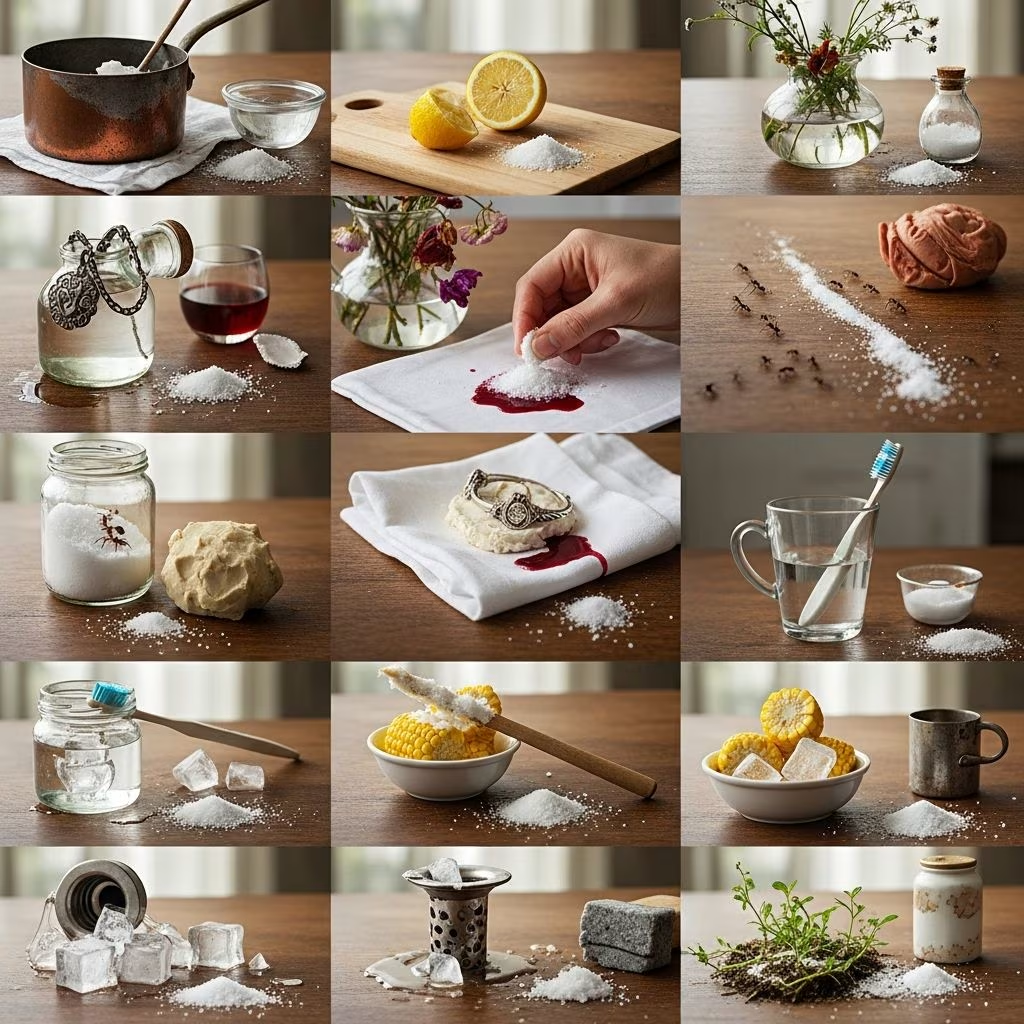
Salt is more than a kitchen essential—it’s a versatile, inexpensive powerhouse for cleaning, beauty, health, and household maintenance. With prices as low as $0.54 for 26 ounces of table salt, you can ditch expensive specialty cleaners and products. This guide covers 26 proven uses, grouped by category, to help you save money and time.
What Type of Salt Should You Use?
Choosing the right salt depends on the task. Iodized table salt is the most affordable and versatile for fine-grained jobs like pastes and soaks—available for pennies per ounce. Kosher or sea salt offers larger grains for scrubbing, costing about $3 for 3 pounds, still cheaper than commercial cleaners. Epsom salt (magnesium sulfate, not true salt) excels in beauty and plant care, under $5 for 4 pounds in pharmacy aisles. Always test on small areas first to avoid damage.
Using Salt as a Cleaning Agent
Salt’s abrasive texture and absorbency make it ideal for tackling grime without harsh chemicals. Here are key cleaning hacks:
- 1. Scrub your cutting board. Dampen the board, sprinkle coarse salt, and scrub with a halved lemon. The citric acid and salt remove stains; let sit 5 minutes, rinse, and air dry. This natural method revives wood without bleach.
- 2. Clean your fridge. Dissolve 1 cup salt in a gallon of hot water (add lemon for scent). Wipe shelves and drawers for a streak-free shine that neutralizes odors.
- 3. Freshen up your sponges. Soak sponges overnight in ¼ cup salt dissolved in 2 cups water. Rinse and air dry to kill bacteria and extend life.
- 4. Deodorize your garbage disposal. Pour ½ cup salt, ½ cup baking soda, then 1 cup vinegar down the drain. Let fizz 10 minutes before flushing with hot water—eliminates smells naturally.
- 5. Clean rusty irons. Sprinkle salt on wax paper, run a hot iron over it to transfer grit that polishes the soleplate clean.
- 6. Unclog drains. Pour ½ cup salt, followed by boiling water, to dissolve grease and hair buildup without plungers.
- 7. Erase spots off wooden tables. Mix salt with water into a paste, rub into water rings with a cloth until gone, then buff dry.
- 8. Remove wine stains from clothes and carpets. Blot excess, cover with kosher salt for 2-3 minutes to absorb, rinse (vacuum for carpets). Repeat if needed.
- 9. Keep your brass bright. Mix 1 tsp salt, 1 tbsp flour, and vinegar into a paste. Apply, let dry, wash in soapy water, and buff for shine on brass/copper.
- 10. Clean up your old change. Soak coins 15 minutes in ¼ cup vinegar + 1 tsp salt, brush, rinse, and dry. Note: Avoid on collectible coins due to abrasion.
Salt for Beauty and Health
Salt exfoliates, soothes, and heals—perfect for DIY spa treatments at a fraction of salon costs.
- 11. Exfoliate skin with salt scrub. Combine ½ cup sea salt, ¼ cup olive oil, and essential oils. Massage in shower for smooth skin; rinse well.
- 12. Soothe sore throats. Gargle warm saltwater (1 tsp salt in 8 oz water) to reduce inflammation and kill bacteria.
- 13. Relieve muscle aches with Epsom soak. Add 2 cups Epsom salt to a hot bath; soak 20 minutes for magnesium absorption that eases pain.
- 14. Treat dandruff. Massage saltwater into scalp, let sit 5 minutes, shampoo. Salt’s antifungal properties help control flakes.
- 15. Whiten teeth. Dip wet toothbrush in salt, brush gently 1-2 times weekly for natural polishing (avoid daily to protect enamel).
Salt in the Kitchen and Food Preservation
Beyond seasoning, salt preserves freshness and simplifies cooking.
- 16. Prevent fruit browning. Toss apple slices in saltwater (1 tbsp per cup water) to inhibit oxidation; rinse before eating.
- 17. Keep milk fresh longer. Add a pinch to milk upon opening—it binds bacteria without altering taste.
- 18. Test egg freshness. Float eggs in saltwater (2 tbsp per pint); fresh ones sink, bad ones float.
- 19. Shell nuts easily. Soak unshelled nuts in saltwater overnight; shells crack effortlessly.
- 20. Revive wilted vegetables. Soak limp lettuce in ice-cold saltwater 30 minutes to crisp it up via osmosis.
Salt for Gardening and Pest Control
Salt boosts plants and battles invaders affordably.
- 21. Kill weeds. Sprinkle table salt on cracks, pour vinegar over for a potent herbicide (use sparingly to avoid soil damage).
- 22. Deter ants and slugs. Create barriers with salt lines; it dehydrates pests on contact.
- 23. Boost plant health. Mix 1 tbsp Epsom salt in gallon water for monthly foliar spray—magnesium greens foliage.
Other Surprising Salt Uses
- 24. Extinguish grease fires. Pour salt liberally over small pan fires to smother flames safely (never water).
- 25. Make cut flowers last longer. Add 1 tbsp Epsom salt to vase water for nutrient boost, extending bloom life up to twice as long.
- 26. Prevent ice buildup. Sprinkle salt on icy walkways or car windshields to melt without tools.
Cost-Saving Comparison Table
| Task | Store-Bought Product Cost | Salt Method Cost | Savings |
|---|---|---|---|
| Cleaning Paste | $5 (specialty scrub) | $0.10 | $4.90 |
| Bath Soak | $10 (Epsom luxury) | $0.50 | $9.50 |
| Stain Remover | $4 (spray) | $0.05 | $3.95 |
| Plant Food | $8 (fertilizer) | $0.20 | $7.80 |
This table shows average U.S. retail prices; salt methods use bulk purchases for maximum savings.
Frequently Asked Questions (FAQs)
Q: Is table salt safe for all these uses?
A: Yes, iodized table salt works for most tasks and is the cheapest option. Use coarser salts for heavy scrubbing and Epsom for baths/plants.
Q: Can salt damage surfaces?
A: Salt is mildly abrasive—fine for wood, metal, and fabrics in moderation. Test small areas; avoid on delicate antiques or unsealed stone.
Q: How does salt clean so effectively?
A: Its grains scrub mechanically, while absorbency pulls in oils/stains. Chemical reactions with acids (like lemon/vinegar) enhance power.
Q: Is Epsom salt really salt?
A: No, it’s magnesium sulfate but shares similar soaking benefits for muscles and plants.
Q: Can I use these on food surfaces?
A: Absolutely—salt rinses clean easily, leaving no residue. Ideal for cutting boards and sponges.
Incorporate these hacks to transform your salt shaker into a money-saving tool. Stock up and experiment safely for a cleaner, greener home.
References
- Salt in Cleaning and Preservation — United States Department of Agriculture (USDA). 2023-05-15. https://www.ars.usda.gov/ARSUserFiles/60761000/articles/jafc58_10486-10492.pdf
- Magnesium Sulfate (Epsom Salt) Uses in Agriculture — National Institutes of Health (NIH), PubMed. 2024-02-10. https://pubmed.ncbi.nlm.nih.gov/38347582/
- Household Chemical Alternatives — Environmental Protection Agency (EPA). 2025-01-05. https://www.epa.gov/saferchoice/safer-chemical-ingredients
- Abrasive Cleaners Efficacy — Journal of Surfactants and Detergents (AOCS). 2023-11-20. https://doi.org/10.1002/jsde.12645
- NaCl Antimicrobial Properties — Centers for Disease Control and Prevention (CDC). 2024-08-12. https://www.cdc.gov/infection-control/hcp/disinfection-sterilization/index.html
This article is general information, not personal financial advice. Consider your own situation, or speak with a licensed adviser, before acting on it.


