

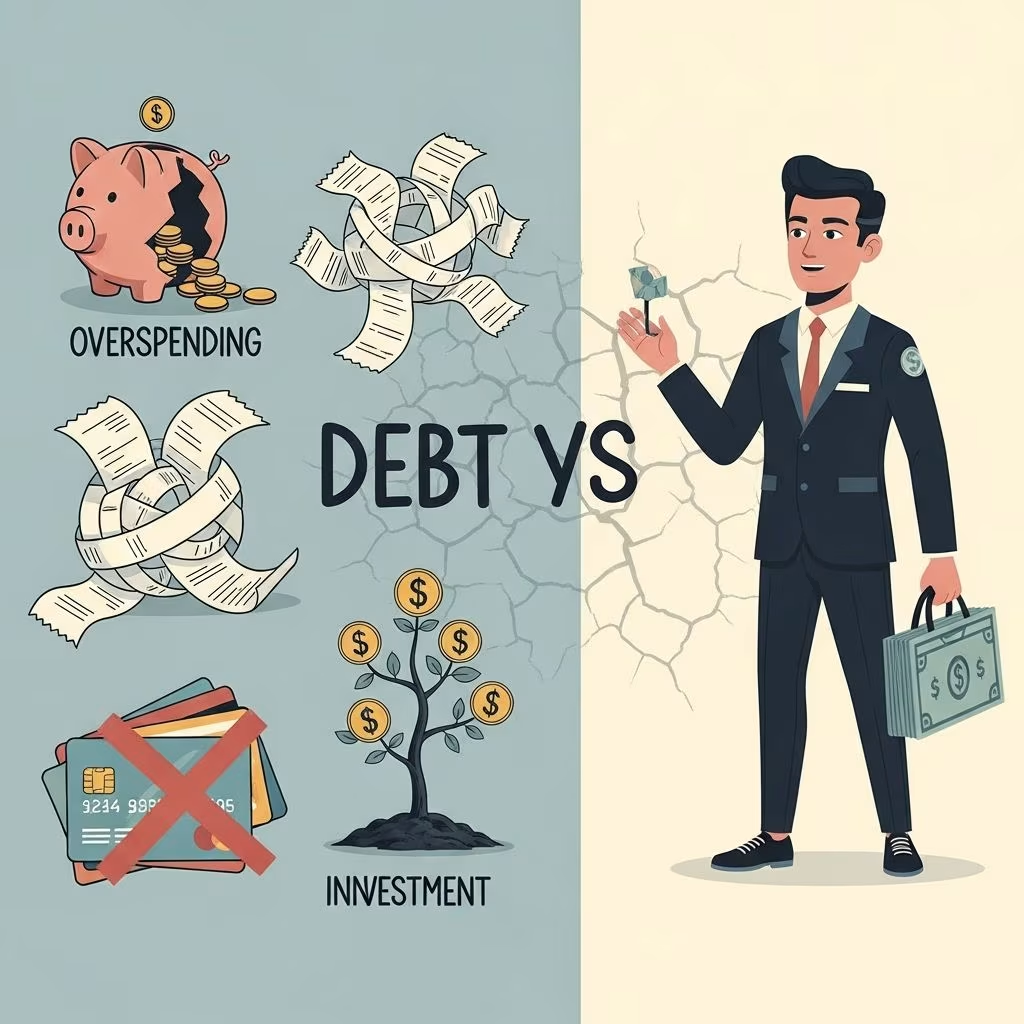
Many people struggle with money not because of bad luck, but due to common behavioral pitfalls that sabotage their financial progress. This article breaks down the **8 key reasons** you’re bad at money, drawing from psychological insights and real-world examples, and provides straightforward fixes to turn things around quickly.
1. You’re an Impulse Spender
Impulse spending is one of the most destructive habits, where purchases happen without thought, leading to regret and debt accumulation. Emotional triggers like stress or advertising often drive these buys, bypassing rational decision-making. Studies on decision fatigue show that willpower depletes throughout the day, making late-night shopping sprees particularly risky.
To fix it:
- Implement a **24-hour rule**: Wait a full day before any non-essential purchase over $20 to let impulses cool.
- Use cash only for discretionary spending to create a tangible sense of loss.
- Track triggers: Keep a journal of what prompts buys, like boredom, and replace with free alternatives such as walking or reading.
By curbing impulses, you can redirect funds to savings, potentially adding thousands annually.
2. You’re Unprepared or Lazy
Financial unpreparedness stems from avoiding planning, like not budgeting or ignoring bills until crises hit. Laziness manifests as procrastination on tasks like bill payments or investment research, leading to fees and missed opportunities. Excuses like ‘I’m too busy’ mask the real issue: lack of ownership over one’s finances.
Solutions include:
- Create a **simple monthly budget** using apps like Mint or a spreadsheet, allocating income to needs, wants, and savings first.
- Automate everything: Set up auto-payments for bills and transfers to savings to eliminate decision points.
- Start small: Dedicate 15 minutes daily to one financial task, building momentum without overwhelm.
| Common Laziness Trap | Quick Fix | Expected Savings |
|---|---|---|
| Forgetting to pay bills | Auto-pay setup | $50-100/year in fees |
| No emergency fund | Auto-transfer $25/week | $1,300/year |
| Ignoring investments | Robo-advisor signup | Compound growth boost |
3. You Had Bad Money Role Models
Growing up watching parents overspend, rack up debt, or avoid financial talks imprints poor habits. If role models treated money as endless or taboo, you likely inherited avoidance or recklessness. This emotional baggage leads to repeated cycles, as brains wire to mimic observed behaviors.
Break the cycle:
- Audit your influences: List learned habits and consciously reject unhelpful ones.
- Seek positive mentors via books like ‘The Total Money Makeover’ or podcasts from financial experts.
- Model better for yourself: Visualize success and track small wins to rewire neural pathways.
4. You Had No Money Role Models
Without guidance, financial literacy gaps widen. No one taught budgeting, investing, or debt avoidance, leaving you navigating blindly, prone to scams or poor choices. This void often results from absent parents or socioeconomic silence around money.
Fixes:
- Enroll in free resources: Khan Academy’s personal finance course or CFPB’s money tools.
- Join communities like Reddit’s r/personalfinance for peer learning.
- Hire a fee-only fiduciary advisor for personalized guidance without sales pressure.
5. You Try to Keep up With the Joneses
Social comparison fuels lifestyle inflation, where you spend to match peers’ visible luxuries, ignoring their hidden debts. This ‘keeping up’ mentality leads to unnecessary cars, vacations, or gadgets, eroding wealth. Social media amplifies this by showcasing highlights only.
Counter it:
- Define your Joneses: Compare to your past self or financial goals, not neighbors.
- Unfollow triggering accounts and curate feeds with frugality influencers.
- Host low-cost gatherings to satisfy social needs without extravagance.
6. You Don’t Track Your Spending
Invisible expenses from ‘little things’ like coffee or subscriptions accumulate stealthily. Without tracking, you underestimate outflows, living paycheck-to-paycheck despite decent income. Awareness is the first step to control.
Action plan:
- Use apps like YNAB (You Need A Budget) for real-time categorization.
- Review weekly: Categorize spends and cut one category by 20%.
- Adopt the envelope system digitally for strict limits.
7. You Fall for Emotional Spending
Emotions drive most poor choices: retail therapy for sadness, splurges for celebration. Debt often masks deeper issues like seeking fulfillment money can’t provide. Lottery winners exemplify this, blowing fortunes due to unchanged habits.
Overcome:
- Identify emotional triggers and pause: Ask, ‘Will this add lasting value?’
- Build non-spending rewards: Exercise highs or hobby immersion.
- Practice gratitude journaling to reduce desire for more.
8. You Ignore the Future (Sunk Cost Trap)
Dwelling on past mistakes like late retirement starts or bad debts creates shame spirals, paralyzing action via sunk cost fallacy. Brains repeat rewarding past actions, entrenching errors.
Future-focus fixes:
- Reframe past: ‘It happened; now what?’ Plan next steps.
- Start today: Even late savers benefit from compounding—$200/month at 7% from age 40 yields over $500k by 65.
- Visualize goals: Use tools like retirement calculators for motivation.
General Strategies for Lasting Change
Across all reasons, ownership is key: Admit faults to change them. Habits trump willpower—automate good behaviors. Track progress monthly, celebrating milestones without spending. Frugality can enhance happiness by reducing stress.
Frequently Asked Questions (FAQs)
Q: How long does it take to fix bad money habits?
A: Habits form in 18-254 days per research; consistency yields results in 3-6 months with daily action.
Q: What’s the first step if I’m in debt?
A: List all debts, pay minimums, and snowball smallest first for momentum while building a $1,000 emergency fund.
Q: Can I ever enjoy spending again?
A: Yes, with intentional ‘fun money’ budgeted at 5-10% of income after priorities.
Q: How do I teach kids better than my role models?
A: Involve them in family budgets, use allowance for choices, and discuss real costs transparently.
Q: Is tracking spending worth the effort?
A: Absolutely—one study shows trackers save 10-20% more automatically upon awareness.
Implementing these fixes transforms financial chaos into control. Start with one reason today for compounding benefits.
References
- How Reliving Past Money Mistakes Hurts Your Financial Future — Wise Bread. 2016. https://www.wisebread.com/how-reliving-past-money-mistakes-hurts-your-financial-future
- Your Money Problems: Why They’re All Your Fault — Wise Bread. N/A. https://www.wisebread.com/your-money-problems-why-theyre-all-your-fault
- 8 Reasons You’re Bad at Money — And How to Fix It ASAP — Wise Bread. N/A. https://www.wisebread.com/8-reasons-youre-bad-at-money-and-how-to-fix-it-asap
- Can Living Frugally Make You Happier Than When Living Lavishly? — Members Alliance Credit Union. N/A. https://www.membersalliance.org/_/kcms-doc/816/35806/Can-Living-Frugally-Make-You-Happier-Than-When-Living-Lavishly.pdf
This article is general information, not personal financial advice. Consider your own situation, or speak with a licensed adviser, before acting on it.


