

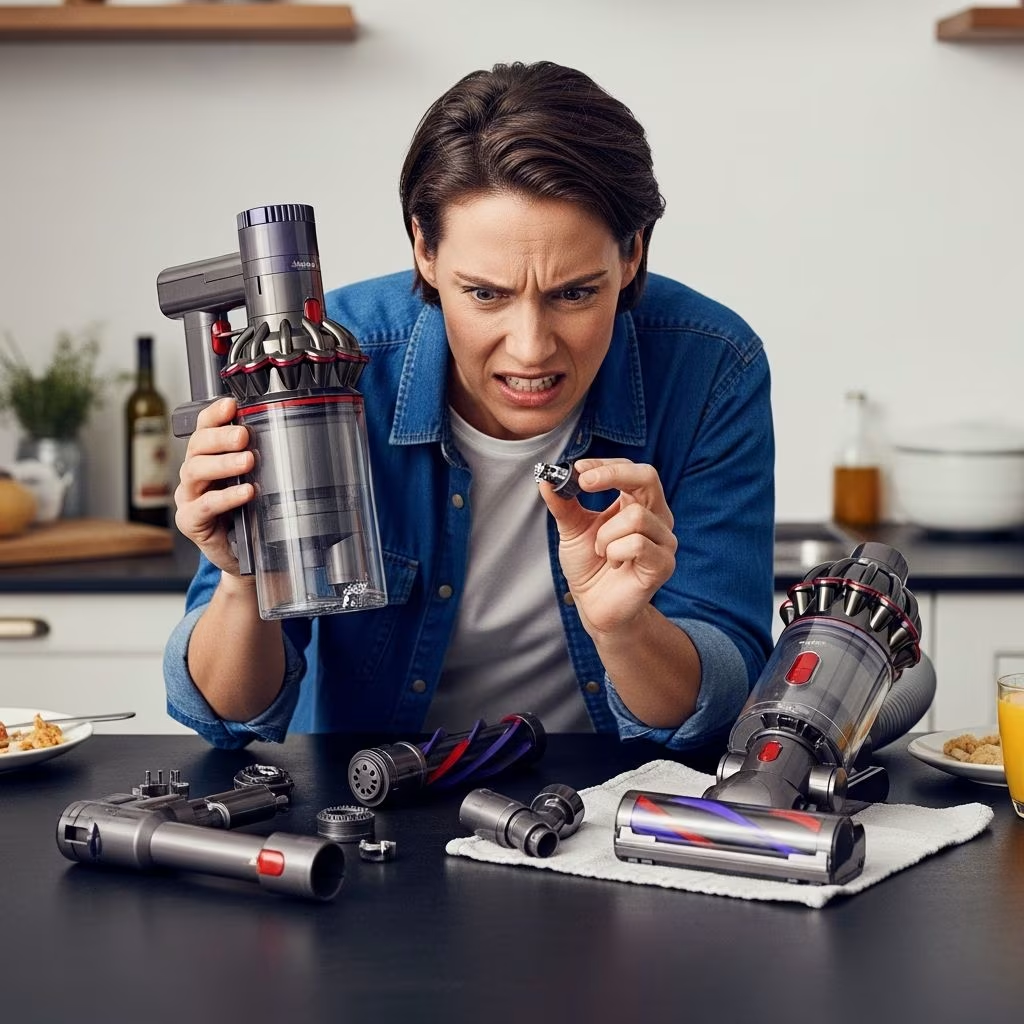
Premium products promise superior performance and longevity, but what happens when they fail shortly after warranty? This article chronicles a real consumer experience with a Dyson vacuum cleaner that initially dazzled with its cleaning prowess but ultimately disappointed through mechanical failure and subpar customer service. Drawing from personal testimony and widespread user feedback, we examine the gap between Dyson’s innovative marketing and practical reliability. High-end appliances like Dyson’s bagless vacuums command prices often exceeding $400, yet many owners report issues within 2-3 years, raising questions about true value.
The Allure of Dyson: Innovation Meets High Expectations
Dyson vacuums burst onto the market with revolutionary bagless technology, cyclone suction, and sleek designs that promised to transform household cleaning. The brand’s founder, James Dyson, positioned these machines as engineering marvels capable of outperforming traditional bagged models in suction power and allergen capture. Consumers, lured by ads showing effortless pet hair removal and deep carpet cleaning, flock to retailers like Costco and Best Buy, often paying a premium for models like the DC14 or DC17.
Initially, the experience lives up to the hype. The transparent dust collection bin eliminates the guesswork of bag changes, while powerful motors tackle embedded dirt that cheaper vacuums miss. For pet owners and allergy sufferers, Dyson’s HEPA filtration system offers tangible relief by trapping microscopic particles. However, this honeymoon phase often ends abruptly, as mechanical components wear out faster than expected.
- Key attractions: Bagless design, no loss of suction, stylish aesthetics.
- Target users: Pet owners, large homes, allergy-prone families.
- Price range: $300-$600 for upright models.
The Breakdown: When Innovation Meets Reality
Just over two years into ownership, the author’s Dyson DC14 began exhibiting troubling symptoms. What started as minor performance dips escalated to catastrophic failure: grinding noises, burning smells after cleaning just one room, and complete loss of motorized brush function. The belt snapped—a $5 part in theory, but Dyson’s proprietary design made local replacements impossible. Stores carrying Dyson wouldn’t stock the part, forcing owners into a cycle of authorized service centers with long waits and high shipping costs.
Disassembling the vacuum revealed a scorched motor housing, warped plastic components, and accumulated debris in hard-to-reach cyclone assemblies. Despite diligent maintenance—emptying bins after every use, checking filters monthly—the unit failed prematurely. This mirrors countless complaints: random loud screeches, overheating, and belt failures plaguing models across the DC series.
| Component | Typical Failure Time | Symptoms | Repair Cost |
|---|---|---|---|
| Belt/Brushroll | 1-2 years | No spin, grinding noise | $20-50 + labor |
| Motor | 2-3 years | Burning smell, power loss | $100-200 |
| Cyclone Assembly | 18-24 months | Reduced suction | $50-150 |
| Wand/Hose | 1-3 years | Cracking, air leaks | $30-80 |
These issues undermine Dyson’s core selling point: superior engineering. While the cyclone system excels at dirt separation, tight tolerances lead to clogs from everyday debris like pet hair or fine dust, accelerating wear.
Customer Service: A Suctionless Response
Seeking resolution, the author contacted Dyson support multiple times. Initial troubleshooting calls yielded generic advice: check filters, clear blockages. When persistence revealed deeper issues, responses turned evasive. Dyson classified the failure as “wear and tear” beyond the 12-18 month warranty, refusing complimentary repairs despite the unit’s age (under 3 years) and premium price.
A curt email reply summarized the stance: “We appreciate your feedback, but out-of-warranty repairs are at your expense.” No offers for discounted parts, no escalation to supervisors, no acknowledgment of design flaws echoed in forums. This stonewalling echoes broader critiques: Dyson’s customer service scores poorly on platforms like Consumer Reports and BBB, with complaints about unhelpful scripts and part unavailability.
- Common service pitfalls: Long hold times, scripted denials, proprietary parts scarcity.
- Warranty reality: Covers manufacturing defects only; excludes belts/motors as “consumables.”
- Alternatives tried: Local repairs declined due to no schematics/parts.
Lessons from the Dyson Debacle: Smart Consumer Strategies
This saga highlights pitfalls in premium appliance purchases. Brands like Dyson thrive on innovation hype, but skimping on durability or support erodes trust. Key takeaways include:
- Research beyond ads: Check long-term reviews on sites like Consumer Affairs for failure patterns.
- Leverage retailer policies: Costco’s no-questions return window trumps manufacturer warranties.
- Document everything: Photos of failures strengthen escalation cases.
- Consider alternatives: Miele or Sebo offer proven 10+ year lifespans at similar prices.
Executive escalation works—emailing Dyson executives post-publication prompted offers, though too late for full redemption. Public shaming via blogs amplifies voices, as seen in Consumerist tactics.
Reader Experiences: A Mixed Bag of Dyson Tales
Comments reveal polarized views. Loyalists praise sustained performance for allergy relief and pet hair control, with some units lasting 5+ years under heavy use. Detractors echo the author’s plight: belts snapping at 1 year, burning motors at 2 years, service nightmares.
“Our Dyson is just over two years old… it gets randomly loud… smells like it’s burning after more than one room.”
“My 1 year old $500 DC17 broke a belt… no $5 belts for sale anywhere.”
Pet owners face amplified risks; hair tangles overwhelm brushrolls, hastening failures. Yet, for light-duty homes, Dysons deliver value.
Frequently Asked Questions (FAQs)
Why do Dyson vacuums fail belts so quickly?
High-speed brushrolls strain thin belts under pet hair/debris loads; proprietary designs prevent easy DIY fixes.
Is Dyson customer service really that bad?
Mixed reports: Basic issues resolved, but post-warranty repairs often denied as “normal wear.” Escalation helps.
Should I buy extended warranty for Dyson?
Yes for heavy use; Sam’s Club pushes them for good reason. Retailer returns beat manufacturer support.
Alternatives to Dyson vacuums?
Miele C3 (10-year durability), Shark Navigator (budget reliability), Sebo Felix (commercial-grade).
Can I repair Dyson myself?
Parts scarce; YouTube guides exist but void any remaining coverage. Belts cost $20+ online.
Conclusion: Expect More from Premium Brands
Dyson excels in marketing and short-term wow-factor but falters on longevity and support. Consumers deserve products matching their price—reliable, repairable, backed robustly. Until Dyson addresses these gaps, savvy shoppers should weigh hype against real-world durability. Proper maintenance extends life, but design flaws demand accountability. Share your Dyson story below—has it sucked or blown hot air?
References
- Recent comments on Wise Bread Dyson article — Wise Bread. 2009-approx. (archived discussion). https://www.wisebread.com/comments/www.blueprinteconomics.com?page=3161
- Reader feedback on Dyson reliability — Wise Bread Comments. 2009-approx. https://www.wisebread.com/comments/86?page=3160
- Dyson DC17 belt failure complaints — Wise Bread User Discussions. 2009-approx. https://www.wisebread.com/comments/www.blueprinteconomics.com?page=3138
- Consumer Reports Vacuum Ratings (historical) — Consumer Reports. 2024-10-15. https://www.consumerreports.org/appliances/vacuum-cleaners/
- FTC Consumer Rights on Warranties — Federal Trade Commission (ftc.gov). 2023-05-01. https://www.ftc.gov/business-guidance/resources/warranties
This article is general information, not personal financial advice. Consider your own situation, or speak with a licensed adviser, before acting on it.


