

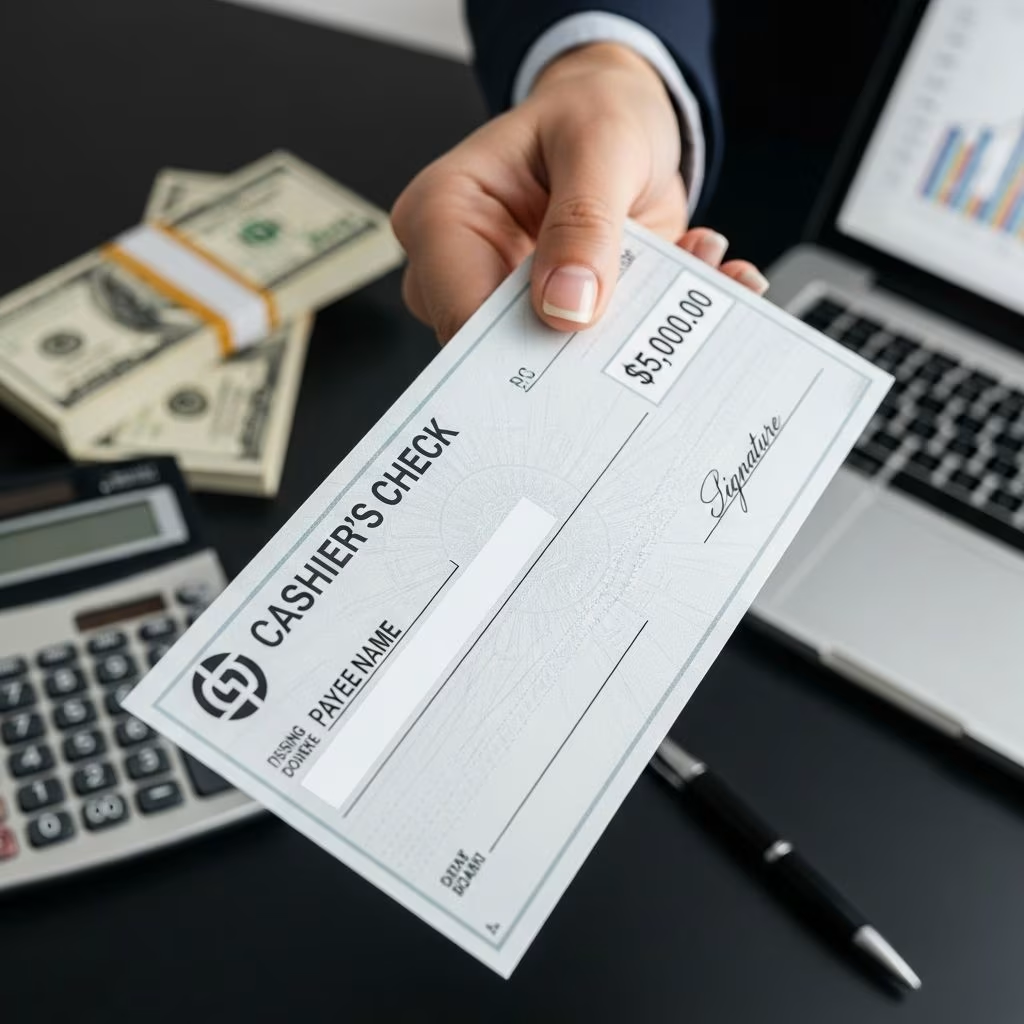
Cashier’s checks provide a reliable method for handling significant payments, backed directly by a financial institution’s funds rather than an individual’s account. This guarantee minimizes risks associated with bounced checks, making them a preferred choice for high-value deals.
Understanding the Fundamentals of Cashier’s Checks
A cashier’s check, often referred to as an official check, is issued by a bank or credit union. The institution draws the funds from its own reserves after debiting the purchaser’s account upfront. This process ensures the recipient receives assured payment, as the bank assumes responsibility for the transaction.
Unlike standard personal checks, which depend on the writer’s account balance, these checks feature enhanced security elements such as watermarks, bank signatures, and sometimes dual authorizations. These measures deter fraud and counterfeiting, offering peace of mind for both parties in a transaction.
Key Advantages Over Traditional Payment Options
- Guaranteed Funds: Banks verify and secure the amount before issuance, eliminating bounce risks.
- Swift Clearance: Typically processes overnight, ideal for time-sensitive closings.
- Heightened Security: Built-in features like microprinting and official endorsements reduce forgery chances.
- Recipient Trust: Sellers prefer them for large sums due to the institutional backing.
These benefits make cashier’s checks indispensable in scenarios where trust and speed are paramount, far surpassing the uncertainties of personal checks or the impracticality of carrying cash.
Common Scenarios Requiring a Cashier’s Check
Financial institutions and merchants often mandate cashier’s checks for transactions exceeding certain thresholds to protect against non-payment. Here are prevalent use cases:
| Transaction Type | Why Preferred | Example Amount |
|---|---|---|
| Real Estate Purchases | Ensures deposit and closing funds availability | $50,000+ |
| Vehicle Acquisitions | Safeguards against payment defaults | $20,000-$40,000 |
| Rental Agreements | Secures security deposits or first/last month’s rent | $2,000-$5,000 |
| Court Settlements | Provides verifiable payment proof | Varies |
| High-Value Goods | Protects buyers and sellers online or in-person | $10,000+ |
In real estate, for instance, escrow agents require them to confirm buyer commitment without fund withdrawal risks. Similarly, auto dealerships favor them over personal checks to avoid delays in title transfers.
Step-by-Step Process to Obtain a Cashier’s Check
- Verify Account Balance: Ensure sufficient funds cover the check amount plus any fees. Banks debit immediately upon request.
- Gather Documentation: Bring government-issued ID, recipient’s full name, and exact amount. Non-account holders may face restrictions.
- Visit a Branch: Most require in-person visits; some offer online initiation but final issuance at branches.
- Pay and Receive: Bank processes payment, issues the check signed by authorized personnel.
- Hand Over Securely: Deliver directly to payee; track if mailed.
Processing usually takes minutes at the branch, though peak times may extend waits. Always confirm policies, as some institutions serve non-customers for additional fees.
Costs and Fee Structures
Expect fees ranging from $10 to $15 per check at major banks and credit unions. Premium accounts or relationships may waive these charges, making them cost-free for frequent users.
- Standard Fee: $10-$15
- Non-Customer Surcharge: Up to $20 extra
- Replacements for Lost Checks: $30+
- Fee Waivers: Common with high-balance checking or loyalty programs
Comparing accounts can yield savings; for example, certain premium checking options eliminate these fees entirely, beneficial for repeated large transactions.
Comparing Cashier’s Checks to Alternatives
While versatile, cashier’s checks aren’t always the sole option. Evaluate based on needs:
| Payment Type | Funds Source | Cost | Security Level | Best For |
|---|---|---|---|---|
| Cashier’s Check | Bank’s account | $10-$15 | High (watermarks, signatures) | Large, secure transfers |
| Certified Check | Your account (verified) | $10-$20 | Medium | When bank verification suffices |
| Money Order | Cash prepaid | $1-$5 | Low-Medium | Smaller amounts, no bank needed |
| Personal Check | Your account | Free | Low | Trusted parties only |
| Wire Transfer | Direct bank-to-bank | $25-$50 | Very High | International or urgent |
Cashier’s checks excel in balancing cost, security, and accessibility for domestic large payments, unlike wires which suit speed over finality proof.
Potential Risks and Protective Measures
Though secure, cashier’s checks aren’t infallible. Lost or stolen checks pose issues, as replacements require affidavits and fees, delaying funds by days.
Fraudsters sometimes counterfeit them; inspect for security features like raised ink or UV elements. Recipients should deposit promptly and verify via bank contact.
- Report loss immediately to issuer
- Use tracked delivery for mailing
- Endorse only at deposit
- Monitor accounts post-transaction
Banks indemnify genuine losses under certain conditions, but prevention remains key.
Special Considerations for Non-Account Holders
Not all banks issue to non-customers, but many credit unions and institutions do for fees. Call ahead to confirm availability, ID requirements, and limits. Alternatives like money orders from post offices or retailers serve smaller needs without accounts.
Digital Evolutions and Future Trends
As fintech advances, some banks pilot digital cashier’s equivalents via apps, promising remote issuance. However, traditional paper remains dominant for legal finality in real estate and courts. Hybrid options may emerge, blending wire speed with check proof.
Frequently Asked Questions
Can a cashier’s check bounce?
No, because funds are prepaid from the bank’s account, ensuring guaranteed payment.
How long does it take to clear?
Usually 1 business day, faster than personal checks which may take weeks.
Do I need a bank account to buy one?
Most require it, but some serve non-customers; verify locally.
What’s the difference from a certified check?
Cashier’s uses bank funds; certified verifies your personal funds but draws from your account.
Are fees refundable if unused?
No, fees are non-refundable even if the check isn’t cashed.
Maximizing Value from Cashier’s Checks
For regular users, select accounts waiving fees to optimize costs. Combine with budgeting tools for seamless large purchases. In an era of digital payments, they retain relevance where verifiable security trumps convenience.
References
- What Is A Cashier’s Check? Definitions, Uses, How To Buy One — Bankrate. 2024-01-15. https://www.bankrate.com/banking/checking/what-is-a-cashiers-check/
- What is a Cashier’s Check | Chase — Chase. 2025-06-01. https://www.chase.com/personal/banking/education/basics/what-is-a-cashiers-check
- What Is a Cashier’s Check? Definition, Cost, Use and How to Buy One — NerdWallet. 2024-11-20. https://www.nerdwallet.com/banking/learn/cashiers-check-when-you-need-one-how-to-get-it
- What Is a Cashier’s Check? | PNC Insights — PNC Bank. 2025-03-10. https://www.pnc.com/insights/personal-finance/spend/what-is-a-cashiers-check.html
- What is a cashier’s check? – Citizens Bank — Citizens Bank. 2024-09-05. https://www.citizensbank.com/learning/what-is-a-cashiers-check.aspx
- What is a Cashiers Check: How & Where to Get Them — Huntington Bank. 2025-01-12. https://www.huntington.com/learn/checking-basics/what-is-cashiers-check
- Cashier’s Checks vs. Personal Checks: What’s the Difference? — Troy Group. 2024-07-22. https://www.troygroup.com/blog/cashiers-checks-vs.-personal-checks-whats-the-difference
This article is general information, not personal financial advice. Consider your own situation, or speak with a licensed adviser, before acting on it.


