

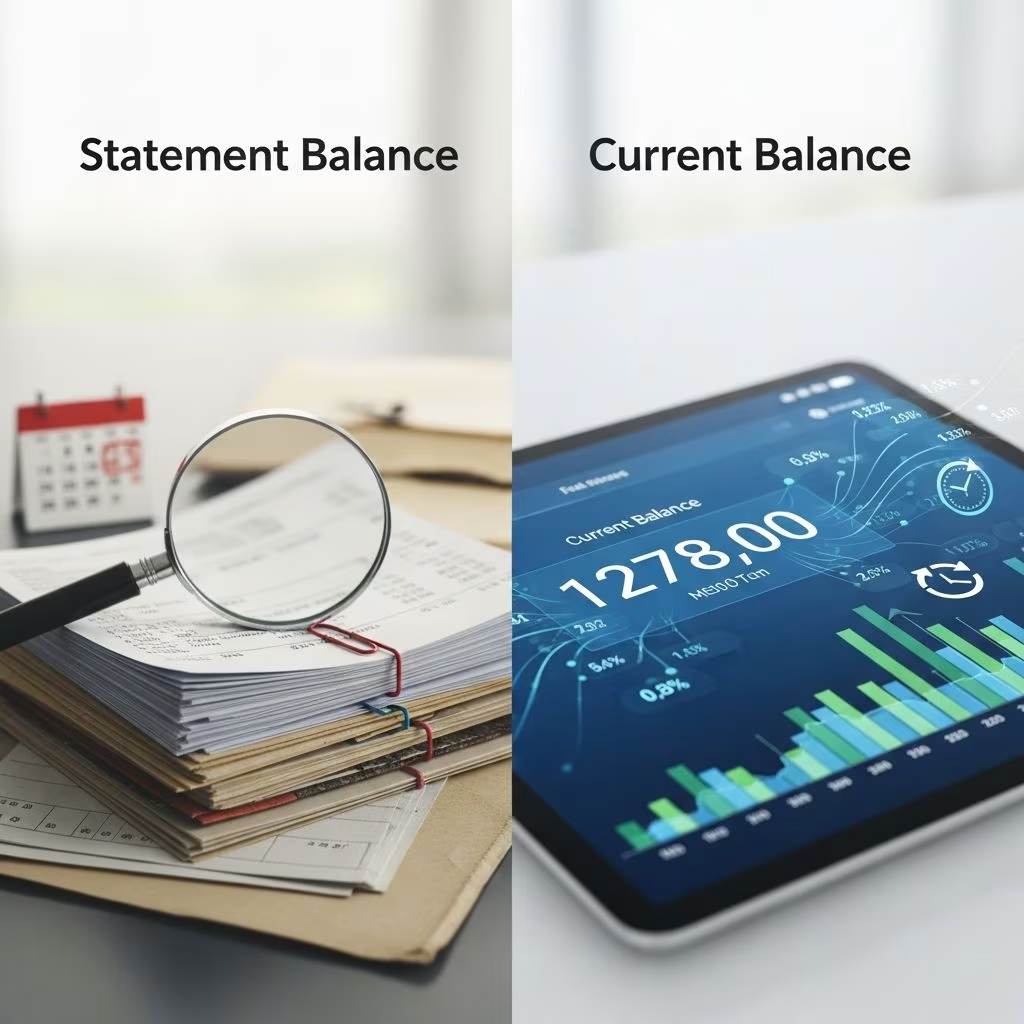
Understanding the distinction between your credit card’s **statement balance** and **current balance** is essential for effective financial management. The statement balance represents the fixed total owed at the end of a billing cycle, while the current balance provides a live snapshot of all activity up to the present moment.
Defining the Core Concepts
Every credit card account displays two primary balance figures that serve different purposes in tracking your debt. Grasping these helps in making informed payment decisions and maintaining healthy credit habits.
Understanding Statement Balance
The statement balance is calculated on the closing date of your billing period, typically spanning 20 to 45 days. It sums all purchases, fees, interest from prior periods, and any remaining unpaid amounts from previous cycles, minus payments or credits applied up to that point. This figure remains unchanged until the next cycle closes, acting as a historical record of your activity during that specific timeframe.
For instance, if your billing cycle ends on the 30th, the statement balance reflects everything transacted from the 1st through the 30th, plus any carried-over debt. Issuers generate your monthly statement based on this amount, setting a due date usually 21 to 25 days later.
Decoding Current Balance
In contrast, the current balance updates dynamically with every posted transaction. It includes the statement balance plus or minus subsequent purchases, payments, cash advances, balance transfers, interest accruals, and fees. Pending transactions may not yet appear, but once posted, they immediately adjust this running total.
This balance fluctuates daily, offering a real-time view of what you owe right now. Checking your online account or app shows this ever-changing figure, which can rise with new spending or drop after payments post.
Key Differences at a Glance
To visualize the contrasts clearly, consider this comparison table:
| Aspect | Statement Balance | Current Balance |
|---|---|---|
| Timing | Fixed at billing cycle end | Real-time, updates continuously |
| Inclusions | Cycle purchases, prior unpaid, interest/fees up to close | All posted activity, including post-statement transactions |
| Stability | Does not change post-closing | Changes with every post |
| Due Date | Specific payment deadline | No fixed due date |
| Credit Reporting | Reported to bureaus at cycle close | Influences utilization ongoing |
Why These Balances Diverge
Your statement and current balances match only if no activity occurs between the statement date and when you check. Differences arise from timing of transactions relative to the billing cycle.
Scenarios Where Current Balance Exceeds Statement Balance
- New purchases or cash advances made after cycle close add directly to the current total.
- Accrued interest or fees posting post-statement increase the figure.
- Balance transfers initiated recently contribute without being in the prior cycle.
Example: Statement balance of $500 on cycle end. You then spend $100 on groceries and $50 fees post. Current balance jumps to $650.
Cases Where Statement Balance Tops Current Balance
- Payments or credits applied after statement generation reduce the current amount.
- Refunds from returns processed post-close lower it further.
If you pay $300 toward a $500 statement balance before new charges, current balance drops to $200.
Strategic Payment Approaches
Knowing which balance to target depends on your goals: avoiding interest, preserving credit health, or minimizing minimum payments.
Paying the Statement Balance: Interest Avoidance Tactic
Paying the full statement balance by the due date prevents interest on purchases from that cycle (under grace period terms). This resets utilization and avoids new purchase interest. Most issuers offer a grace period if you pay in full monthly.
Targeting Current Balance: Real-Time Debt Reduction
Opt for current balance payments to clear all recent activity immediately. Useful if you’ve overspent post-statement, reducing overall debt faster.
Minimum Payments: Short-Term Option with Costs
Minimums cover a portion of statement balance (often 1-3% plus interest/fees). This avoids late fees but accrues interest on remainder, raising costs long-term.
| Payment Type | Pros | Cons |
|---|---|---|
| Full Statement | No interest, grace period intact | Ignores post-statement debt |
| Full Current | Clears all debt now | May exceed due amount |
| Minimum | Meets requirements | High interest accrues |
Effects on Credit Health
Both balances influence your credit score, primarily via utilization ratio (30% of FICO score).
- Statement Balance Impact: Reported to bureaus at cycle close, affecting utilization snapshot. High ratio here hurts score.
- Current Balance Role: Lenders monitor internally; consistent high currents signal risk, potentially impacting future approvals.
Keep utilization under 30% on both for optimal scores. Pay early/often to lower currents before reporting.
Practical Tips for Balance Mastery
- Monitor Frequently: Log in weekly to track currents and predict statements.
- Time Purchases: Delay big buys until post-payment to control utilization.
- Set Alerts: For due dates, high balances, or low available credit.
- Automate Payments: Full statement payments on due date via auto-pay.
- Review Statements: Check for errors in postings affecting balances.
These habits build discipline, reduce debt, and enhance creditworthiness.
Frequently Asked Questions
What if my current balance is lower than statement balance?
This occurs post-payments or refunds after statement close. Pay statement minimum by due to avoid fees.
Does paying current balance satisfy statement due?
Yes, as it includes statement amount. Confirm with issuer.
How does billing cycle affect balances?
Cycle dictates statement snapshot; activity outside impacts only current.
Can I change my billing cycle?
Some issuers allow; request to align spending patterns.
Why check both balances?
Statement for due payments; current for true debt picture and utilization control.
Advanced Management Strategies
Beyond basics, integrate balance tracking into broader finances. Use apps syncing multiple cards for aggregated views. For businesses, current balance directly sways utilization in real-time, critical for lines of credit.
Consider payoff methods like debt snowball (smallest first) or avalanche (highest interest). Track via spreadsheets: columns for date, transaction, impact on statement vs. current.
In high-interest environments, prioritize full payments. Recent data shows average card APR over 20%, amplifying unpaid balances quickly.
Common Pitfalls to Avoid
- Confusing balances leading to underpayment and fees.
- Ignoring currents, allowing debt creep.
- Assuming minimum covers all—interest balloons debt.
- Not understanding grace periods, triggering retroactive interest.
Avoid by educating yourself and consistent monitoring.
References
- Statement Balance vs. Current Balance: Differences Explained — Ramp. 2024. https://ramp.com/blog/statement-balance-vs-current-balance
- Statement Balance vs. Current Balance — Discover. 2025-01-15. https://www.discover.com/credit-cards/card-smarts/whats-the-difference-between-a-statement-balance-and-a-current-balance/
- Statement balance vs. current balance: How they differ — Capital One. 2025-02-01. https://www.capitalone.com/learn-grow/money-management/statement-balance-vs-current-balance/
- Statement Balance vs. Current Balance: What’s the Difference? — Citi. 2024-11-20. https://www.citi.com/credit-cards/understanding-credit-cards/statement-balance-vs-current-balance
- Statement Balance vs. Current Balance — Chase. 2025-01-10. https://www.chase.com/personal/credit-cards/education/basics/statement-balance-vs-current-balance
- Statement balance vs. current balance: What’s the difference? — Bankrate. 2025-02-05. https://www.bankrate.com/credit-cards/advice/statement-balance-vs-current-balance/
- Statement balance vs current balance: What’s the difference? — BILL. 2024-12-12. https://www.bill.com/learning/statement-balance-vs-current-balance
This article is general information, not personal financial advice. Consider your own situation, or speak with a licensed adviser, before acting on it.


