

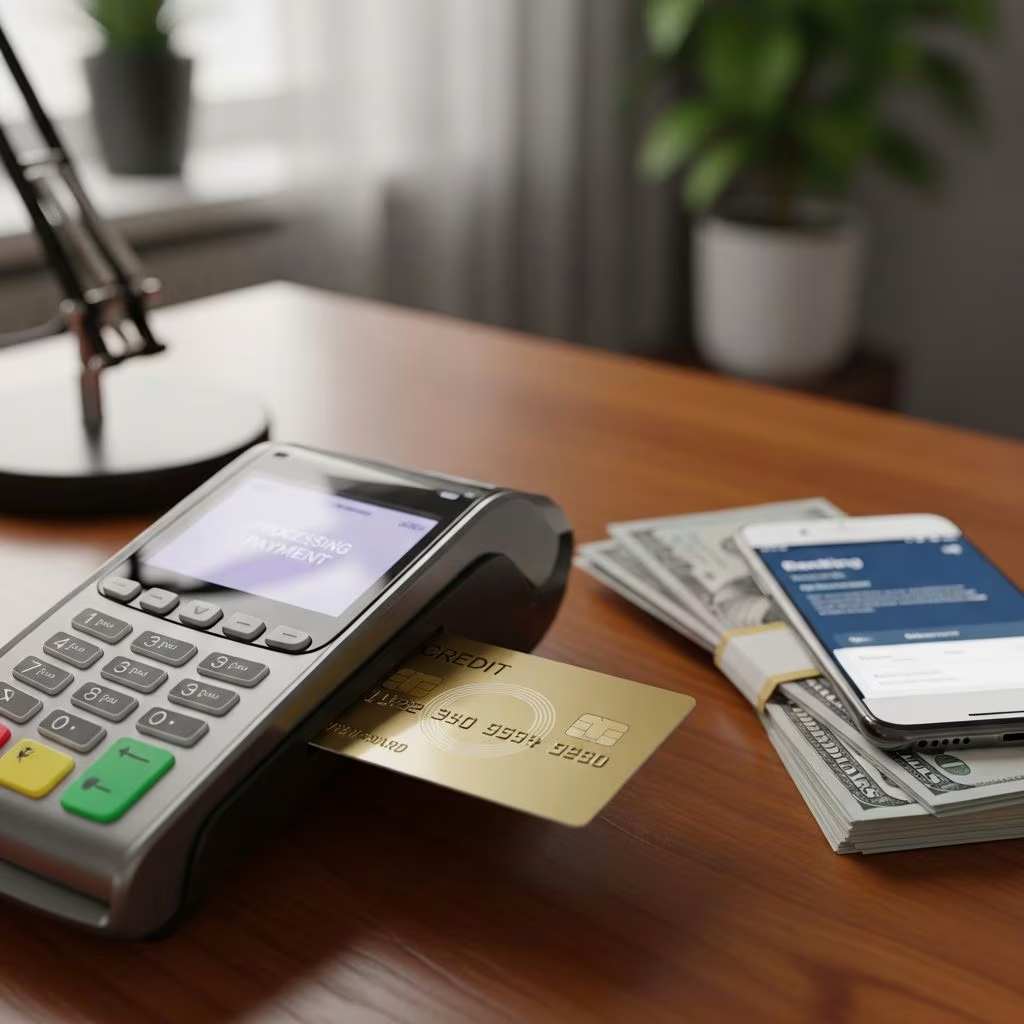
Paying your credit card bill promptly is crucial for maintaining a strong financial profile and avoiding unnecessary charges. With multiple payment avenues available today, cardholders can choose methods that suit their lifestyle, from instant digital transfers to scheduled automatic deductions. This guide delves into practical approaches, highlighting benefits, potential pitfalls, and steps to ensure every payment lands successfully.
Why Timely Payments Matter for Your Wallet
Making payments by the due date prevents late fees, which can range from $25 to $40 per occurrence, and shields your credit score from derogatory marks. Consistent on-time payments contribute positively to 35% of your FICO score, the payment history factor. Beyond penalties, carrying balances leads to interest accrual at APRs often exceeding 20%, compounding daily and eroding purchasing power over time.
Proactive payment habits also unlock rewards maximization and credit limit increases. Issuers monitor reliability; habitual payers often qualify for better terms. In contrast, missed deadlines trigger penalty APRs, hiking costs on existing balances.
Digital Payment Platforms: Fast and Convenient
Most credit card issuers provide robust online dashboards accessible via websites or mobile apps. Logging in reveals your current balance, minimum due, full payoff amount, and due date. From here, payments initiate in seconds.
- Online Portal Access: Navigate to your issuer’s site, enter credentials, select ‘Payments,’ choose amount, and confirm source account.
- Mobile App Features: Push notifications alert upcoming dues; biometric logins speed entry.
- Funding Flexibility: Link checking, savings, or external debit cards for one-time transfers.
Processing times vary: same-day credits for morning submissions, next-business-day otherwise. Always verify confirmation numbers post-transaction.
Setting Up Autopay for Effortless Management
Autopay automates deductions, eliminating forgetfulness. Options include minimum payment only—risky due to interest—or full balance for debt-free cycling.
| Autopay Type | Pros | Cons | Best For |
|---|---|---|---|
| Minimum Payment | Ensures no late fees | Builds debt via interest | Temporary cash flow issues |
| Full Statement Balance | Zero interest accrual | Requires sufficient funds | Rewards optimizers |
| Fixed Amount | Custom control | Manual adjustments needed | Budget-conscious users |
Activation mirrors manual payments: select ‘Autopay’ in settings, verify bank details via micro-deposits, choose frequency (monthly), and set amount. Monitor first cycles to confirm accuracy. Many issuers offer grace periods for insufficient funds, but repeated issues may suspend service.
Traditional Methods: Phone, Mail, and In-Person
Not everyone prefers digital routes. Phone payments via automated lines or agents use voice prompts for account input and funding selection. Fees may apply ($5-$10), offset by convenience for complex queries.
Postal mail remains viable: write account number on check memo, include payment coupon, and mail to issuer’s lockbox. Allow 7-10 business days; certified mail adds tracking. Retail locations like grocery stores or banks accept payments for fees ($3-$5), scanning barcodes for instant posting.
- Phone: 24/7 availability, live support option.
- Mail: Ideal for large checks, no tech needed.
- In-Person: Confirmation receipt provided.
Third-Party Services and Aggregators
Apps like Plaid-linked services or bank bill pay consolidate multiple bills. Schedule one-time or recurring from your bank’s portal, routing securely to issuer. Western Union or MoneyGram offer cash-funded payments at agents, useful for unbanked users, though fees exceed $10.
Digital wallets like PayPal or Venmo sometimes facilitate via ‘Pay with Card’ but verify issuer acceptance to avoid declines. Global users leverage services supporting 100+ currencies for international billing.
Understanding Payment Timing and Posting
Payments post when received, not mailed. Cutoff times dictate same-day crediting—typically 5 PM ET. Weekends delay to Monday. Track via app notifications or statements; pending status resolves in 1-3 days.
Partial payments apply to minimum first, then purchases, balance transfers, cash advances per CARD Act rules. Confirm allocations if prioritizing high-interest portions.
Troubleshooting Common Payment Hurdles
Declines stem from insufficient funds, mismatched details, or fraud flags. Contact issuer immediately for reversals. If overpaid, credits apply to future balances; refunds requestable after review.
Disputes over posting errors require written notification within 60 days of statement. Keep records: screenshots, emails, receipts. Escalation to CFPB aids unresolved cases.
Advanced Strategies for Payment Optimization
Align payments with cash flow: pay early to free credit lines for rewards. Balance transfers to 0% promo cards buy time, but watch post-promo hikes. Tools like spreadsheets or apps (Mint, YNAB) forecast dues against inflows.
For businesses, processors like Stripe or Square handle volume with flat fees (2.9% + 30¢), supporting cards, wallets, ACH. High-volume favors interchange-plus at 1.5%-2.5% + interchange.
Global Perspectives on Card Payments
North America favors cards (immediate confirmation, disputes supported). Europe leans SEPA transfers (delayed but low-cost). Asia thrives on mobile wallets like Alipay. Tailor methods regionally for e-commerce.
| Region | Top Methods | Key Features |
|---|---|---|
| North America | Cards, Wallets | Instant, fraud protection |
| Europe | Bank Transfers, Cards | Low fees, direct debit |
| Asia-Pacific | Mobile Payments | Cashless ubiquity |
Frequently Asked Questions
What happens if I pay my credit card bill late?
Late fees apply, and it may trigger penalty APRs, harming your credit score. Set reminders or autopay to prevent this.
Can I pay more than my balance?
Yes, overpayments credit future statements. Request refunds if needed.
Is it safe to pay via mobile app?
Yes, with encryption and biometrics, but use secure networks and monitor statements.
How long does a payment take to post?
Online: 1-2 days; mail: up to 10 days. Check confirmations.
Does autopay pay my full balance?
Choose settings: minimum, statement balance, or fixed amount.
Building Long-Term Financial Discipline
Integrate payments into routines: review statements weekly, adjust autopay seasonally. Pair with budgeting to pay full balances, maximizing 1-5% rewards cashback. Over time, this fosters wealth accumulation versus debt cycles.
For families, involve all users in shared accounts via authorized access, teaching responsibility. Elderly users benefit from proxy setups with trusted contacts.
References
- Consumer Financial Protection Bureau: Credit Card Payment Rules — CFPB. 2024-01-15. https://www.consumerfinance.gov/rules-policy/regulations/1026/
- Stripe Payment Methods Guide — Stripe. 2025-11-20. https://stripe.com/guides/payment-methods-guide
- Federal Reserve: Consumer Credit Regulations — Federal Reserve. 2023-07-01. https://www.federalreserve.gov/supervisionreg/regreportforms.htm
- Salesforce Commerce: Online Payment Methods — Salesforce. 2025-09-10. https://www.salesforce.com/commerce/online-payment-solution/online-payment-methods/
- FICO Score Factors — myFICO. 2024-03-05. https://www.myfico.com/credit-education/whats-in-your-credit-score
This article is general information, not personal financial advice. Consider your own situation, or speak with a licensed adviser, before acting on it.


