

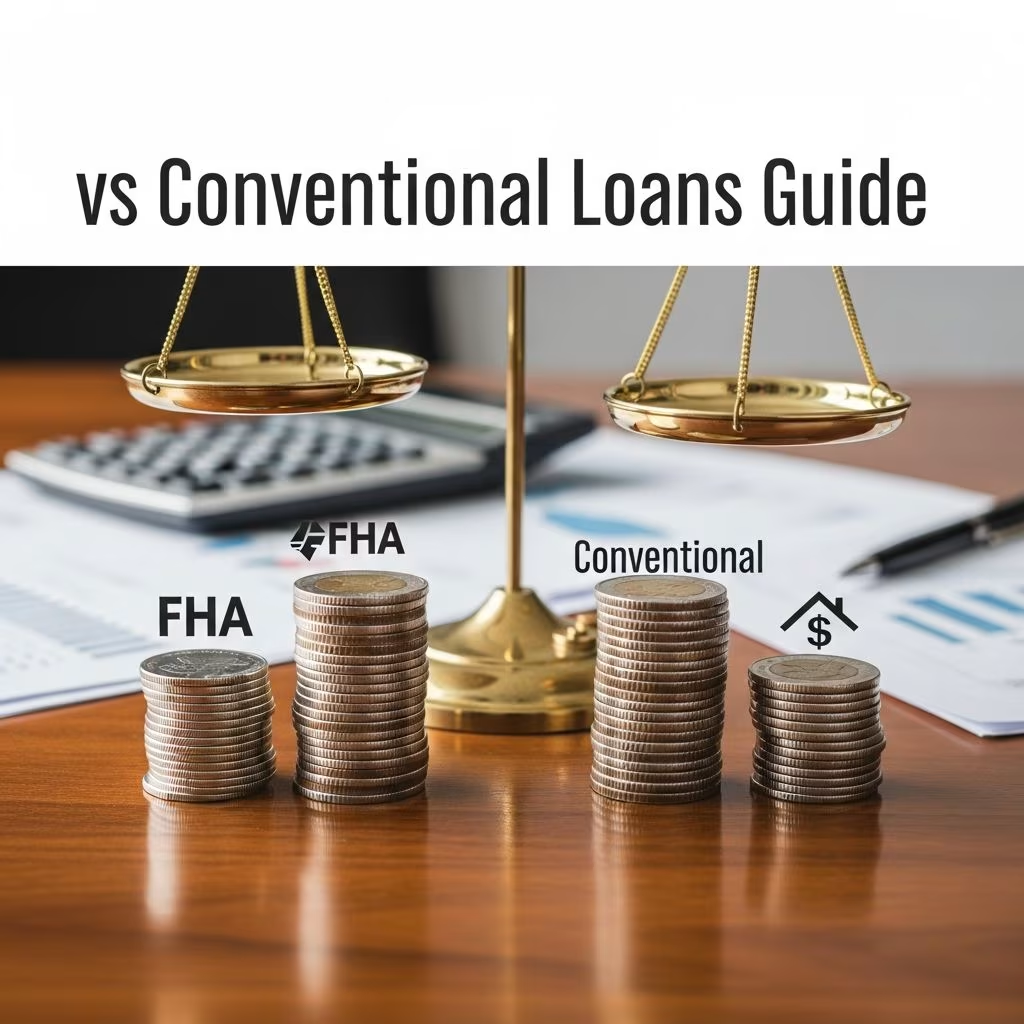
Choosing between FHA and conventional loans can significantly impact your homeownership path. FHA loans, backed by the Federal Housing Administration, cater to buyers with modest credit profiles, while conventional loans, offered by private lenders, suit those with stronger financial standings. This guide breaks down their differences to help you decide.
Understanding Loan Basics
FHA loans provide government insurance to lenders, reducing risk and enabling more lenient terms. Conventional loans rely on private entities like Fannie Mae or Freddie Mac for standardization without direct government support. Both fund home purchases, but their structures serve distinct borrower needs.
Key Eligibility Factors
Qualification hinges on credit history, income stability, and debt levels. FHA options open doors for first-time buyers facing credit hurdles, whereas conventional paths reward established profiles.
Credit Score Thresholds
FHA programs accept scores as low as 500, with 580 unlocking the lowest down payments. Conventional typically demands 620 or higher, favoring applicants with solid payment histories.
Debt-to-Income Ratios
DTI measures monthly debts against income. FHA caps total DTI at 43%, sometimes stretching to 57% with compensating factors. Conventional allows up to 45-50%, but prefers under 36% for optimal approval.
Down Payment Requirements
Low down payments make homeownership accessible. FHA requires 3.5% for scores 580+, or 10% below that. Conventional offers 3% for qualified buyers, but 20% avoids insurance fees.
| Aspect | FHA Loans | Conventional Loans |
|---|---|---|
| Minimum Down Payment | 3.5% (580+ score) | 3% |
| With Lower Score | 10% | Typically 5-20% |
| Example on $400k Home | $14,000 | $12,000 |
This table illustrates potential savings; actual amounts vary by lender and location.
Interest Rate Dynamics
FHA rates often edge lower for moderate-credit borrowers due to government backing, stabilizing offerings. Conventional rates shine for high-credit profiles, potentially dropping further with larger down payments.
- FHA Advantage: Consistent rates for scores 580-740.
- Conventional Edge: Best rates above 740 score with 20% down.
Mortgage Insurance Obligations
Insurance protects lenders from default. FHA mandates a 1.75% upfront premium plus annual payments lasting 11 years or the loan life for low-down-payment cases. Conventional requires PMI only under 20% down, cancellable at 20-22% equity.
| Insurance Type | FHA (MIP) | Conventional (PMI) |
|---|---|---|
| Upfront Fee | 1.75% | None |
| Monthly Premium | Required | If <20% down |
| Duration | 11+ years or life | Cancellable |
Loan Limits and Property Rules
FHA sets county-based limits, lower in most areas but higher in high-cost regions. Conventional permits larger amounts, ideal for pricier homes. FHA restricts to primary residences with strict safety appraisals; conventional allows investment properties.
Refinancing Opportunities
FHA Streamline Refinance simplifies rate drops with minimal paperwork, no appraisal often needed. Conventional refinances mirror new applications, demanding full underwriting but offering flexibility.
Pros and Cons Breakdown
Weigh strengths against drawbacks based on your profile.
FHA Loans
- Pros: Low credit entry, small down payments, flexible DTI, easy refis.
- Cons: Lifelong insurance possible, lower limits, rigorous appraisals.
Conventional Loans
- Pros: No permanent insurance, higher limits, property variety, better long-term costs for strong applicants.
- Cons: Strict credit/DTI, potential higher rates for weaker profiles.
Cost Comparison Over Time
Assume a $300,000 loan at 6.5% rate, 30-year term.
- FHA: 3.5% down ($10,500), plus $147/month MIP initially.
- Conventional: 5% down ($15,000), PMI $100/month until 20% equity.
Conventional may save thousands long-term without perpetual insurance.
Who Should Choose Which?
- Opt for FHA if: Credit under 620, high DTI, limited savings, first home.
- Opt for Conventional if: Score 700+, 20% down ready, investment property, high-value home.
Appraisal and Inspection Differences
FHA appraisals enforce safety standards like functional roofs and no hazards. Conventional appraisals focus primarily on market value, often less stringent.
2026 Updates and Trends
Loan limits adjust annually; check HUD for FHA figures. Rates fluctuate with economy—monitor Federal Reserve actions.
Frequently Asked Questions
Can I switch from FHA to conventional later?
Yes, via refinance once equity builds and credit improves, eliminating MIP.
Are FHA loans only for first-timers?
No, repeat buyers qualify if meeting criteria.
Which has lower closing costs?
FHA often lower upfront, but insurance evens it out.
Do conventional loans have income limits?
No, unlike some programs.
What’s the max DTI for FHA?
43% standard, up to 57% with strong reserves.
Steps to Apply
- Check credit and calculate DTI.
- Compare lender quotes.
- Gather docs: pay stubs, tax returns.
- Secure pre-approval.
- Finalize with appraisal.
Consult multiple lenders for personalized rates.
References
- FHA Loans vs. Conventional Loans: Key Differences — Freedom Mortgage. 2025. https://www.freedommortgage.com/learning-center/articles/fha-vs-conventional-loans
- FHA vs. Conventional Loans: What’s the Difference? — Experian. 2025. https://www.experian.com/blogs/ask-experian/fha-vs-conventional-loans/
- FHA vs. conventional loan: Definition and differences — Rocket Mortgage. 2025. https://www.rocketmortgage.com/learn/fha-vs-conventional
- FHA vs. Conventional Loans: Pros, Cons and Differences — NerdWallet. 2025. https://www.nerdwallet.com/mortgages/learn/fha-loan-vs-conventional-mortgage
- FHA vs. Conventional Loans: What’s the Difference? — Capital One. 2025. https://www.capitalone.com/learn-grow/life-events/fha-vs-conventional-loans/
- FHA vs Conventional Loan | 2026 Rates & Differences — The Mortgage Reports. 2026-01-01. https://themortgagereports.com/17168/fha-conventional-97-low-downpayment-comparison
This article is general information, not personal financial advice. Consider your own situation, or speak with a licensed adviser, before acting on it.


