

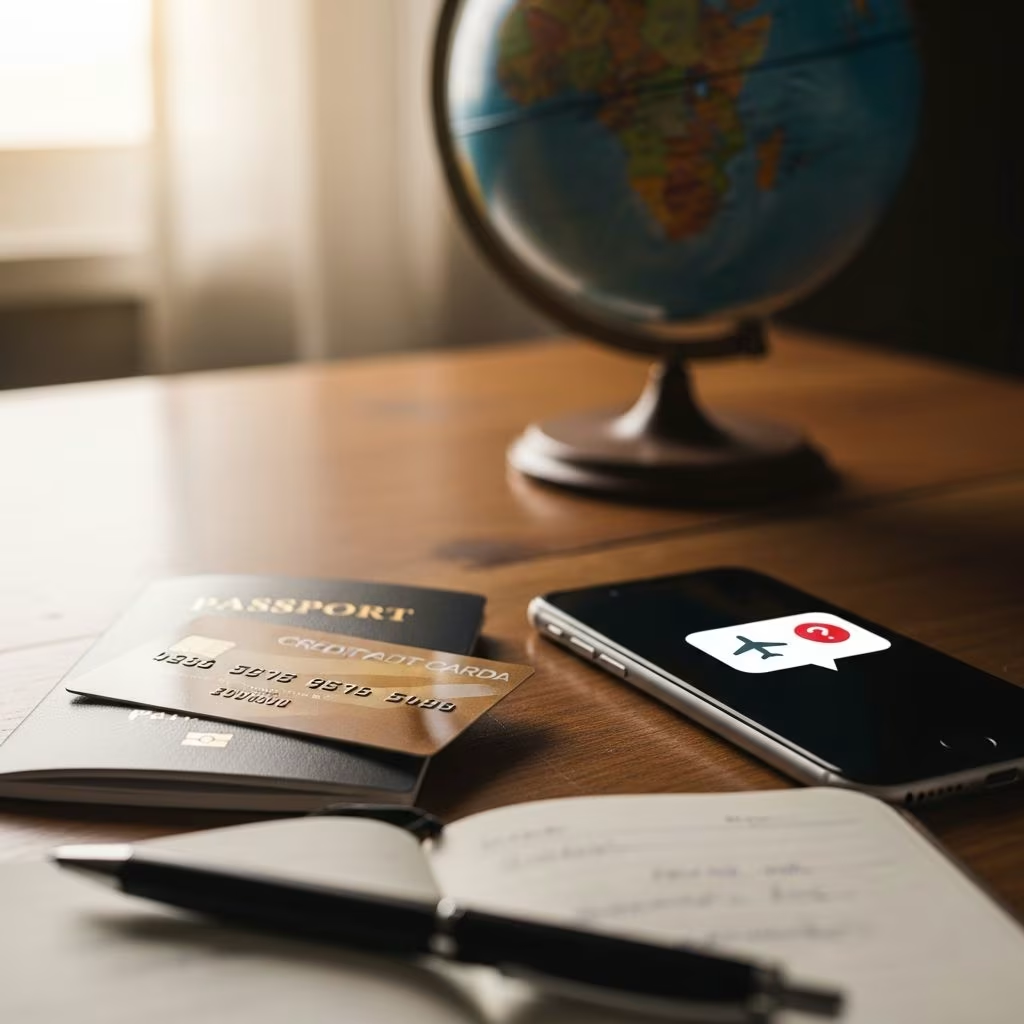
Advancements in fraud detection technology have largely eliminated the need for travelers to proactively notify their credit card issuers about upcoming trips, whether domestic or international. Major providers like Chase, Capital One, American Express, and Bank of America rely on sophisticated algorithms to distinguish legitimate charges from suspicious activity, reducing the risk of card blocks during travel.
The Evolution of Travel Notifications
Travel notices originated as a simple precaution in an era when credit card fraud was harder to detect automatically. Users would inform issuers of planned destinations and dates to preempt flags on out-of-pattern spending, such as hotel bookings in Paris after routine U.S. purchases. This manual step prevented disruptions but required foresight and phone calls.
Today, issuers employ machine learning models that analyze spending patterns, location data from EMV chips, and transaction velocities in real-time. These systems flag anomalies without relying on preemptive alerts, making proactive notifications obsolete for most users. For instance, a sudden charge in Tokyo triggers review based on your historical behavior, not absence of notice.
Current Policies from Leading Issuers
Most top credit card companies have publicly stated that travel notices are no longer required. Here’s a breakdown:
- Chase: No travel notices accepted; enhanced security handles it. Customize alerts via app for activity notifications.
- Capital One: No notification needed domestically or abroad. Update contact info and enable mobile alerts for suspicious activity.
- American Express: Industry-leading detection recognizes travel automatically. Keep contacts current and use the app.
- Bank of America: Monitors accounts proactively; alerts sent for issues. Update profile details.
- Citi: Still offers optional setup online under Services > Travel Services.
Smaller institutions or credit unions may differ, sometimes recommending notices to avoid blocks.
Why Fraud Detection Has Changed the Game
Modern systems integrate multiple data points: geolocation from chip-enabled cards, purchase amounts relative to norms, merchant types, and even time zones. Contactless payments and tokenization further secure transactions. If a charge piques suspicion, issuers text or email for verification—hence the emphasis on updated phone numbers and emails.
Zero-liability policies protect users from unauthorized charges, even if cards are lost abroad. This safety net, combined with tech, shifts focus from prevention to rapid response.
Steps to Prepare Your Cards for Travel
Even without notices, proactive steps ensure hassle-free use:
- Verify Contact Details: Log in to update phone, email, and address. Enable text alerts for real-time monitoring.
- Customize Alerts: Set notifications for large purchases, foreign transactions, or declines via apps.
- Check Fees: Confirm no foreign transaction fees on rewards cards; research local currency.
- Carry Backups: Pack 2+ cards from different networks (Visa, Mastercard) to mitigate declines.
- Test Mobile Wallet: Load cards into Apple Pay/Google Pay for contactless options.
Comparison of Issuer Features
| Issuer | Travel Notice Required? | Key Security Feature | Alert Options |
|---|---|---|---|
| Chase | No | Fraud alerts | App-customizable |
| Capital One | No | $0 liability | Mobile texts |
| Amex | No | Auto-detection | App management |
| Bank of America | No | Auto-alerts | Profile-based |
| Citi | Optional | Online setup | Travel services |
Risks of Skipping Preparation
Without updated contacts, verification requests may go unanswered, leading to temporary blocks. Poor cell service abroad exacerbates this. Always have cash or alternate payments as backups. Domestic trips can trigger flags too, like cross-state road trips.
International Travel Specifics
Abroad, EMV chips and contactless tech shine, but notify if using smaller banks. Watch for dynamic currency conversion fees at merchants—always pay in local currency. Rewards cards often waive foreign fees, maximizing value.
Enhancing Security Beyond Basics
Enroll in two-factor authentication for accounts. Use VPNs on public Wi-Fi for online banking. Monitor statements daily via apps. For business travelers, cards like Ink Business Preferred offer robust protections.
Best Travel Rewards Cards
Opt for cards with travel perks: airport lounge access, insurance, no foreign fees. Examples include Chase Sapphire Preferred for points and Capital One Venture for simplicity.
Frequently Asked Questions
Do I need a travel notice for domestic trips?
No, for major issuers; tech handles unusual patterns.
What if my card gets flagged abroad?
Respond to alerts promptly; use backups meanwhile.
Can I set a notice with Chase?
No longer accepted; security covers it.
Is a VPN necessary for travel banking?
Recommended for public networks to encrypt data.
How soon before travel to update contacts?
Immediately; test alerts pre-departure.
What about credit unions?
Some require notices; check policies.
Traveling with credit cards is safer and simpler than ever. Focus on preparation over outdated notices for uninterrupted adventures.
References
- Should You Set a Credit Card Travel Notice? — Capital One. 2026 (accessed). https://www.capitalone.com/learn-grow/money-management/how-to-set-a-travel-notice/
- Do you need to set up travel alerts on your credit cards? — The Points Guy. 2026-01-14. https://thepointsguy.com/credit-cards/travel-alerts-on-credit-cards/
- Do I Need to Notify a Credit Card Company When Traveling? — Chase. 2026 (accessed). https://www.chase.com/personal/credit-cards/education/rewards-benefits/should-you-notify-your-credit-card-company-when-traveling
- Why are travel notifications important? — Lafayette Federal Credit Union. 2026 (accessed). https://www.lfcu.org/faq/why-are-travel-notifications-important/
- I’m traveling soon. Do I need to let American Express know? — American Express. 2026 (accessed). https://www.americanexpress.com/us/customer-service/faq.travel-notification.html
This article is general information, not personal financial advice. Consider your own situation, or speak with a licensed adviser, before acting on it.


