

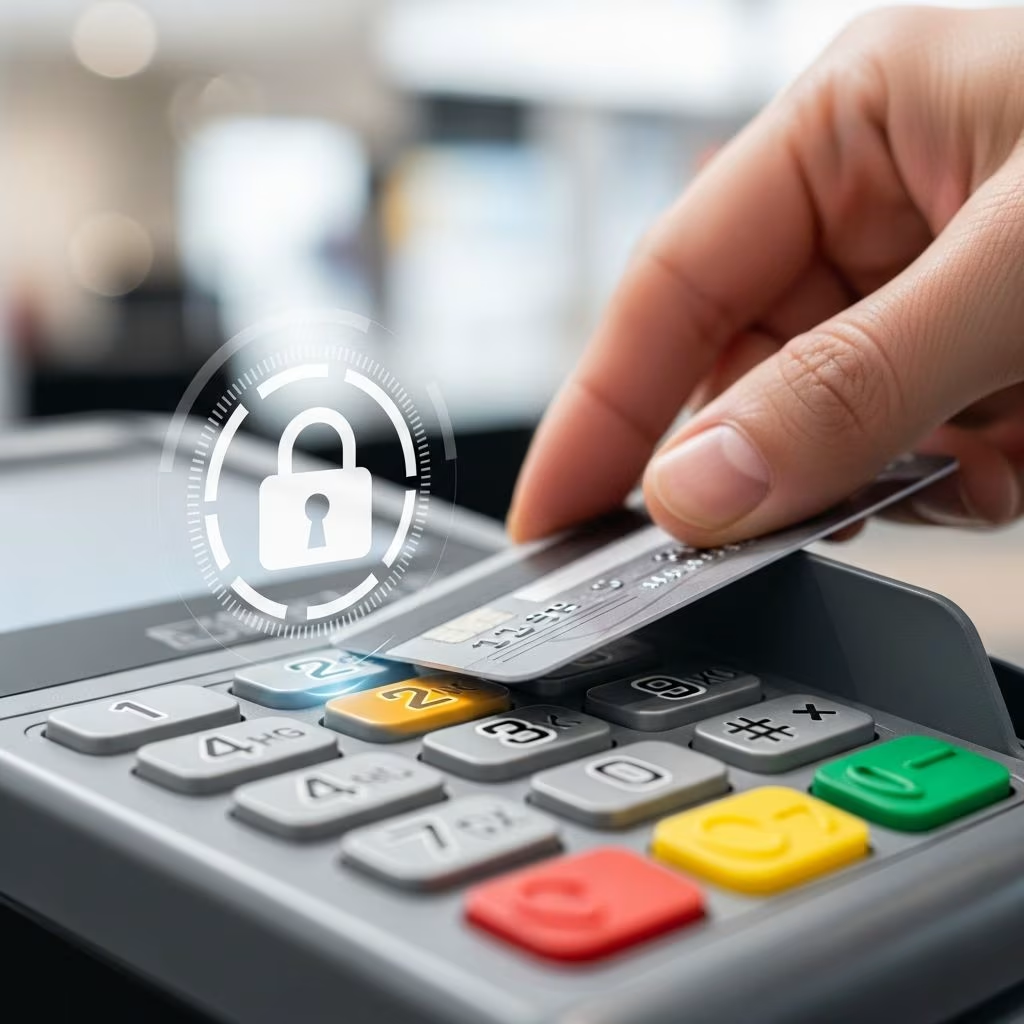
Credit card PINs provide a vital layer of security for specific transactions, verifying the cardholder’s identity through a numeric code. Primarily used for cash advances and international purchases, they differ from standard U.S. signature-based approvals.
Defining the Credit Card PIN
A credit card PIN, or Personal Identification Number, consists of four digits serving as a confidential passcode. Unlike debit cards where PINs are routine for everyday swipes, credit card PINs activate mainly for ATM withdrawals or chip-enabled terminals abroad. This code confirms you are the authorized user, blocking unauthorized access during key operations.
Issuers often mail the initial PIN separately from the card to prevent theft of both items simultaneously. Cardholders can then customize it via phone, app, or ATM, ensuring memorability without compromising strength.
Mechanisms Behind PIN Operations
PIN verification integrates with chip technology for heightened protection. When you insert a chip card into a reader, the microchip generates a one-time code tied to that transaction, paired with your PIN entry. This duo thwarts skimming attacks common on magnetic stripes, as data cannot be easily cloned.
The process unfolds rapidly: card insertion triggers the terminal, PIN input encrypts instantly, and the issuer’s server cross-checks it. Approval follows if matched, or denial if not, with limits on retry attempts to deter guessing.
Key Scenarios Requiring a Credit Card PIN
- ATM Cash Advances: Essential for withdrawing cash; without it, dispensers reject the card.
- Overseas Purchases: Many countries mandate chip-and-PIN for in-store buys, unlike U.S. chip-and-signature norms.
- Cash Back at Registers: Some merchants request PIN for added verification during convenience withdrawals.
- High-Risk Transactions: Certain issuers enable PIN-only modes for suspicious activities.
In the U.S., most credit cards default to signature or contactless, but travelers benefit from activating PINs preemptively.
Contrasts with Debit Cards and Other Codes
| Feature | Credit Card PIN | Debit Card PIN | CVV/CVC |
|---|---|---|---|
| Primary Use | Cash advances, international | Daily purchases, ATMs | Online/phone |
| Digits | 4 | 4-6 | 3-4 |
| Location | Memorized/issued | Memorized/issued | On card back/front |
| Security Role | In-person verification | Direct debit auth | Remote fraud block |
CVVs stay static on the card for non-physical verifies, while PINs demand active input at terminals. Debit PINs link directly to funds, risking overdrafts, whereas credit PINs guard borrowing limits.
Steps to Obtain or Update Your PIN
- Contact your issuer via secure app, website, or customer service line.
- Verify identity through security questions or codes.
- Select a new four-digit combination, avoiding patterns like 1234 or birthdays.
- Confirm via ATM or follow-up message.
Not all U.S. cards ship with PINs; request one if traveling. Changes lock prior versions instantly.
Global Variations in PIN Requirements
Europe, Asia, and Latin America favor chip-and-PIN universally, rejecting signature cards at many merchants. U.S. cards without PINs may fail abroad, prompting issuers like Citi or Discover to offer easy activation. Contactless limits often bypass PINs under set amounts, but chips demand it for larger sums.
Post-2026 EMV mandates worldwide accelerate PIN adoption, reducing stripe fraud by over 80% where implemented.
Consequences of Incorrect PIN Entries
Terminals allow 3-4 tries before temporary locks, protecting against brute-force hacks. Merchants see declines but no direct liability; advise customers on alternatives like contactless or app payments. Locked cards require issuer unlock via phone, typically within minutes.
Frequent failures might flag accounts for review, but proper use builds transaction history.
Enhancing Security with PIN Best Practices
- Memorize, never write it down or share.
- Steer clear of obvious sequences; use random generators.
- Update periodically or post-suspicion.
- Enable transaction alerts for monitoring.
- Combine with biometrics where available.
PINs slash chargeback risks by proving authorization, fostering merchant trust.
Overcoming Common PIN Challenges
Forgotten PINs? Issuers reset via verified channels, no fees usually. Lost cards? Report immediately; liability caps at $50 if prompt. Abroad without PIN? Use digital wallets or issuer apps for virtual cards.
For businesses, EMV-compliant terminals ensure seamless PIN processing, minimizing disputes.
Frequently Asked Questions
Do all credit cards require a PIN?
No, U.S. cards emphasize signatures, but PINs suit ATMs and travel.
Can I choose my credit card PIN?
Yes, most issuers permit selection or changes anytime.
What if I enter the wrong PIN too many times?
The card locks temporarily; contact issuer to reset.
Is a credit card PIN the same as CVV?
No, PINs authenticate in-person; CVVs secure remote.
Why do some countries insist on PINs?
They cut fraud via dynamic chip data.
Future of PINs in Payment Security
Biometrics and tokens phase in, but PINs persist as reliable backups. Hybrid systems blend them for optimal defense, with global standards evolving. Stay proactive: activate, protect, and use your PIN wisely for frictionless, safe spending.
References
- How a PIN Works on Credit Cards and Debit Cards — Clearly Payments. 2023. https://www.clearlypayments.com/blog/how-a-pin-works-on-credit-cards-and-debit-cards/
- Chip and PIN payments explained — Tyl by NatWest. 2024. https://www.tylbynatwest.com/tyl-talks/chip-and-pin-payments-explained
- Guide to chip and PIN credit cards — Bankrate. 2025-01-15. https://www.bankrate.com/credit-cards/advice/chip-and-pin-credit-cards/
- What Is a Credit Card PIN? — Citi. 2024. https://www.citi.com/credit-cards/understanding-credit-cards/what-is-a-credit-card-pin
- Do All Credit Cards Have PIN Numbers? — SoFi. 2024. https://www.sofi.com/learn/content/credit-card-pins/
- What is a Credit Card PIN? — Discover. 2023. https://www.discover.com/credit-cards/card-smarts/what-are-credit-card-pins/
- What Is a Personal Identification Number (PIN)? — Capital One. 2025. https://www.capitalone.com/learn-grow/money-management/personal-identification-number/
This article is general information, not personal financial advice. Consider your own situation, or speak with a licensed adviser, before acting on it.


