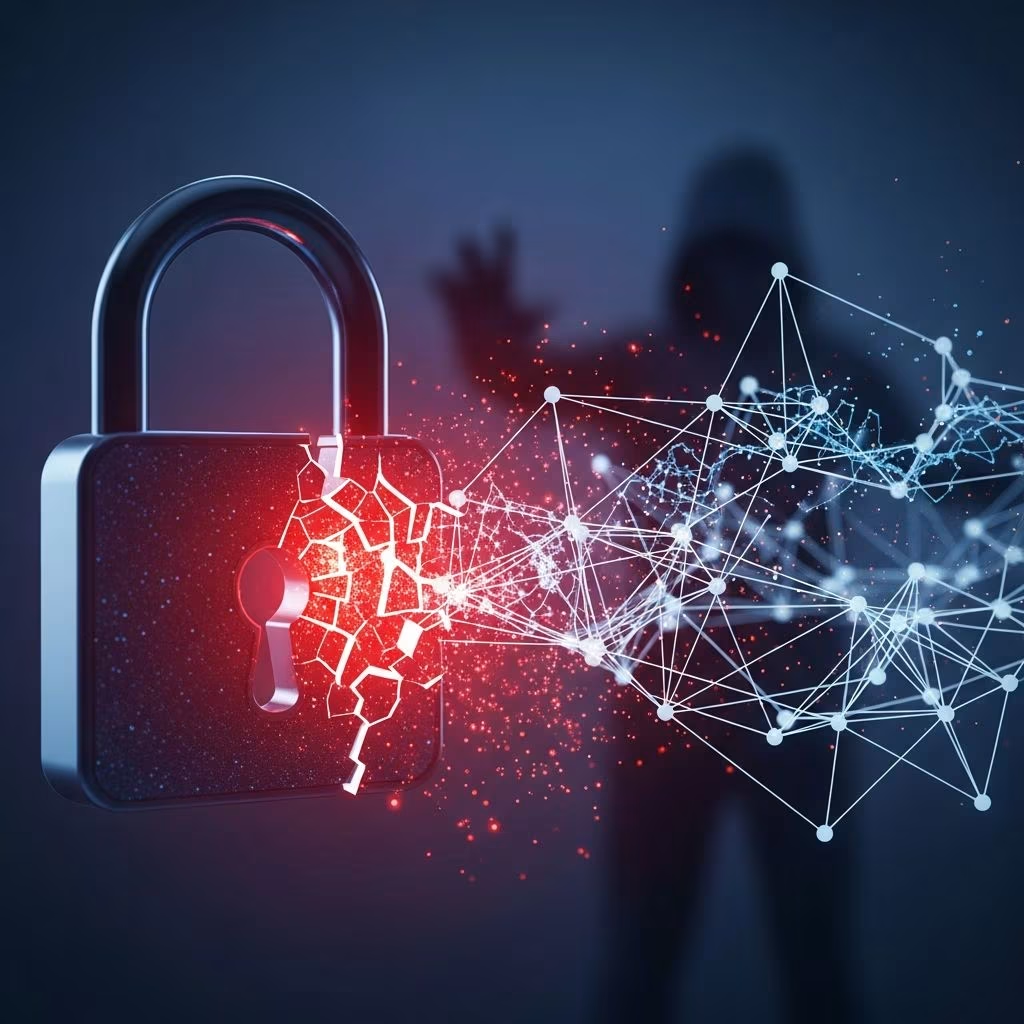
In an era where data drives nearly every aspect of modern life, understanding data breaches is crucial for individuals and organizations alike. A data breach occurs when unauthorized parties gain access to sensitive information, such as personal identifiers, financial details, or health records, often leading to identity theft, financial loss, and eroded trust.
Defining Data Breaches in the Digital Age
A data breach represents the unauthorized access, acquisition, or disclosure of confidential data. This can stem from malicious intent, like cyberattacks, or unintentional errors, such as misconfigured systems. According to security experts, breaches compromise personally identifiable information (PII), which includes names, addresses, Social Security numbers, and credit card details. The consequences extend beyond immediate theft, potentially enabling long-term fraud and privacy violations.
Breaches are not rare events; they affect millions annually. For instance, hackers target vulnerabilities in networks, applications, or human behavior to extract valuable data. Recognizing these incidents early can mitigate damage, but prevention remains the strongest defense.
Common Pathways to Data Breaches
Data breaches manifest through various vectors, each exploiting different weaknesses. Here’s a breakdown of prevalent types:
- Phishing and Social Engineering: Attackers impersonate trusted entities via email, SMS, or calls to trick users into revealing credentials or downloading malware. This tops breach causes, involved in 68% of cases due to human error.
- Ransomware Attacks: Malicious software encrypts files, demanding payment for access. Even if ransoms are paid, data theft often occurs, risking exposure.
- Insider Threats: Employees or partners with legitimate access misuse privileges, either accidentally (e.g., sharing files publicly) or maliciously (e.g., selling data).
- Access Control Failures: Weak passwords, poor configurations, or unpatched systems allow entry. Historical cases like the Uber breach highlight how single compromised credentials expose millions.
- Third-Party Vulnerabilities: Supply chain attacks, such as the SolarWinds incident, infect trusted vendors, cascading to customers.
- SQL Injections and Code Exploits: Unsanitized inputs in web forms let attackers query databases directly, pulling sensitive records.
- Man-in-the-Middle Interceptions: Attackers eavesdrop on unsecured connections, capturing credentials or redirecting to fake sites.
- Physical and DDoS Breaches: Theft of unencrypted devices or overwhelming servers with traffic disrupts operations and exposes data.
These pathways underscore that breaches rarely result from single failures but from layered vulnerabilities.
Real-World Examples of Major Data Breaches
History provides stark lessons through high-profile incidents:
| Incident | Date | Impact | Cause |
|---|---|---|---|
| Equifax Credit Bureau | 2017 | 147 million records stolen (SSNs, credit cards) | Hacker network intrusion |
| Yahoo | 2016 | 57 million user accounts | Compromised GitHub credentials |
| SolarWinds | 2019-2020 | 18,000 customers affected | Supply chain malware |
| Children’s Hospital Boston | ~2015 | 2,000+ patient records | Physical laptop theft |
| Mirai Botnet DDoS | 2016 | Disrupted Twitter, Netflix | Infected IoT devices |
These cases illustrate scale: Equifax faced $1.4 billion in remediation costs. Cloud misconfigurations have also exposed millions, like a travel site’s 10 million guest records.
Immediate and Long-Term Consequences
Breaches ripple outward, affecting victims profoundly. Individuals face identity theft, fraudulent charges, and credit damage. Organizations suffer financial hits from fines, lawsuits, and recovery—often exceeding millions. Reputational harm erodes customer loyalty, while regulatory penalties under laws like GDPR or state breach notifications add pressure.
Personally, stolen PII fuels scams, while protected health information (PHI) breaches violate privacy and enable medical fraud. Long-term, victims monitor credit for years, altering behaviors like avoiding online shopping.
Spotting Signs of a Potential Breach
Detection is key to limiting harm. Watch for:
- Unexpected account logins or password reset prompts.
- Unfamiliar charges on statements or new accounts in your name.
- Alerts from banks or credit agencies about suspicious activity.
- Slow system performance, possibly from malware.
- Company notifications of breaches affecting your data.
Tools like credit monitoring and dark web scans help proactively identify exposed info.
Protective Measures for Individuals
Empower yourself with these strategies:
- Use strong, unique passwords managed by a password manager.
- Enable multi-factor authentication (MFA) everywhere possible.
- Be vigilant against phishing: verify sender emails and avoid unsolicited links.
- Regularly review financial statements and credit reports.
- Freeze credit with bureaus to block unauthorized inquiries.
- Keep software updated to patch vulnerabilities.
For financial security, consider cards with zero-liability fraud protection and virtual card numbers.
Organizational Strategies to Prevent Breaches
Businesses must adopt robust frameworks:
- Implement zero-trust access models and network segmentation.
- Train staff on phishing recognition and secure practices.
- Encrypt data at rest and in transit.
- Conduct regular audits, penetration testing, and vendor risk assessments.
- Develop incident response plans for swift containment.
Investing in endpoint detection, SIEM tools, and cyber insurance bolsters resilience.
Responding Effectively After a Breach
If breached:
- Change all affected passwords immediately.
- Contact financial institutions to dispute charges and monitor accounts.
- Place fraud alerts or credit freezes via Equifax, Experian, TransUnion.
- Report to authorities like FTC at IdentityTheft.gov or local AG.
- Enroll in free credit monitoring if offered by the breached entity.
Act quickly: timely response minimizes fraud success rates.
Frequently Asked Questions (FAQs)
What should I do if I receive a data breach notification?
Review the letter for affected data, change passwords, monitor accounts, and consider credit freezes. Use provided monitoring services.
How long does a data breach affect my credit?
Impacts can linger years if identity theft occurs; regular monitoring is essential for 7-10 years or until resolved.
Are data breaches only a business problem?
No, individuals are prime targets via phishing or lost devices. Personal vigilance is critical.
Can antivirus software prevent all breaches?
It helps against malware but not phishing or insider threats; layer defenses for comprehensive protection.
What laws govern data breaches in the US?
State-specific notification laws require informing affected parties; federal sector rules apply variably.
Future-Proofing Against Evolving Threats
As 2026 approaches, threats like AI-driven phishing and quantum computing risks loom. Stay informed via reputable sources, adopt privacy-focused tools, and advocate for better corporate security. By understanding breaches—from phishing dominance to ransomware evolution—you position yourself to navigate digital risks confidently.
References
- 12 Types of Data Breaches to Look Out For in 2026 — Teramind. 2026 (est.). https://www.teramind.co/blog/types-of-data-breaches/
- 10 common types of data breaches that threaten your data security — NordLayer. 2024. https://nordlayer.com/blog/common-types-of-data-breaches/
- What Is a Data Breach? – Definition, Types, Prevention — Proofpoint US. 2024. https://www.proofpoint.com/us/threat-reference/data-breach
- What Is a Data Breach? — Microsoft Security. 2024. https://www.microsoft.com/en-us/security/business/security-101/what-is-a-data-breach
- Data Breaches — Attorney General Office of Missouri (.gov). Accessed 2026. https://ago.mo.gov/get-help/programs-services-from-a-z/data-breaches/
- Data Breaches — National Association of Attorneys General (.org). Accessed 2026. https://www.naag.org/issues/consumer-protection/consumer-protection-101/privacy/data-breaches/
This article is general information, not personal financial advice. Consider your own situation, or speak with a licensed adviser, before acting on it.