

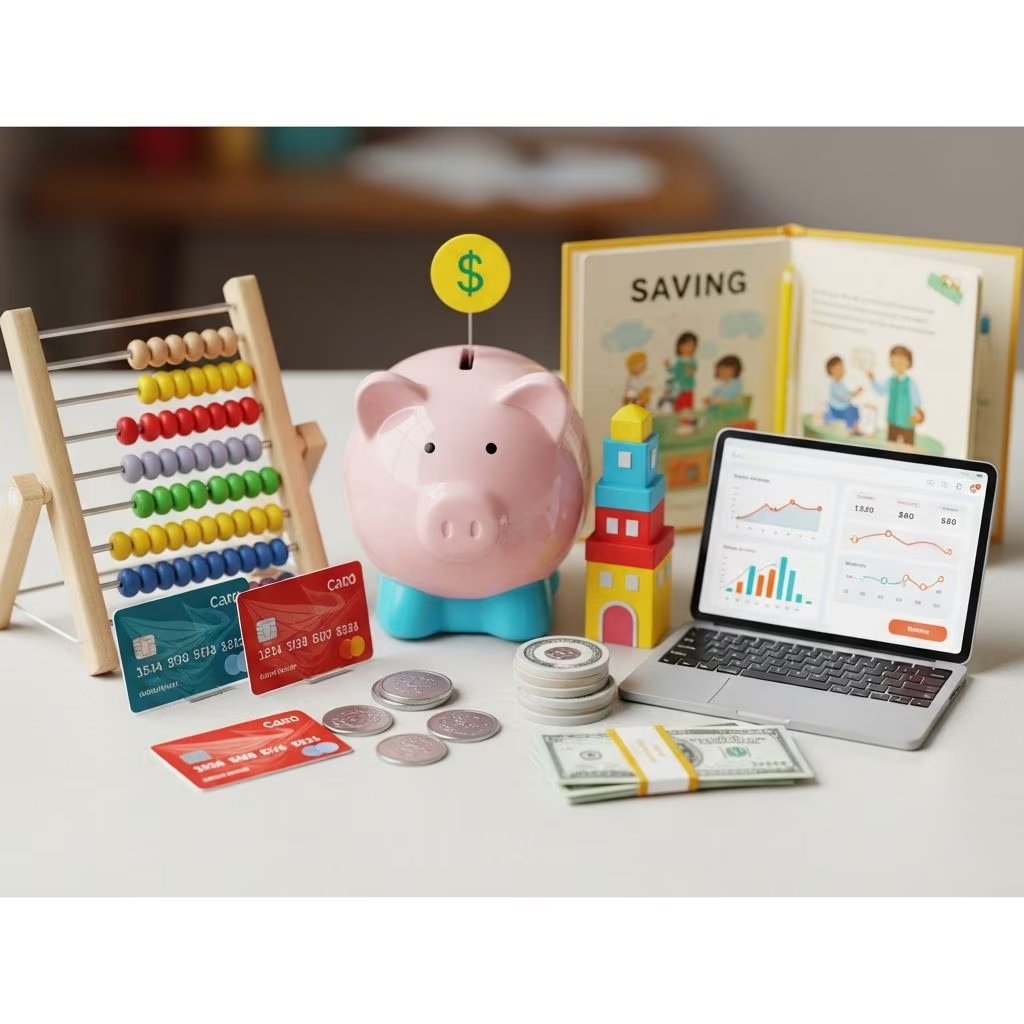
Introducing children to money management from an early age lays the foundation for lifelong financial responsibility. Simple tools like divided piggy banks help kids grasp concepts of saving, spending, and giving, turning abstract ideas into tangible lessons.
Why Start Financial Education Early?
Research indicates that basic money habits form by age seven, making preschool and early school years critical for building positive behaviors. Toddlers as young as three can understand value exchange, while consistent parental modeling reinforces these lessons.
Financial literacy encompasses earning, saving, spending, borrowing, and repaying. Early exposure prevents poor habits and equips kids to achieve life goals through informed decisions.
- Habits solidify quickly: UK studies show core skills like delayed gratification set by age 7.
- Parental role is key: Modeling tithing, budgeting, and saving from age three builds fluency.
- Long-term benefits: Strong foundations lead to better independent choices later.
Choosing the Right Savings Tool for Kids
A classic piggy bank evolves into a powerful educator when divided into compartments. Use jars or multi-slot banks labeled for different purposes to teach allocation immediately upon receiving money.
Physical containers make progress visible, motivating children to watch their savings grow. Digital apps work for older kids, but hands-on tools suit beginners by linking effort to rewards tangibly.
| Age Group | Recommended Tool | Key Benefit |
|---|---|---|
| 3-5 years | Three-jar system (Save, Spend, Give) | Visual division teaches portions |
| 6-9 years | Labeled piggy bank with goals | Tracks progress toward toys |
| 10+ years | Bank account or app with parent oversight | Introduces interest and digital tracking |
Setting Up a Three-Part Money System
Divide earnings or allowance into save, spend, and give categories using ratios like 20-50-30 or 10-30-60. This ‘pay yourself first’ approach prioritizes savings before impulses.
For young children, clear jars labeled with pictures reinforce the system. Consistently applying percentages—such as 20% to savings—builds discipline without overwhelming them.
- Agree on percentages together to encourage buy-in.
- Deposit money right away to form the habit.
- Review monthly to adjust and celebrate wins.
Age-Appropriate Money Lessons
For Toddlers and Preschoolers (Ages 2-5)
Focus on basics: earning through chores, recognizing coins, and simple trades. Use play money for pretend shopping to differentiate needs from wants.
- Chores for coins: Cleaning room earns a token toward a small treat.
- Count-along games: Sort piggy bank contents by color and value.
- No free lunch: Items require saving, not instant access.
For School-Age Kids (Ages 6-9)
Introduce budgeting and comparison shopping. Grocery trips become lessons in unit pricing and coupons.
Create family goals, like a park outing, by cutting small expenses. Kids suggest trade-offs, boosting engagement.
- Needs vs. wants: Discuss why food is essential but toys are not.
- Handle cash: Let them pay cashiers to feel transactions.
- Budget play: Use fake money to allocate family expenses.
For Tweens (Ages 10-12)
Expand to interest, credit basics, and investing. Open a kid’s savings account to show compounding.
Teach the 50/30/20 rule: 50% needs, 30% wants, 20% savings. Track via simple spreadsheets or apps.
- Family budget input: List income vs. expenses using statements.
- Investment intro: Discuss fixed deposits or low-risk options.
- Consequences: Allow spending mistakes for real learning.
Integrating Money Talks into Daily Life
Turn routines into teachable moments. Explain purchase choices at stores, like opting for nutritious cereal despite higher cost.
Grocery planning with budgets shows maximization strategies. Involve kids in pet cost discussions for ongoing vs. one-time expenses.
Share statements to demystify interest and balances. Gear lessons to age comprehension, giving more autonomy as they grow.
Family Budgeting Activities
Joint budgeting fosters teamwork. List income, then expenses from past statements. Calculate surpluses or shortfalls together.
Set shared goals: Vacation funds via subscription cuts or fewer takeouts. Kids’ input makes lessons stick.
Celebrate milestones with bonuses to reinforce saving.
Addressing Digital Money and Safety
As kids encounter cards and apps, teach traceability and security. Discuss PINs, passwords, and avoiding in-app buys.
Electronic tools track spending, but start with cash for value feel. Transition gradually to prepaid cards.
Common Challenges and Solutions
| Challenge | Solution | Source Insight |
|---|---|---|
| Impulse spending | Pre-allocate to jars | Immediate division works |
| No interest in saving | Set visible goals | Family trips motivate |
| Mistakes happen | Allow and discuss | Experience teaches best |
| Uneven chores | Tie to earnings | Value of work |
Measuring Progress and Long-Term Habits
Track via savings growth or goal achievements. Adjust systems as kids mature toward full bank accounts.
Consistent practice yields fluent adults. Early starters gain compound benefits over lifetimes.
Frequently Asked Questions
What age should I start with a piggy bank?
Around age 3, using simple divided jars for basic concepts.
How much allowance is right?
Tie to chores; enough for learning without excess. Divide per system.
What if my child spends all their money?
Let them experience it, then guide rebuilding. Mistakes build wisdom.
Can digital tools replace piggy banks?
They complement but don’t replace tactile learning for young kids.
How to teach giving?
Allocate a jar percentage; choose charities together.
References
- Money Talks: Teaching Kids Financial Fluency — BYU Marriott. 2023. https://marriott.byu.edu/magazine/feature/money-talks-teaching-kids-financial-fluency
- Teaching Children Money Management — Utah State University Extension. 2024. https://extension.usu.edu/finance/teaching-children-money-managment
- Money management for children — Raising Children Network. 2025. https://raisingchildren.net.au/preschoolers/family-life/pocket-money/money-management-for-children
- How a kid’s allowance can teach money management skills — AICPA & CIMA. 2024. https://www.aicpa-cima.com/news/article/how-a-kids-allowance-can-teach-money-management-skills
- 20 Things to Teach Your Child About Finances — Eastspring Investments. 2023. https://www.eastspring.com/money-parenting/20-things-to-teach-your-child-about-finances
- Dollars & Sense: Money Management for Kids — Scholastic. 2024. https://www.scholastic.com/parents/family-life/financial-literacy/dollars-and-sense-money-management-kids.html
- Money Smart for Young People — FDIC.gov. 2025. https://www.fdic.gov/consumer-resource-center/money-smart-young-people
This article is general information, not personal financial advice. Consider your own situation, or speak with a licensed adviser, before acting on it.


