

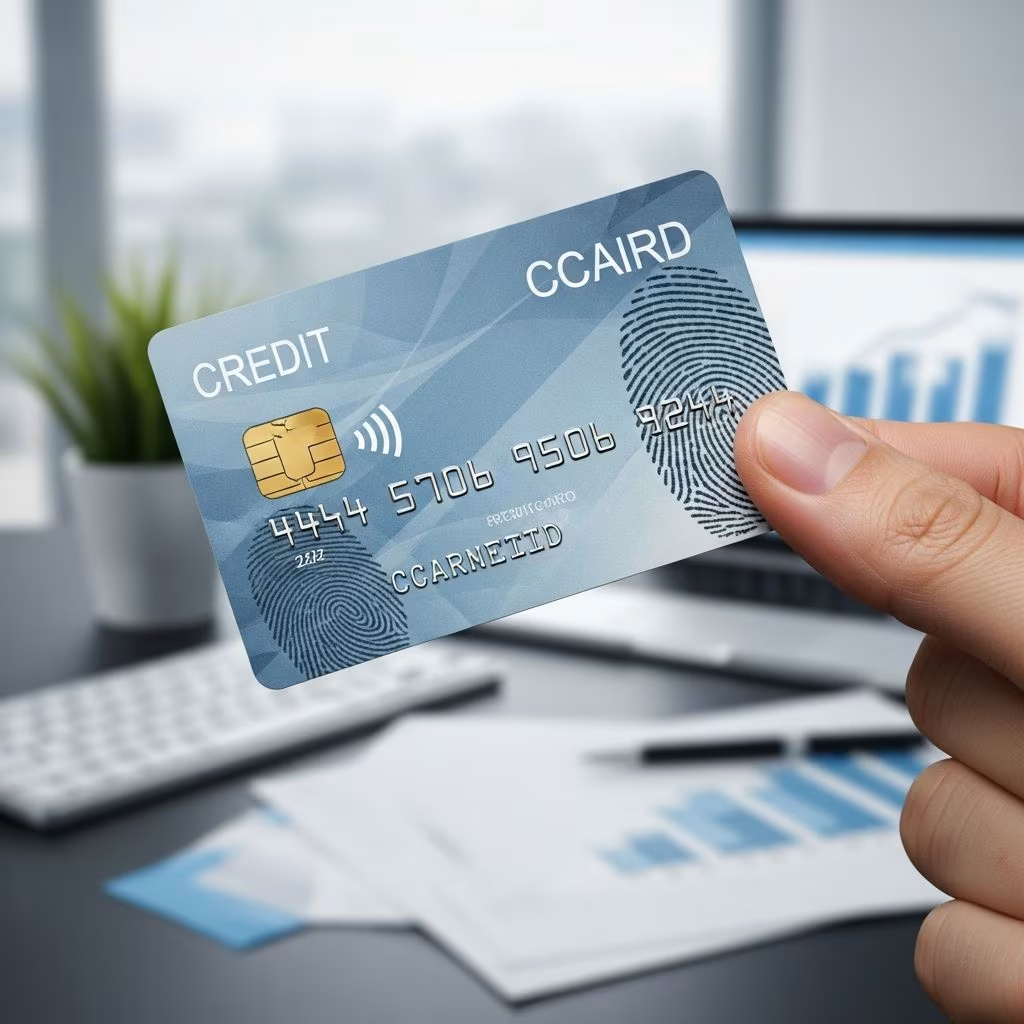
Credit cards provide a flexible way to access funds for everyday purchases, offering convenience over cash or debit while building financial history when managed properly. Unlike debit cards that draw directly from your bank account, credit cards let you borrow from the issuer up to an approved limit, repay over time or in full, and repeat the process.
The Core Mechanism of Credit Cards
At its heart, a credit card establishes a revolving line of credit. Upon approval, the issuer assigns a credit limit based on your income, credit history, debts, and other factors. This limit caps total borrowing at any moment. Purchases reduce available credit instantly, while payments restore it, enabling ongoing use without reapplying.
Transactions flow through networks like Visa, Mastercard, or American Express, which authorize payments and route funds from issuer to merchant. You receive monthly statements detailing activity, with options to pay the full amount (avoiding interest) or a minimum (incurring charges on the remainder).
Key Components of Your Credit Card Account
Every card features essential elements that dictate usage and costs:
- Credit Limit: Maximum borrowable amount, often $500 to tens of thousands depending on profile.
- Available Credit: Limit minus current balance, shown on statements and apps.
- Billing Cycle: Typically 28-31 days, ending with a statement snapshot.
- Grace Period: 21-25 days post-statement to pay new purchases interest-free if full balance cleared.
Monitoring these prevents overspending and maintains account health.
Decoding Your Monthly Statement
Statements arrive via mail or online, summarizing the cycle. Critical sections include:
| Section | Description |
|---|---|
| Previous Balance | Starting amount from last cycle, plus payments/credits. |
| Transactions | Itemized purchases, fees, advances, and returns. |
| Statement Balance | Total owed at cycle end; pay in full to skip interest. |
| Minimum Payment | Required sum (often 1-3% of balance + interest/fees) to avoid penalties. |
| Current Balance | Updated total including post-statement activity. |
| Available Credit | Remaining spendable limit. |
Review promptly to spot errors and plan payments. Current balance helps with budgeting beyond statement due dates.
Types of Credit Cards for Every Need
Cards vary by security, perks, and audience:
- Secured Cards: Backed by your deposit (matching limit), ideal for beginners or credit repair. Refundable if account closes in good standing.
- Unsecured Cards: No deposit needed; limits based purely on creditworthiness, suiting established users.
- Rewards Cards: Provide cash back (1-5%), travel miles, or points on spending categories like groceries or gas. Best if balances paid fully.
- Student or Beginner Cards: Lower limits, starter APRs for young adults building history.
- Premium/Travel Cards: High rewards but annual fees; perks like lounge access or insurance.
Match type to goals: secured for building scores, rewards for high spenders.
Fees That Can Add Up Quickly
Beyond purchases, watch these common charges:
- Annual Fee: Flat yearly cost ($0-$550+) for card privileges; waived on basic cards.
- Late Fee: $30-40 if minimum misses due date; repeated triggers penalty APR.
- Balance Transfer Fee: 3-5% of transferred amount to consolidate debts.
- Cash Advance Fee: 3-5% or $10 minimum; no grace period, high APR.
- Foreign Transaction Fee: 1-3% on non-local currency buys.
Many issuers waive first late fees or offer fee-free intro periods—call to negotiate.
Understanding APR and Interest Calculations
Annual Percentage Rate (APR) is the yearly cost of carrying balances, expressed as percentage. Types include:
| APR Type | Applies To | Typical Range |
|---|---|---|
| Purchase | New buys after grace ends | 15-30% |
| Balance Transfer | Moved debts | 0% intro, then 18-28% |
| Cash Advance | ATM withdrawals, equivalents | 25-30%+ |
| Penalty | Late payments | 29.99%+ |
Interest accrues daily (APR/365) on unpaid balances. Pay full to leverage grace; otherwise, minimums prolong debt via compound interest.
Building Credit Through Responsible Use
Credit cards boost scores via payment history (35% of FICO), utilization (30%—keep under 30%), and mix. On-time full payments signal reliability; low utilization shows control. Secured cards start this cycle effectively.
Authorized users inherit primary holder’s history, aiding minors. Avoid maxing out or closing old cards, hurting averages.
Strategies for Maximizing Benefits
- Pay full monthly to dodge interest—cheaper than loans.
- Redeem rewards optimally: statement credits over merchandise.
- Track spending via apps to stay under limits.
- Request limit increases after 6-12 months good use.
- Transfer balances to 0% promo APR cards strategically.
Combine with budgeting for debt-free rewards harvesting.
Common Pitfalls and How to Avoid Them
Treat cards as loans, not free money. Minimum payments cover ~1% principal + interest/fees, extending $1,000 at 20% APR to years of payments. Overspending erodes gains; set alerts.
Scams mimic issuers—verify calls. Dispute errors within 60 days federally protected.
Frequently Asked Questions
What happens if I miss a payment?
Late fees apply, plus potential penalty APR hiking costs. Credit score dips; repeated issues risk account freeze.
Can I use credit cards for cash advances?
Yes, but expect immediate interest sans grace, plus fees—costlier than alternatives.
How does utilization affect my score?
High ratios (>30%) signal risk; pay mid-cycle if nearing limits.
Are rewards worth annual fees?
Calculate: $300 fee needs $600+ cash back annually to break even.
What’s the grace period exactly?
Time from statement close to due date for interest-free pay on new buys, if prior full paid.
Choosing and Applying for Your First Card
Pre-qualify online to check odds sans hard inquiry. Compare APR, fees, rewards via issuer sites. Approval factors: 670+ FICO ideal, stable income. Provide SSN, ID, finances honestly.
Post-approval, activate, set PIN, link autopay for minimums at least.
References
- How Credit Cards Work: A Beginner’s Guide — Navy Federal Credit Union. 2024. https://www.navyfederal.org/makingcents/credit-debt/credit-card-basics.html
- How Do Credit Cards Work? — Experian. 2025-01-15. https://www.experian.com/blogs/ask-experian/how-do-credit-cards-work/
- A Beginner’s Guide to Credit Cards — Commerce Bank. 2025. https://www.commercebank.com/personal/ideas-and-tips/2025/a-beginners-guide-to-credit-cards
- Credit Cards 101 — NerdWallet. 2025. https://www.nerdwallet.com/credit-cards/learn/credit-cards-101
- Understanding Credit Cards — Yale Financial Literacy. 2024. https://finlit.yale.edu/planning/understanding-credit-cards
This article is general information, not personal financial advice. Consider your own situation, or speak with a licensed adviser, before acting on it.


