

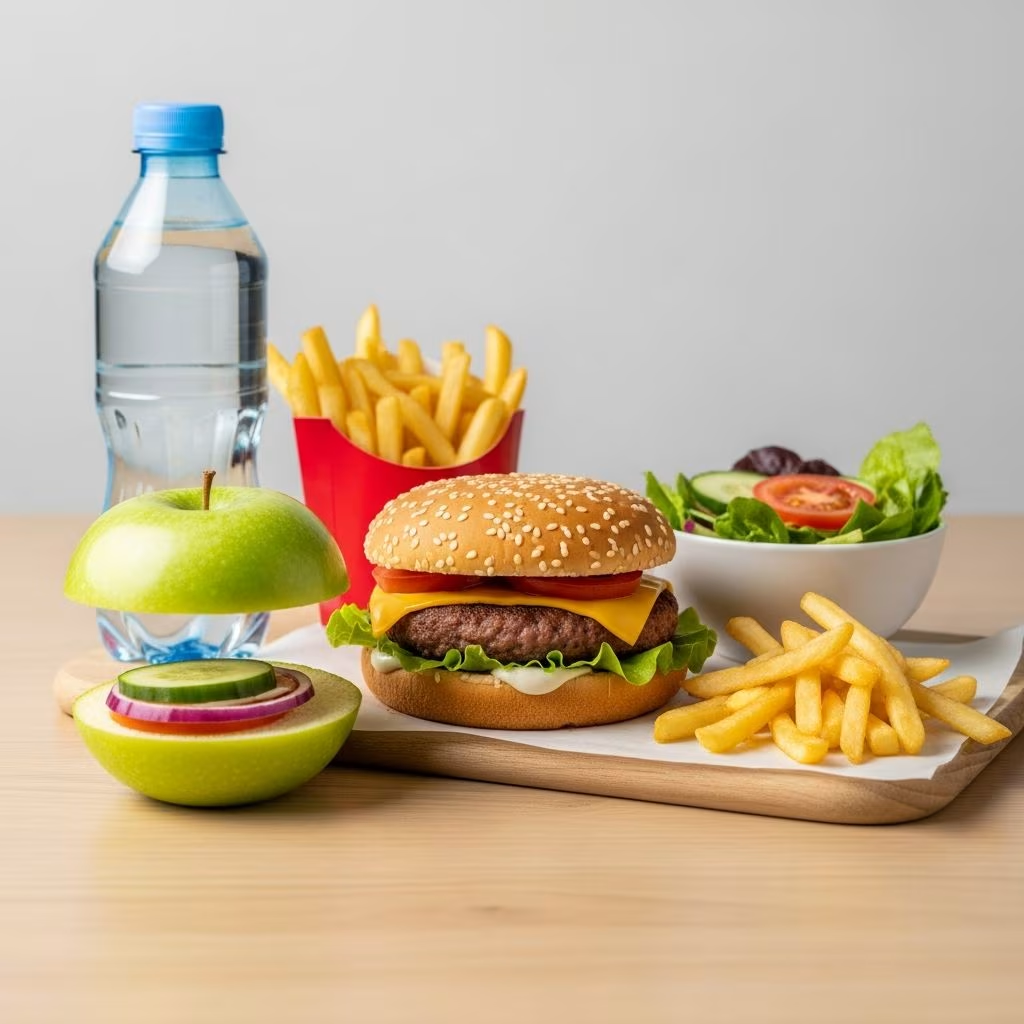
Fast food offers convenience but drains your wallet and health. Quitting it can save $200–$500 monthly while improving nutrition and energy levels. This roundup draws from expert advice on breaking the habit through planning, cooking, and mindset changes.
Why Quit Fast Food? The Financial and Health Impact
Fast food spending averages $1,200 annually per person in the U.S., per USDA data, often exceeding grocery budgets. Beyond costs, it contributes to obesity and related diseases costing $190 billion yearly in medical expenses.[USDA Consumer Expenditure Survey] Quitting redirects funds to savings or debt payoff.
- Average savings: $10–$20 per meal swapped for home-cooked equivalents.
- Health gains: Reduced sodium, sugars, and fats lower risks of heart disease and diabetes.
- Long-term wins: Builds cooking skills, cutting lifetime food costs by 30–50%.
Start by tracking expenses: Apps like Mint reveal fast food as 20–40% of discretionary spending for many households.
Step 1: Plan Your Meals Like a Pro
Meal planning prevents impulse buys. Dedicate Sunday to plotting weekly menus around sales flyers and pantry staples. This slashes waste and ensures variety without drive-thrus.
- Scan grocery ads for deals on proteins, veggies, and grains.
- Create a master list: Breakfasts (oatmeal batches), lunches (salad jars), dinners (one-pot meals).
- Prep in bulk: Cook rice, chop veggies, portion proteins for grab-and-go ease.
A sample weekly plan costs under $50 per person:
| Day | Breakfast | Lunch | Dinner |
|---|---|---|---|
| Monday | Yogurt parfait | Turkey wrap | Stir-fry chicken |
| Tuesday | Smoothie | Quinoa salad | Bean chili |
| Wednesday | Egg muffins | Lentil soup | Baked fish |
| Thursday | Oatmeal | Chickpea salad | Veggie pasta |
| Friday | Fruit/nuts | Leftovers | Taco night |
| Weekend | Pancakes | Sandwiches | Grill/rotisserie |
Step 2: Stock a Budget-Friendly Pantry
Build a core pantry to mimic fast food flavors cheaply. Staples like rice, beans, spices, and frozen veggies enable endless variations for pennies per serving.
- Essentials under $1/serving: Dry beans ($0.10/cup cooked), pasta ($0.20/serving), eggs ($0.25 each).
- Flavor boosters: Garlic powder, cumin, hot sauce, soy sauce—buy in bulk.
- Frozen savers: Berries, spinach, chicken breasts beat fresh prices and spoilage.
Invest $50 initially: Oats, peanut butter, canned tomatoes, broth. Rotate stock to avoid waste; use FIFO (first in, first out).
Step 3: Master Quick, Healthy Recipes
Fast food wins on speed—counter with 15–20 minute meals. Focus on sheet-pan bakes, slow-cooker dumps, and no-cook assemblies rivaling drive-thru times.
Breakfast Hacks
- Overnight oats: Mix oats, milk, fruit—ready in fridge overnight.
- Microwave mug eggs: Whisk, nuke 60 seconds for burrito filling.
Lunch on the Go
- Mason jar salads: Layers stay crisp 5 days.
- Wraps: Tortillas + hummus + veggies + protein.
Dinner Wins
- One-pot pasta: Boil all together in 12 minutes.
- Stir-fry: High-heat wok with pre-chopped mix (5 mins).
Recipe example: Budget Burrito Bowl – Rice, beans, salsa, cheese: $2/serving vs. $8 fast food.
Step 4: Overcome Cravings and Temptations
Cravings hit hardest at work or evenings. Stock ’emergency kits’: Nuts, apples, dark chocolate. Drink water first—thirst mimics hunger 40% of time.
- Mindset shift: View fast food as a treat, not default (limit to 1x/month).
- Accountability: Track ‘fast food free’ days; reward with non-food perks like movies.
- Work hacks: Pack thermos soups; join potlucks.
Replace routines: Evening walks over fries runs; office fruit bowl vs. vending.
Step 5: Budget and Track Your Progress
Allocate grocery budget: 50% produce, 30% proteins, 20% staples. Use cash envelopes for food—seeing it dwindle curbs overspending.
- Apps: YNAB for zero-based budgeting; Ibotta for rebates.
- Monthly audit: Compare fast food spend drop to savings growth.
- Scale up: Redirect $100/month saved to emergency fund or Roth IRA.
Federal Reserve data shows households cooking at home save 25% on food; compound over years builds wealth.[Federal Reserve Survey of Consumer Finances]
Common Pitfalls and How to Avoid Them
- Pitfall: Boredom – Solution: Theme nights (Taco Tuesday, Meatless Monday).
- Pitfall: Time crunch – Solution: Batch cook Sundays; use Instant Pot.
- Pitfall: Family resistance – Solution: Involve kids in prep; make it fun games.
- Pitfall: ‘Healthy’ traps – Solution: Read labels; whole foods first.
Long-Term Success: Make It a Lifestyle
After 30 days, habits solidify. Expand to gardening herbs, co-op buys, or foraging apps. Celebrate milestones: 3 months fast food-free? Splurge on quality steak dinner at home.
Communities like Reddit’s r/EatCheapAndHealthy offer 1,000+ recipes under $3. Success stories report $3,000+ yearly savings funneled to travel or debt freedom.
Frequently Asked Questions (FAQs)
Q: How much can I really save by quitting fast food?
A: Most save $200–$600/year initially, scaling to $1,000+ with family involvement and optimized grocery habits.
Q: What if I don’t like cooking?
A: Start simple—no-cook meals like salads, smoothies. YouTube 5-minute channels build skills fast.
Q: How do I handle eating out with friends?
A: Suggest picnics or home potlucks; order salads/apps to split costs.
Q: Is meal prepping time-consuming?
A: Initial 1–2 hours weekly yields 5–7 days’ meals, netting hours saved vs. daily drive-thrus.
Q: What about kids or picky eaters?
A: Sneak veggies in sauces/smoothies; let them choose from 3 options; involve in shopping.
Bonus: Fast Food Hacks for Transition
While quitting, use hacks: App coupons, value menus, share meals. But phase out—home versions cheaper long-term.
References
- Consumer Expenditure Survey — U.S. Department of Agriculture. 2023. https://www.bls.gov/cex/
- Survey of Consumer Finances — Federal Reserve Board. 2022-10-01. https://www.federalreserve.gov/econres/scfindex.htm
- Annual Obesity Costs — Centers for Disease Control and Prevention. 2024. https://www.cdc.gov/obesity/data/adult.html
- Emergency Fund Guidelines — Utah State University Extension. 2023. https://extension.usu.edu/finance/research/emergency-cash-stash
- Budgeting Basics — Truliant Federal Credit Union. 2024-01. https://www.truliantfcu.org/learn/saving-and-budgeting/nine-ways-to-keep-new-years-financial-resolutions
This article is general information, not personal financial advice. Consider your own situation, or speak with a licensed adviser, before acting on it.


