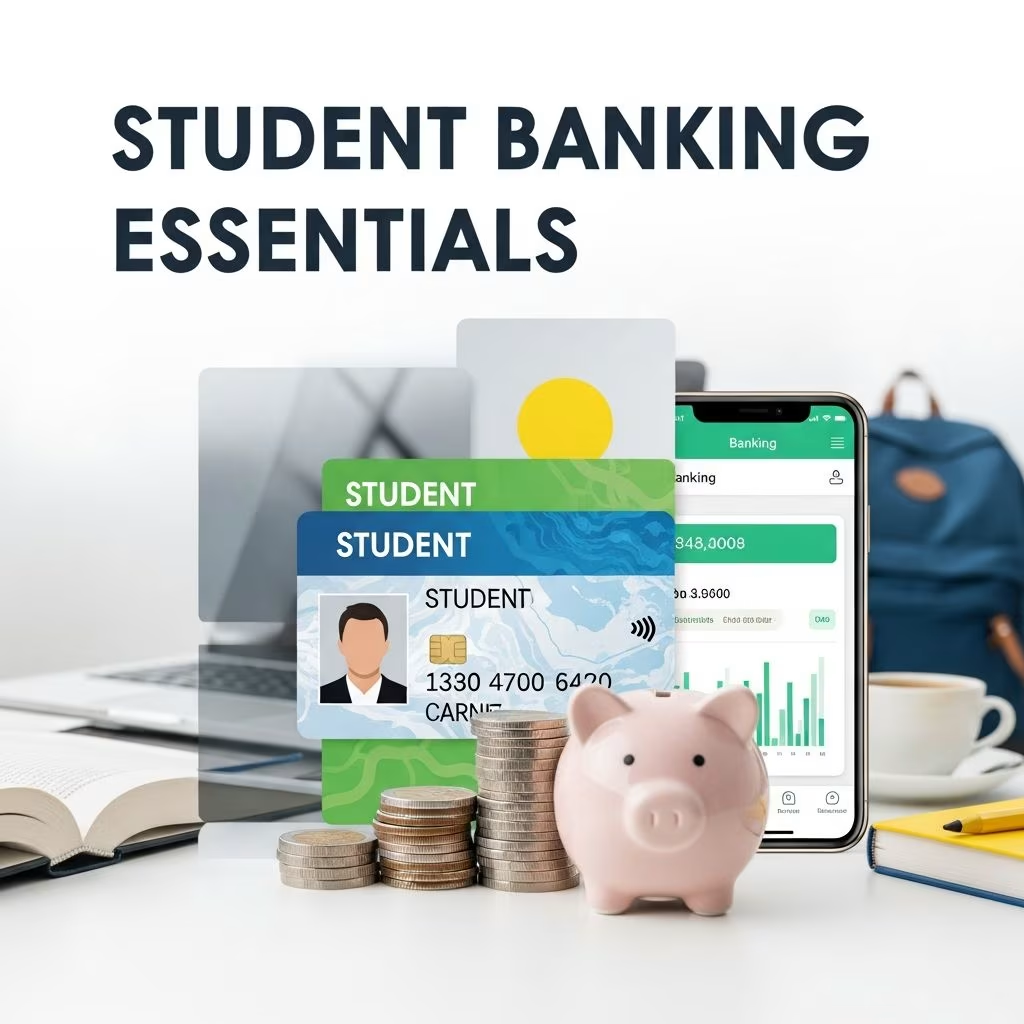
Embarking on higher education or even high school comes with new financial responsibilities. Student-specific checking and savings accounts offer tailored solutions to help young individuals manage daily expenses, build savings habits, and avoid common pitfalls like overdraft fees. These accounts typically feature waived monthly fees during enrollment, access to digital banking tools, and perks designed for academic life.
Why Choose Dedicated Student Accounts?
Standard bank accounts often impose maintenance fees or minimum balance requirements that can burden students with limited income. In contrast, student accounts prioritize accessibility and education. They provide no-fee structures for several years, integration with mobile apps for real-time tracking, and features like automatic savings transfers to encourage long-term planning.
- Fee Waivers: Many eliminate monthly service charges while you’re enrolled, often up to five years or until graduation.
- Mobile Accessibility: Apps enable deposits, transfers, and payments via services like Zelle, perfect for splitting bills or receiving allowances.
- Educational Tools: Alerts, budgeting features, and overdraft protections teach responsible money management.
Types of Student Checking Accounts Available
Banks categorize accounts by age and education level to match users’ needs. High school options involve parental oversight, while college versions promote independence.
| Account Type | Age Range | Key Features | Fee Structure |
|---|---|---|---|
| High School Checking | 13-17 | Parent co-owner required; linked to parent’s account; Autosave to savings | No monthly fee if conditions met |
| College Checking | 17-24 | Independent opening for 18+; Zelle, QuickDeposit; bonus offers | $0 for up to 5 years in school |
| Kids/Teens Banking | 6-17 | Parent-managed debit; money skills resources | No monthly fee |
High school accounts ensure safety through linkage to a parent’s qualifying checking account, excluding certain specialty accounts. College variants allow solo management post-18, with proof of enrollment.
Pairing Checking with Savings for Optimal Growth
A checking account handles transactions, but savings builds wealth. Student bundles often waive savings fees when linked for overdraft protection, automating transfers to grow funds effortlessly.
- Autosave Features: Round up purchases or schedule transfers to savings seamlessly.
- No-Fee Savings: Ideal for stashing refunds, gifts, or part-time earnings without erosion from charges.
- Overdraft Safeguards: Link savings to cover shortfalls, avoiding hefty fees up to $34 per incident.
Qualifying balances or deposits can maintain fee waivers post-graduation, transitioning smoothly to adult banking.
Eligibility Criteria and Opening Process
Opening requires meeting age, enrollment, and documentation standards. US students aged 18-24 can apply online for college accounts; 17-year-olds and internationals need branch visits.
- Gather Documents: SSN (for most), government ID, proof of enrollment or school details, expected graduation date.
- Choose Channel: Online for eligible applicants; in-branch for minors or verification needs. Bring parent/guardian for teen accounts.
- Link Accounts: Parents must connect to their personal Chase checking (certain exclusions apply).
- Approval: Subject to bank review; internationals provide passport and visa proofs.
Post-opening, activate digital tools like the mobile app for ATM locator, balance checks, and peer payments.
Maximizing Perks and Avoiding Pitfalls
Student accounts shine with incentives. New users might snag $100-$125 bonuses via qualifying transactions, like 10 debit purchases within 60 days.
- ATM Access: Thousands of fee-free machines nationwide; waivers for out-of-network use.
- Direct Deposits: Speed up refunds or paychecks; count toward fee avoidance ($500+ monthly).
- Cash Back Cards: Pair with student credit options for rewards on essentials.
Watch overdrafts: College accounts permit them (fees apply), but high school versions do not. Opt for protection transfers instead. Track via alerts to stay positive.
Digital Tools Empowering Student Finance
Modern banking apps transform account management. Chase Mobile offers QuickDeposit for check scans, Zelle for instant transfers, and customizable alerts for low balances or large spends.
Budgeting integrations help categorize expenses—groceries vs. entertainment—fostering habits that last beyond campus.
International Students: Inclusive Options
Foreign enrollees qualify, often needing in-person ID checks. Accounts provide US-centric tools like widespread ATMs and domestic payments, easing transition.
Long-Term Transition Strategies
Fee waivers end at graduation (max 5 years). Maintain via $1,500 balances, $500 deposits, or linked relationships. Upgrade seamlessly to total checking for continued benefits.[10]
Frequently Asked Questions (FAQs)
Can high schoolers open accounts without parents?
No, accounts for 13-17 require a parent/guardian co-owner and linkage to their qualifying checking account.
What documents prove student status?
School name, expected graduation, student ID, or enrollment letter. 17-year-olds apply in-branch.
Are there bonuses for new accounts?
Yes, up to $125 for completing transactions post-opening.
How to waive fees after school?
Maintain $500+ electronic deposits, $1,500 balance, or link to other Chase products.[10]
Do savings accounts have interest?
Rates vary; focus on no-fee access and growth tools during studies.
Building Financial Confidence from Day One
Student accounts bridge youthful spending with adult prudence. By leveraging fee-free periods, digital innovations, and savings automation, young bankers cultivate security. Start early: schedule a branch visit or apply online to harness these tools today.
References
- Chase High School Checking Account | Student Banking — Chase. 2025. https://www.chase.com/personal/checking/high-school-checking
- Best Student Checking Accounts of 2025 – Bankrate — Bankrate. 2025. https://www.bankrate.com/banking/checking/best-student-checking-accounts/
- Chase student account review: Everything you need to know – Wise — Wise. Recent. https://wise.com/us/blog/chase-student-account
- Compare Checking Accounts & Apply Online | Chase — Chase. 2025. https://personal.chase.com/personal/checking
- Chase College Checking Account | Student Banking — Chase. 2025. https://www.chase.com/personal/checking/student-checking
- For students | Chase Money Skills — Chase. Recent. https://www.chase.com/personal/financial-goals/students
- Opening Student Checking & Savings Accounts | Banking | Chase — Chase. Recent. https://www.chase.com/personal/banking/education/student/opening-student-checking-and-savings-accounts
This article is general information, not personal financial advice. Consider your own situation, or speak with a licensed adviser, before acting on it.