

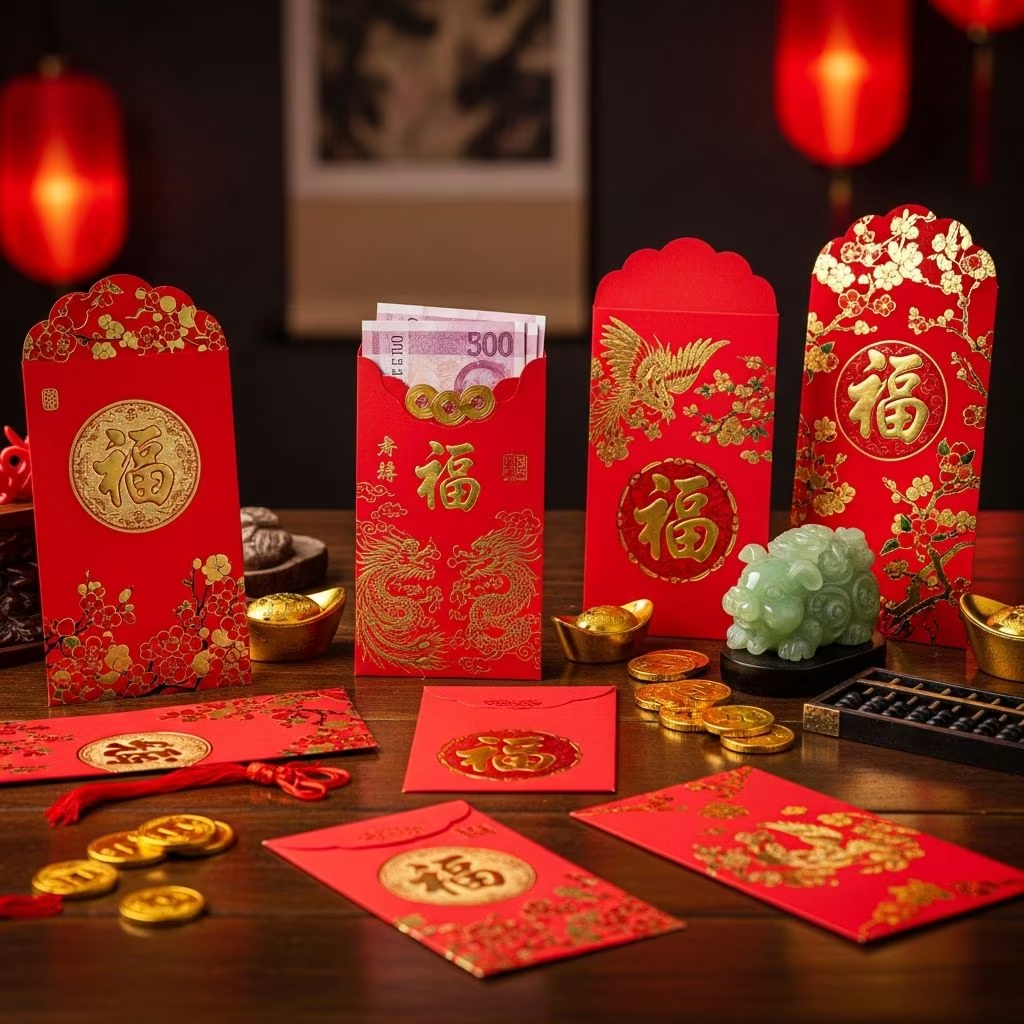
Understanding the Significance of Red Envelopes in Lunar New Year Celebrations
The Lunar New Year stands as one of the most significant celebrations across Asia, observed by millions of people in countries including China, Vietnam, Korea, Mongolia, and throughout diaspora communities worldwide. Central to these festivities is the practice of exchanging red envelopes, a tradition that extends far beyond a simple monetary gift. These vibrant packets carry deep cultural meaning, representing blessings, prosperity, and the transmission of goodwill from one generation to the next.
Red envelopes, known as “hongbao” in Mandarin Chinese, serve as tangible expressions of hope for the recipient’s success and happiness in the coming year. The color red itself holds paramount importance in Chinese culture, believed to ward off negative energy and attract good fortune. When families gather during Lunar New Year, the exchange of red envelopes becomes a cherished ritual that bonds generations together and reinforces cultural identity, particularly for diaspora communities seeking to maintain connections with their heritage.
The Historical Roots and Evolution of Red Envelope Traditions
The practice of giving red envelopes has ancient origins deeply embedded in Chinese agrarian traditions and spiritual beliefs. Historically, Lunar New Year marked the most important time in the agricultural calendar when farmers could finally rest from their labor in the fields. During this precious period, families would reunite, and the exchange of gifts became a way to share prosperity and ensure continued blessings throughout the year ahead.
The symbolism of red envelopes evolved through centuries of cultural practice, intertwining with various myths and legends. According to tradition, the color red was discovered to have protective properties—villagers observed that wearing red clothing and displaying red decorations could ward off evil spirits and misfortune. This belief system gradually formalized into structured gifting practices where red packets became the standard vessel for transmitting financial blessings and goodwill wishes.
Over time, the practice spread throughout East and Southeast Asia, adapting to local customs while maintaining core symbolic elements. Different cultures incorporated their own unique twists, yet the fundamental meaning remained constant: red envelopes represent the giver’s hopes for the recipient’s prosperity and happiness.
Cultural Importance Across Different Asian Communities
While red envelopes originated in Chinese culture, their significance has expanded throughout the Asian world. Korean communities celebrate their own Lunar New Year with distinct traditions, though the exchange of gifts during this time remains important. Vietnamese Tet celebrations similarly incorporate gift-giving practices as families prepare their homes and gather together. Mongolian communities, celebrating Tsagaan Sar, emphasize family reunions and the blessing of elders, creating their own framework for honoring and supporting loved ones.
For diaspora communities, particularly Chinese Americans, Lunar New Year represents far more than a simple holiday marked by festive decorations. It serves as a vital connection to ancestral heritage and provides younger generations with tangible ways to understand and participate in their cultural traditions. Families that may not have access to extended time off work still prioritize gathering for celebratory meals and exchanging red envelopes, maintaining these practices on a smaller scale while preserving their spiritual and emotional significance.
The Symbolic Language of Red Envelopes
Red envelopes communicate through a rich symbolic language that extends beyond their monetary contents. The color red itself represents luck, prosperity, and protection against negative forces. The act of giving, rather than the amount enclosed, carries the primary significance—it represents the giver’s good intentions and blessings for the recipient’s future.
The envelope itself, typically made of red paper or fabric, often features gold or silver decorative elements. These metallic accents add layers of symbolism, with gold representing wealth and prosperity while silver suggests purity and clarity. Many envelopes include written characters or phrases wishing recipients good fortune, longevity, or happiness in the year ahead.
The presentation of red envelopes follows specific etiquette guidelines that vary slightly across cultures. In Chinese tradition, envelopes should never be opened in front of the giver, as this could be interpreted as disrespectful or dismissive of the blessing they offer. The timing of giving—typically during family gatherings or chance encounters during the celebration period—adds ceremonial weight to the exchange.
Family Gatherings and Red Envelope Traditions
Red envelope giving reaches its peak during the family reunion dinner on Lunar New Year’s Eve, known as Nian Ye Fan in Chinese culture. This meal represents the focal point of celebrations, bringing together relatives who may have traveled great distances to participate. The dinner itself features symbolic dishes laden with meaning, while red envelope exchanges punctuate the evening with moments of connection and blessing-giving.
The practice extends throughout the celebration period, not limiting itself to a single evening. As families visit relatives, friends, and neighbors, red envelopes continue to circulate, spreading goodwill and prosperity wishes throughout the community. Elders typically give envelopes to younger family members, establishing a hierarchy of blessing that reinforces family bonds and cultural values.
In contemporary settings, particularly for diaspora families in Western countries, the red envelope exchange often concentrates on a single gathering since many members cannot take extended time away from work and school. Despite this adaptation, families maintain the essential meaning and emotional weight of the tradition, ensuring that younger generations understand its importance and participate in its perpetuation.
Modern Adaptations and Digital Red Envelopes
As technology advances, red envelope traditions have evolved to accommodate modern lifestyles and long-distance relationships. Digital red envelopes, transmitted through mobile payment apps and social platforms, now allow families separated by geography to participate in the tradition instantaneously. These virtual envelopes maintain the symbolic significance while adjusting to contemporary communication methods.
The shift toward digital giving doesn’t diminish the tradition’s importance but rather expands its accessibility. Family members who cannot physically gather can still exchange blessings and monetary gifts, keeping the tradition alive across continents. Some families combine both physical and digital approaches, creating a blended celebration that honors tradition while embracing practical modern realities.
The Food Connection: Symbolic Dishes and Red Envelope Occasions
Red envelope exchanges intertwine with the culinary traditions of Lunar New Year celebrations. The reunion dinner features carefully selected dishes, each carrying symbolic meaning related to prosperity and good fortune. As families enjoy dumplings reminiscent of ancient gold ingots, whole fish symbolizing abundance, longevity noodles representing extended life, and whole chickens representing family unity, they simultaneously exchange red envelopes that reinforce these wishes for the coming year.
The preparation of these symbolic meals often involves multiple family members working together, creating bonding opportunities that parallel the blessing-giving nature of red envelopes. Children learn simultaneously about their cultural heritage through food preparation and through receiving red envelopes from elders, creating multi-sensory connections to tradition that strengthen cultural identity.
Cultural Identity and Red Envelopes for Diaspora Communities
For Asian American families and other diaspora communities, red envelope traditions serve as anchors to cultural heritage amid the pressures of assimilation. These practices provide concrete, tangible ways for younger generations to experience their ancestral culture and understand the values their parents and grandparents hold dear. The ritual of receiving red envelopes becomes a moment of cultural transmission, carrying not just money but also blessings, hope, and connection to generations past.
Beyond the monetary value, red envelopes represent resilience and cultural pride, particularly important during periods when anti-Asian sentiment rises. The continued practice of Lunar New Year celebrations and red envelope exchanges allows families to affirm their cultural identity and teach younger members the importance of maintaining traditions despite external pressures.
Etiquette and Proper Red Envelope Practices
Understanding proper red envelope etiquette shows respect for the tradition and the cultures that practice it. Key guidelines include:
- Present red envelopes with both hands as a sign of respect and sincerity
- Never open an envelope immediately upon receiving it; wait until you are alone
- Avoid giving envelopes in sets of four, as the number four sounds similar to the word for death in Chinese
- Do not give envelopes containing amounts ending in eight, which is considered lucky and reserved for significant occasions
- Ensure bills inside are new and crisp, representing fresh beginnings
- Include odd numbers of bills when possible, as even numbers suggest finality
These practices demonstrate cultural awareness and respect, whether participating as a member of the culture or as an interested outsider honoring this tradition.
The Broader Context: Lunar New Year Celebrations Beyond Red Envelopes
While red envelopes stand as iconic symbols of Lunar New Year, they represent just one component of comprehensive celebration practices. The holiday incorporates cleaning homes to remove bad luck, decorating with red and gold items, wearing new clothes, preparing symbolic foods, and engaging in festivities like lion and dragon dances. Families also pay respects to ancestors, make offerings to deities, and participate in community celebrations that extend the festive spirit throughout neighborhoods.
The Lantern Festival, occurring on the fifteenth day of the first lunar month, marks the conclusion of Lunar New Year celebrations. During this festival, children carry red lanterns and families consume sweet rice flour dumplings, creating a final ceremonial moment before returning to regular routines. Yet the blessings transmitted through red envelopes throughout the celebration period continue to resonate throughout the year.
Why Red Envelopes Matter in the Modern World
In an increasingly digital and fast-paced world, red envelope traditions remind us of the importance of pausing to honor relationships, transmit blessings, and celebrate cultural identity. These seemingly simple red packets carry profound meaning about family bonds, intergenerational connection, and the perpetuation of cultural values. They represent a practice that has endured for centuries while continuing to adapt to contemporary circumstances.
Whether exchanged physically or digitally, within nuclear families or extended communities, red envelopes embody hopes for prosperity, protection, and happiness. They transform financial transactions into spiritual exchanges, infusing monetary gifts with cultural significance and emotional weight. For families worldwide, the practice of giving red envelopes during Lunar New Year ensures that ancient traditions remain vital and meaningful in modern life.
Frequently Asked Questions About Red Envelopes
What is the traditional amount to put in a red envelope?
There is no single correct amount; the gesture matters more than the monetary value. Amounts should be appropriate to the giver’s relationship to the recipient and financial situation. The practice focuses on transmitting blessings rather than achieving specific financial thresholds.
Who typically receives red envelopes?
Traditionally, younger family members and unmarried individuals receive red envelopes from elders and established family members. However, modern practice varies, with some families exchanging red envelopes among all adult members as well.
Can red envelopes be given outside of Lunar New Year?
While traditionally associated with Lunar New Year, some families and businesses give red envelopes during other auspicious occasions, though the practice is less common outside this primary celebration period.
What should someone do if they cannot give red envelopes due to financial constraints?
The tradition emphasizes the blessing and gesture rather than the specific amount. A small amount or even a red envelope containing a heartfelt written message can carry the same spiritual significance as larger monetary gifts.
References
- Lunar New Year – CultureAlly — CultureAlly. Accessed February 2026. https://www.cultureally.com/blog/lunar-new-year
- Celebrating Lunar New Year 2025 — National Association for the Education of Young Children (NAEYC). 2025. https://www.naeyc.org/resources/blog/lunar-new-year-2025
- Digging Up the Roots of Holiday Traditions: Lunar New Year — Tenement Museum. Accessed February 2026. https://www.tenement.org/blog/digging-up-the-roots-of-holiday-traditions-lunar-new-year/
- The Lunar New Year: Rituals and Legends — Asia for Educators, Columbia University. Accessed February 2026. https://afe.easia.columbia.edu/special/china_general_lunar.htm
- Chinese New Year — Wikipedia. Accessed February 2026. https://en.wikipedia.org/wiki/Chinese_New_Year
- Chinese New Year 2026: Traditions, Horse Year Celebration Calendar — China Highlights. 2026. https://www.chinahighlights.com/travelguide/special-report/chinese-new-year/
- Chinese New Year Traditions — Lam Museum of Anthropology, Wake Forest University. Accessed February 2026. https://lammuseum.wfu.edu/education/teachers/chinese-new-year/chinese-new-year-traditions/
This article is general information, not personal financial advice. Consider your own situation, or speak with a licensed adviser, before acting on it.


