

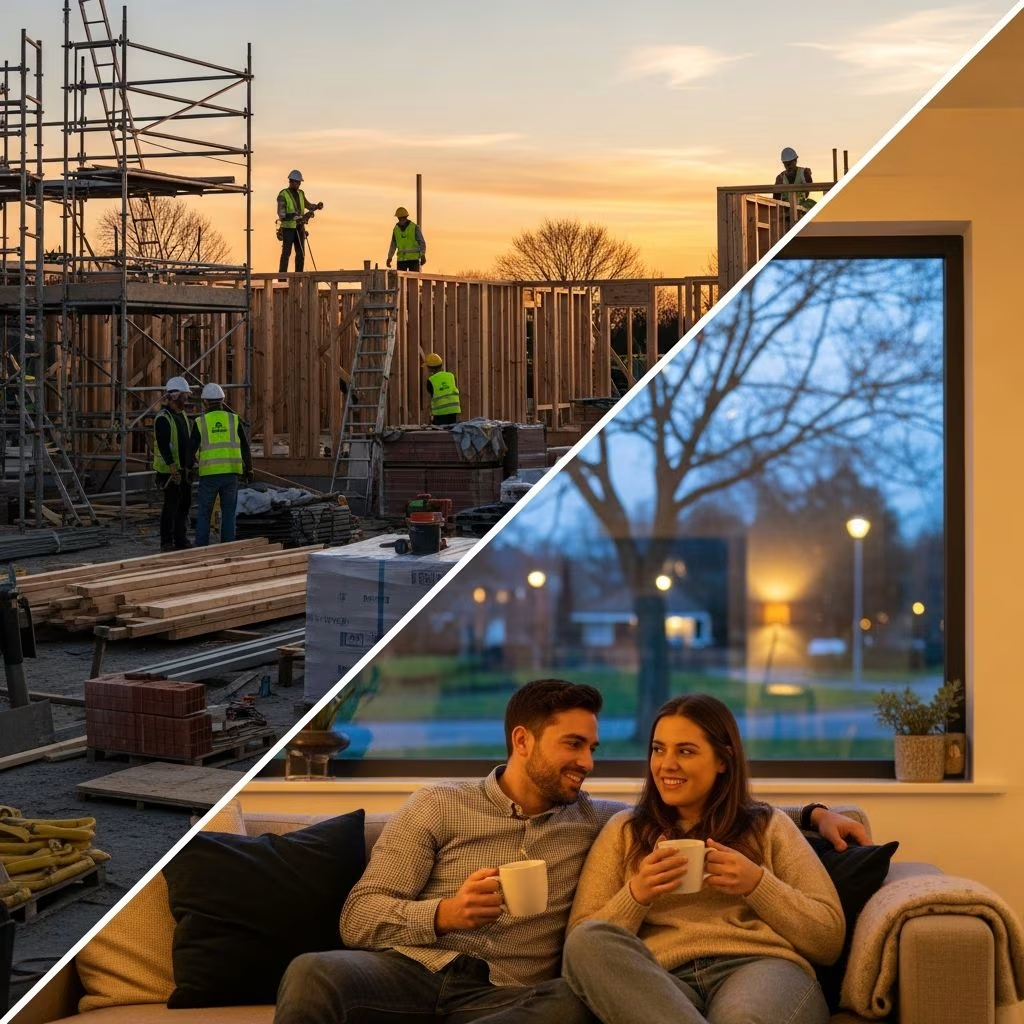
Choosing between constructing a custom home from the ground up or purchasing a ready-made property is a pivotal moment for many aspiring homeowners. This decision impacts not only your immediate finances but also your long-term satisfaction, lifestyle, and maintenance responsibilities. Factors like budget constraints, desired customization, location preferences, and timeline urgency play crucial roles. In this comprehensive guide, we delve into the nuances of each path, backed by reliable data and insights, to empower you with the knowledge needed to proceed confidently.
Understanding the Core Differences
Building a home offers unparalleled personalization, allowing you to design every element to match your vision, from layout to finishes. However, it demands significant time, oversight, and capital upfront. Buying an existing home, conversely, provides speed and often lower initial hurdles, though it may require compromises on features or necessitate renovations. According to industry analyses, the median cost to build a new single-family home in the U.S. averaged around $428,000 in recent years, while existing home prices hovered near $400,000, though these figures fluctuate by region and market conditions.
Key distinctions include financing structures—traditional mortgages for purchases versus specialized construction loans for builds—and the involvement level required from you as the homeowner. Building suits those with patience and a clear blueprint in mind, while buying appeals to those seeking immediacy.
Advantages of Constructing Your Own Home
Opting to build grants control over the final product, ensuring it aligns perfectly with your needs. Here’s a breakdown of the primary benefits:
- Full Customization: Select layouts, materials, and features tailored to your family, such as open-concept kitchens or home offices, without retrofitting constraints.
- Modern Standards: New builds incorporate contemporary materials free from outdated hazards like lead paint or asbestos, plus superior energy-efficient designs that lower utility bills long-term.
- Reduced Maintenance: Brand-new systems like HVAC, plumbing, and roofing come with warranties, minimizing early repair costs and offering peace of mind.
- Minimal Buyer Competition: Once land is secured, focus shifts to construction rather than outbidding others in hot markets.
- Community Fresh Start: New developments foster neighbor bonds as residents move in simultaneously.
Energy efficiency stands out: Modern homes can achieve 20-30% lower energy use compared to older structures built before stringent codes.
Drawbacks of New Construction Projects
Despite the appeal, building introduces complexities that can strain resources. Consider these challenges:
- Extended Timelines: Construction typically spans 6-12 months or more, delayed by weather, permits, or supply shortages, versus 30-60 days for purchases.
- Budget Overruns: Unexpected expenses from site preparation, material price hikes, or design changes often inflate costs by 10-20%.
- Intensive Oversight: Homeowners must coordinate contractors, approve plans, and manage finances, demanding substantial time and expertise.
- Financing Hurdles: Higher-interest construction loans require phased disbursements and larger down payments due to elevated lender risk.
- Location Limitations: Prime lots may be scarce or pricey, pushing builds to outskirts with longer commutes.
| Aspect | Building a Home | Average Impact |
|---|---|---|
| Timeline | 6-18 months | Delays common |
| Cost Variance | 10-25% overruns | Site-dependent |
| Effort Level | High | Daily decisions |
Benefits of Purchasing an Existing Property
Buying a pre-built home accelerates the process and often uncovers hidden value. Top advantages include:
- Swift Move-In: Closings average 44 days, ideal for urgent relocations or rentals ending soon.
- Cost Predictability: Fixed purchase prices avoid construction surprises, frequently lower than equivalent new builds.
- Negotiation Leverage: In buyer’s markets, haggle on price, especially for lingering listings.
- Mature Landscaping: Established yards with trees and gardens save thousands in upfront planting.
- Renovation Flexibility: Customize gradually, spreading costs over time rather than all at once.
Existing homes dominate the market, comprising over 90% of sales, offering diverse styles and neighborhoods.
Challenges with Pre-Existing Homes
No option is flawless; buying carries its own risks:
- Bidding Wars: Seller’s markets drive up prices through competition.
- Hidden Issues: Older structures may harbor maintenance needs like roof repairs or outdated wiring.
- Energy Inefficiency: Pre-1980s homes often lack insulation, inflating bills.
- Style Compromises: Finding an exact match is rare, potentially requiring adaptations.
- Potential Hazards: Asbestos or lead in vintage properties demands inspection and remediation.
Financial Breakdown: Costs Compared
Cost is decisive. Building averages $150-$400 per square foot, totaling $300,000-$800,000 for a 2,000 sq ft home, excluding land ($50,000-$200,000). Buying medians sit at $412,000 nationally, with renovations adding $20,000-$100,000.
| Cost Category | Building Estimate | Buying Estimate |
|---|---|---|
| Land/Acquisition | $100,000+ | Included in price |
| Construction/Purchase | $300,000-$500,000 | $350,000-$450,000 |
| Financing Fees | 2-5% higher rates | Standard mortgage |
| Utilities/Landscaping | $20,000-$50,000 | Often established |
| Total (Avg. 3BR) | $450,000-$700,000 | $400,000-$550,000 |
Land loans demand 20-25% down, construction loans interest-only during builds, converting to permanent mortgages. Buyers access conventional 3-5% down options via FHA/VA. Tax credits for energy upgrades can offset costs in either scenario.
Navigating Financing Pathways
Funding differs markedly. For builds:
- Secure land loan.
- Obtain construction-to-permanent loan (one-time close simplifies).
- Convert post-completion.
Purchases use straightforward mortgages. Prequalify early to gauge affordability; tools from lenders estimate payments based on credit and income.
Timeline and Lifestyle Fit
Urgency matters—if relocating for work, buying wins. Families desiring legacy features like generational suites may favor building. Assess via checklists: Do you prioritize speed or specificity?
Steps to Decide and Proceed
- Budget Audit: Calculate savings, income, debts.
- Market Research: Compare local new developments vs. resales.
- Professional Consult: Engage realtors, builders, lenders.
- Site Visits: Inspect builds in progress, existing homes.
- Projections: Model 5-10 year costs including maintenance.
Frequently Asked Questions
Is building cheaper than buying?
Not typically; new builds often exceed existing home prices due to land and labor, but customization value may justify it.
How long does building take?
6-12 months standard, longer with custom specs or delays.
Can I finance a build with a regular mortgage?
No, construction loans are required initially.
What if I buy and renovate?
A hybrid: Quicker than building, customizable, financed via FHA 203(k) loans.
Are new homes more energy-efficient?
Yes, adhering to updated codes for better insulation and appliances.
Final Thoughts on Your Path Forward
Weigh your priorities—customization and modernity versus speed and simplicity. Consult professionals tailored to your area for personalized advice. Whether building your vision or selecting a starter home, informed steps lead to lasting satisfaction.
References
- Is it cheaper to build or buy a house? – Rocket Mortgage — Rocket Mortgage. 2023. https://www.rocketmortgage.com/learn/building-a-house-vs-buying
- Is It Better to Build or Buy a House? Pros, Cons, and Costs Explained — Buildern. 2024. https://buildern.com/resources/blog/is-it-better-to-build-or-buy-house/
- Should I Buy Or Build A House? Pros And Cons — Bankrate. 2025-01-15. https://www.bankrate.com/real-estate/build-or-buy-a-house/
- Building vs. Buying: Weighing the Pros and Cons — BHHS Select STL. 2024. https://bhhsselectstl.com/view-blog/building-vs-buying-weighing-the-pros-and-cons
- Buy, Build or Fix: Pros and Cons for Home Buyers — NerdWallet. 2024-06-10. https://www.nerdwallet.com/mortgages/learn/fix-build-or-buy-a-house
This article is general information, not personal financial advice. Consider your own situation, or speak with a licensed adviser, before acting on it.


