

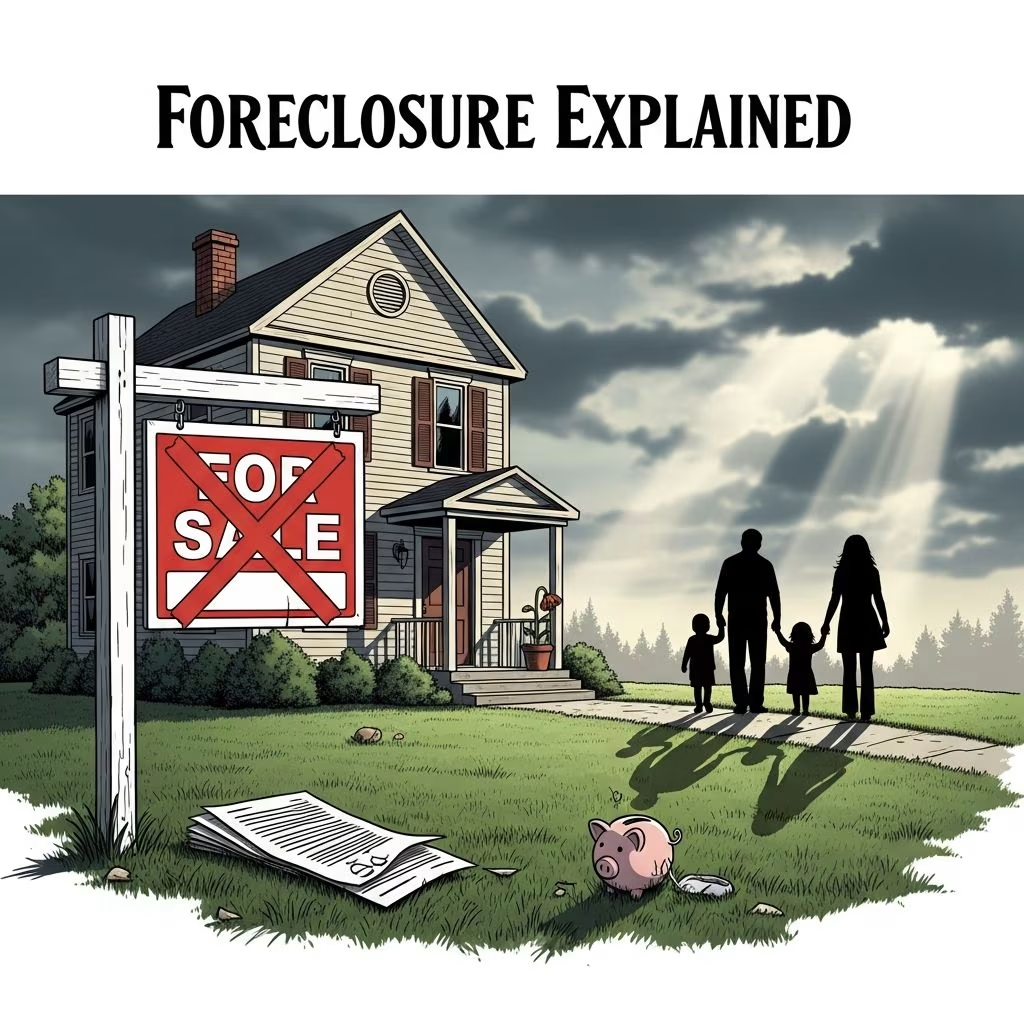
Foreclosure represents a critical legal mechanism that lenders employ when borrowers fail to meet mortgage obligations, ultimately allowing the seizure and sale of the property to recover outstanding debts. This process varies significantly across states but consistently results in the loss of homeownership rights for the borrower.
The Fundamentals of Mortgage Default and Foreclosure Initiation
A mortgage default occurs when a homeowner misses payments, typically after 90 days, triggering the lender’s right to initiate foreclosure proceedings. The home serves as collateral, meaning the lender can legally pursue repossession to recoup losses. Borrowers often receive initial notices warning of delinquency, providing a window—usually several months—to remedy the situation before formal action begins.
Early intervention is crucial; contacting the lender immediately upon financial hardship can uncover options like payment plans or temporary forbearance, preventing escalation.
Judicial Foreclosure: The Court-Supervised Path
In states mandating judicial foreclosure, lenders must file a lawsuit against the borrower. This process grants homeowners an opportunity to contest the action in court, potentially delaying proceedings and negotiating resolutions.
- Lender files a complaint detailing the default and amount owed.
- Borrower has 20-30 days to respond, raising defenses such as payment disputes or lender errors.
- If unresolved, a judge issues a foreclosure decree, leading to a sheriff-conducted auction.
This method ensures due process but extends timelines, often spanning 6-12 months or longer.
Non-Judicial Foreclosure: Streamlined Power of Sale
Non-judicial foreclosure bypasses courts, relying on a ‘power of sale’ clause in the deed of trust. It’s faster, typically concluding in 3-6 months, as trustees handle notices and auctions without judicial oversight.
- Notice of default recorded publicly after 90-120 days of delinquency.
- Notice of sale follows, scheduling a public auction after a statutory waiting period.
- Highest bidder wins; if the lender buys, they evict occupants.
About half of U.S. states, including Texas and California, favor this efficient approach.
Timeline Variations Across States
Foreclosure durations differ by jurisdiction and type:
| State Example | Foreclosure Type | Average Timeline | Key Features |
|---|---|---|---|
| North Carolina | Power of Sale | 120-150 days | 10-day upset bid periods post-auction |
| Texas | Non-Judicial | 180 days | Deed of trust required with power of sale |
| New York | Judicial | 1-2 years | Court filings mandatory |
These timelines include mandatory notices and redemption periods where borrowers might reclaim the property.
Credit Consequences: Long-Term Financial Scars
Foreclosure devastates credit profiles, dropping scores by 100-200 points and lingering on reports for seven years. It signals high risk to future lenders, inflating borrowing costs or blocking approvals.
Post-foreclosure, rebuilding involves secured cards, on-time payments, and disputing inaccuracies via credit bureaus.
Strategies to Halt Foreclosure Before It’s Too Late
Proactive measures can interrupt the process:
- Loan Modification: Adjust terms like interest rates or extending duration for affordability.
- Forbearance: Pause payments temporarily, repaying later.
- Short Sale: Sell below mortgage balance with lender approval, avoiding full foreclosure stain.
- Deed-in-Lieu: Voluntarily transfer title to lender, often less damaging to credit.
- Bankruptcy: Chapter 13 halts proceedings via automatic stay, restructuring debts.
Homeowners should explore government programs like FHA-HAMP for eligible mortgages.
Post-Foreclosure Realities: Eviction and Deficiency Judgments
After auction, new owners—often the lender—gain possession. Borrowers receive eviction notices if not vacating voluntarily. Some states allow deficiency judgments, pursuing borrowers for sale shortfalls, though many ban this via anti-deficiency laws.
Federal Protections and Borrower Rights
The CARES Act and other regulations mandate loss mitigation before foreclosure on federally backed loans. Borrowers must receive clear notices and opportunities for mediation in certain states.
HOA and Condo Association Foreclosures
Beyond mortgages, homeowners’ associations can foreclose for unpaid dues via liens, following specific statutes like those in North Carolina.
Frequently Asked Questions
What triggers the start of foreclosure?
Typically, 3-4 missed payments, though servicers issue pre-foreclosure notices earlier.
Can I stay in my home during foreclosure?
Yes, until auction and eviction, but rights diminish post-sale.
How does foreclosure affect renting or buying later?
It complicates approvals; wait 2-7 years depending on loan type and score recovery.
Is there a right to redeem the property?
Some states offer redemption periods post-sale by paying full amount plus costs.
What role does the trustee play?
In non-judicial cases, trustees manage sales under deed of trust terms.
Navigating Foreclosure: Resources for Support
Consult HUD-approved counselors via 888-995-HOPE or state housing agencies. Legal aid societies offer free advice on defenses. Document all lender communications meticulously.
Understanding these elements empowers homeowners facing distress. Early action preserves equity and averts irreversible damage.
References
- How does foreclosure work? — Consumer Financial Protection Bureau. 2023. https://www.consumerfinance.gov/ask-cfpb/how-does-foreclosure-work-en-287/
- Foreclosure: What it means and how to avoid it — Rocket Mortgage. 2024. https://www.rocketmortgage.com/learn/foreclosure-definition
- SAR Home Foreclosure Process — FHFA Office of Inspector General. 2022-10-01. https://www.fhfaoig.gov/Content/Files/SAR%20Home%20Foreclosure%20Process.pdf
- Understanding Default and Foreclosure — University of Wisconsin Extension. 2021-01. https://finances.extension.wisc.edu/files/2021/01/Understanding-Default-and-Foreclosure-2.1011.pdf
- Foreclosures — North Carolina Judicial Branch. 2025. https://www.nccourts.gov/help-topics/housing/foreclosures
- The Foreclosure Process — Texas State Law Library. 2024. https://guides.sll.texas.gov/foreclosure/the-foreclosure-process
This article is general information, not personal financial advice. Consider your own situation, or speak with a licensed adviser, before acting on it.


