

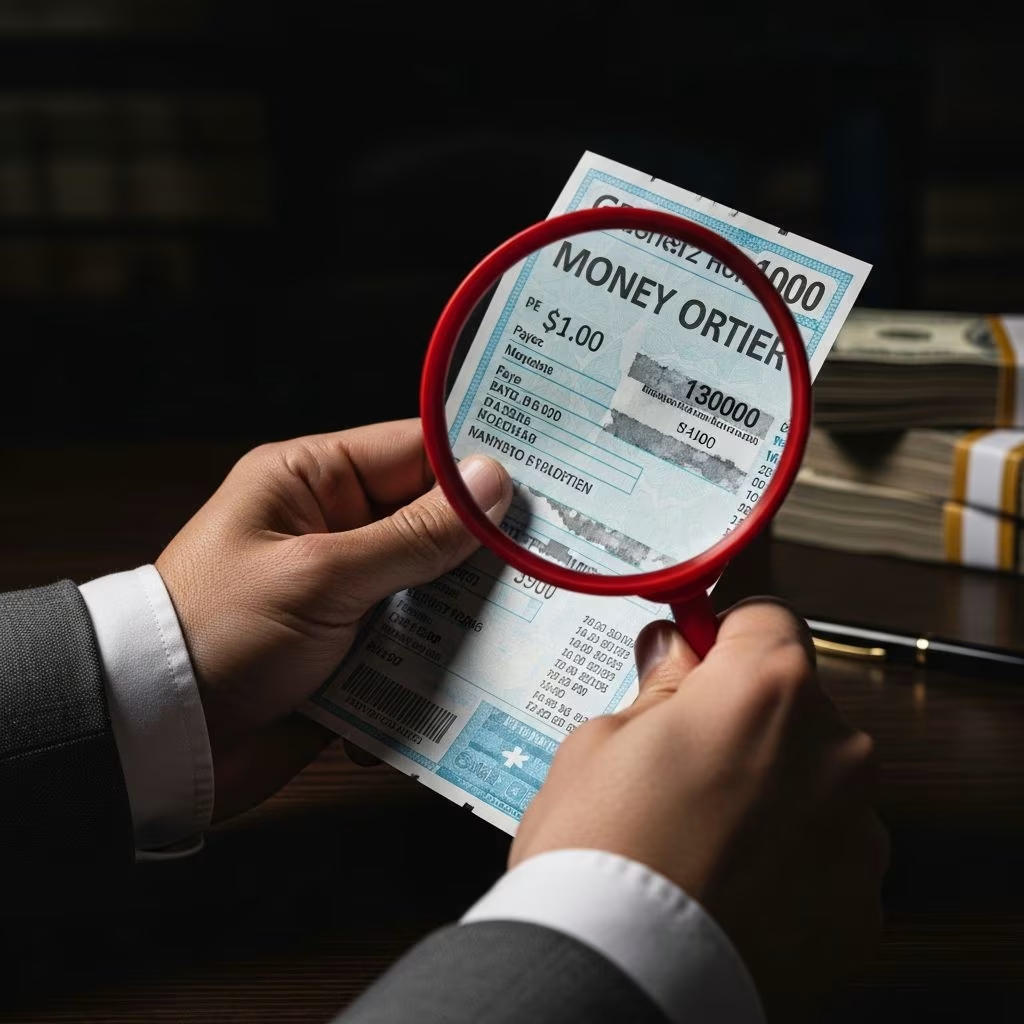
Money orders serve as a popular choice for secure payments, especially when trust is limited or bank accounts are unavailable. However, their ease of use makes them a prime target for fraudsters who forge documents or manipulate transactions to steal funds. Understanding these threats allows individuals to safeguard their money effectively.
Understanding the Appeal of Money Orders to Criminals
Money orders function like prepaid checks, issued by providers such as the U.S. Postal Service, Western Union, or MoneyGram. Buyers pay upfront with cash or debit, receiving a document that recipients can cash or deposit without linking to personal bank details. This anonymity attracts scammers, who exploit the delay in fraud detection—often days or weeks—between deposit and bank reversal.
Criminals favor money orders because they mimic legitimate payments closely. Forged versions may include sophisticated watermarks or heat-sensitive features, fooling initial inspections. Unlike wire transfers, which are irreversible, money orders create a false sense of security, enabling schemes where victims send back portions of “overpayments” before the fake clears.
Common Tactics Employed by Money Order Scammers
Fraudsters deploy various strategies to ensnare victims. One prevalent method involves sending an unexpectedly large money order for a small purchase, like a used item online, then requesting the excess via wire or another money order. Victims deposit the fake, see temporary funds availability, and forward money, only to face bank deductions later.
- Overpayment Ploys: Scammers “accidentally” send more than owed, urging quick refunds for fabricated emergencies, such as medical bills or family crises.
- Impersonation Frauds: Posing as employers, landlords, or buyers, they demand money orders for rent, jobs, or deals that sound ideal.
- Urgency Manipulation: Pressure tactics invoke sympathy, threats, or deadlines to bypass caution, like rescuing a supposed kidnapping victim.
- International Twists: Requests for cross-border money orders complicate verification and recovery.
These tactics prey on goodwill and haste. Poor grammar in communications or refusal of digital payments like Venmo often signals deceit.
Physical and Digital Red Flags in Suspicious Money Orders
Examine documents closely for tampering or forgery signs. Altered amounts show erased lines or mismatched ink. Legitimate orders feature security elements: U.S. Postal Service versions have specific anti-counterfeiting patterns; others use watermarks visible under light.
| Feature | Legitimate Indicators | Fraud Warnings |
|---|---|---|
| Watermark | Clear image when held to light | Absent or blurry |
| Serial Number | Matches issuer records | Invalid upon verification |
| Amount Line | Smooth, no erasures | Smudges or corrections |
| Paper Quality | High-grade, secure thread | Thin or standard printer paper |
Providers like MoneyGram embed heat-sensitive inlays that change color when rubbed. If unfamiliar, visit an issuing outlet for inspection. Digital communications accompanying orders often contain errors, unsolicited offers, or demands for alternative payments.
Step-by-Step Verification Protocols
Before handling any money order, implement rigorous checks. Start by contacting the issuer using details printed on the document—not from accompanying messages—to validate the serial number.
- Call Issuer Directly: Use official websites or numbers for USPS, Western Union, or MoneyGram to confirm issuance and amount.
- Inspect Physically: Check for security features against provider guidelines.
- Delay Deposits: Wait full clearance—up to weeks—before spending or refunding.
- Retain Records: Store copies of orders, receipts, and communications for potential disputes.
Banks provisionally credit deposits, but fraud discovery reverses them, holding victims liable. Avoid writing checks against unverified funds.
Protective Habits for Everyday Transactions
Build defenses through awareness. Reject payments insisting on money orders exclusively, especially from strangers or online contacts. Prefer peer-to-peer apps like PayPal or Zelle for their traceability and reversibility.
- Block unsolicited contacts pushing urgent payments.
- Verify identities before wiring or sending funds.
- Research offers; if too good, it’s likely false.
For trusted exchanges with family, money orders remain viable if verified properly. Always keep receipts, which allow status checks or stops if uncashed.
Consequences of Falling Victim and Recovery Paths
Victims lose deposited refunds once fakes bounce, facing bank fees and credit impacts. Emotional toll includes stress from disputes. Swift action mitigates damage: contact your bank immediately to flag the deposit.
Report to local police for theft records. Since mail involvement, notify U.S. Postal Inspectors. File with FTC at ReportFraud.ftc.gov for trends tracking. Issuers like Fidelity Express offer support lines for sent orders.
Modern Alternatives to Minimize Exposure
Shift to digital for security. Apps provide receipts, disputes, and buyer protections absent in money orders.
| Method | Pros | Cons | Best For |
|---|---|---|---|
| PayPal/Venmo | Reversible, insured | Fees possible | Online sales |
| Zelle | Fast, bank-integrated | Irreversible | Known contacts |
| Cash Apps | Convenient | Fraud risks | Small amounts |
| Bank ACH | Secure, low-cost | Slower | Rent/utilities |
Avoid crypto, gift cards, or wires demanded by unknowns—hallmarks of scams.
Frequently Asked Questions
Can I cancel a money order I sent?
Yes, if uncashed. Contact the issuer with receipt details for refund or replacement, though fees apply.
How long until a fake money order is detected?
Typically 1-2 weeks, varying by bank processing.
What if I deposit a suspicious money order?
Notify your bank promptly; do not spend until cleared.
Are international money orders safe?
Riskier due to verification challenges; prefer digital alternatives.
Who to contact first after a scam?
Your bank, then local law enforcement and FTC.
Building Long-Term Financial Vigilance
Stay informed via FTC alerts and bank advisories. Educate networks about risks. In 2026, rising digital fraud underscores hybrid caution: blend tech tools with manual checks. Proactive habits prevent losses, preserving financial stability.
References
- How to Watch Out for Money Order Scams — Experian. 2023-10-15. https://www.experian.com/blogs/ask-experian/how-to-watch-out-for-money-order-scams/
- How to Avoid a Scam — Federal Trade Commission. 2025-01-10. https://consumer.ftc.gov/articles/how-avoid-scam
- Money Orders: Safety & Security Tips — CFSC. 2024-05-20. https://www.cfsc.com/money-orders-safety-security-tips/
- Fraud Prevention Best Practices — Fidelity Express. 2024-08-12. https://fidelityexpress.co/find-support/fraud-prevention/
- Fraud and Safety — MoneyGram. 2025-02-01. https://www.moneygram.com/us/en/help-center/fraud-and-safety
- Protect Against Money Order Fraud — U.S. Postal Service. 2007-06-28 (authoritative ongoing reference). https://about.usps.com/postal-bulletin/2007/html/pb22198/pb10kitt.html
This article is general information, not personal financial advice. Consider your own situation, or speak with a licensed adviser, before acting on it.


