

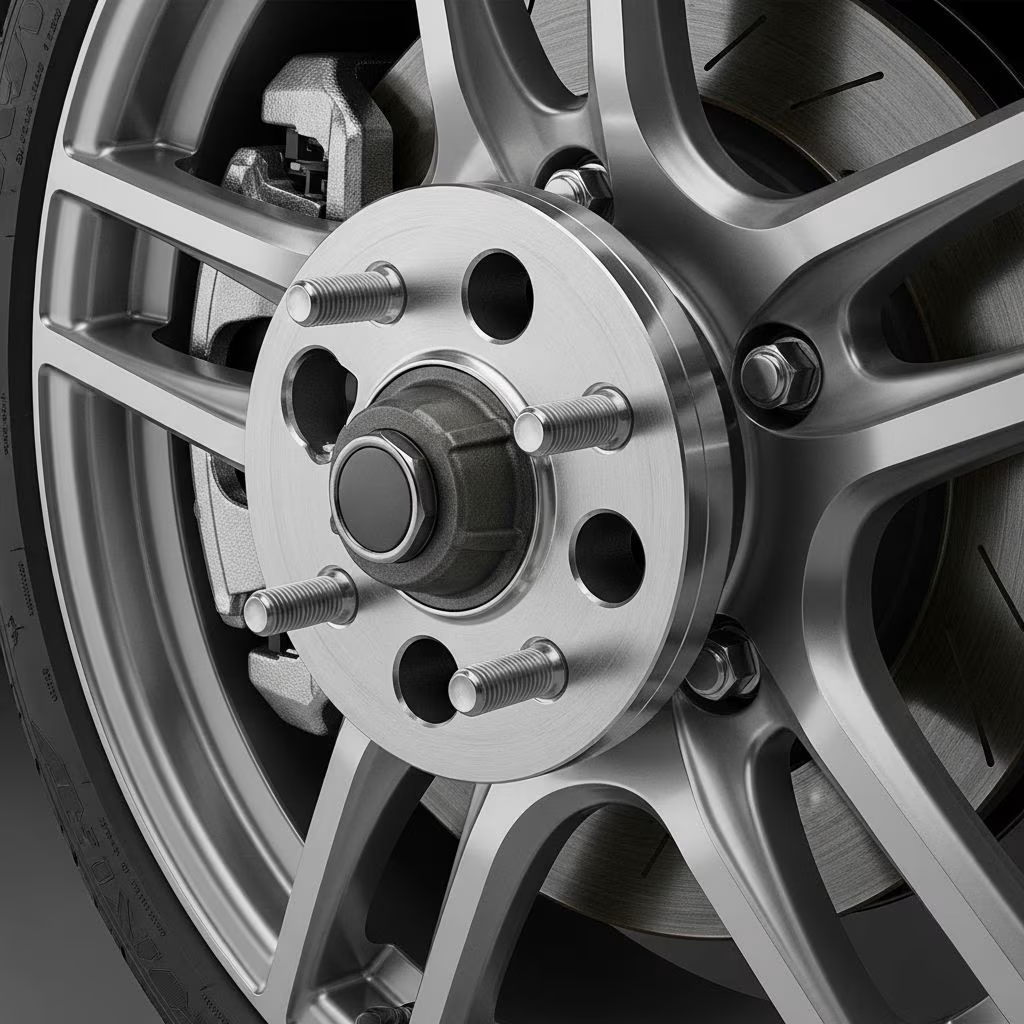
Wheel spacers are automotive accessories designed to push wheels outward from the hub, altering a vehicle’s track width and overall stance. These metal rings mount between the hub and wheel, using matching bolt patterns and extended studs to secure everything in place. By increasing the distance between the wheels and the vehicle’s centerline, spacers address fitment issues, enhance aesthetics, and improve certain driving dynamics.
Core Functions of Wheel Spacers
At their essence, wheel spacers relocate the wheel assembly farther from the suspension components. This adjustment creates space for larger components or corrects improper offsets on aftermarket wheels. Unlike wheel adapters, which change bolt patterns, true spacers maintain the original pattern while only shifting position. Common applications include off-road setups needing bigger tires, performance builds with upgraded brakes, or aesthetic tweaks for a wider stance.
Physically, spacers extend the lever arm from the hub to the tire’s contact patch. This modification widens the track—the distance between left and right wheels—lowering the center of gravity relative to the roll axis and promoting stability during cornering.
Key Advantages for Drivers and Enthusiasts
Wheel spacers offer practical and visual upgrades, making them popular among daily drivers, racers, and off-roaders. Here’s a breakdown of primary benefits:
- Superior Handling and Grip: Widening the track enhances cornering stability by increasing the tire contact patch’s leverage against lateral forces. Vehicles feel planted, with reduced body roll and quicker response out of turns. Installing on all four wheels maximizes this effect.
- Accommodation for Larger Tires: Off-road enthusiasts often upgrade to oversized tires for better traction and ground clearance. Spacers prevent rubbing against fenders or wheel wells, enabling these modifications without bodywork alterations.
- Clearance for Performance Brakes: Upgraded calipers are bulkier than stock units. Spacers provide the necessary inset adjustment, allowing high-performance brakes to fit without interference.
- Wheel Fitment Corrections: Aftermarket wheels with incorrect offsets can clash with suspension or body panels. Spacers push them outward, ensuring proper clearance while avoiding costly new wheel purchases.
- Aggressive Aesthetics: Extended wheels fill fender wells for a muscular, lowered look. Brands like Porsche have leveraged this for decades to convey sportiness without sacrificing functionality.
- Cost-Effective Solution: Priced affordably, spacers deliver results comparable to custom wheels, ideal for minor adjustments like 10-20mm shifts.
Potential Drawbacks and Performance Trade-offs
While beneficial, wheel spacers introduce mechanical stresses that can compromise longevity if not managed. Understanding these is crucial for informed use.
| Benefit | Counter Drawback |
|---|---|
| Improved stability | Increased steering effort due to larger scrub radius |
| Brake/tire clearance | Accelerated wheel bearing and suspension wear |
| Wider stance | Potential ride harshness and amplified road feedback |
| Aesthetic appeal | Risk of tire-fender rubbing if oversized |
Steering and Ride Impacts: The extended track raises steering input requirements, as tires fight harder against turns. Modern power steering mitigates this, but feel changes noticeably. Ride quality may stiffen, transmitting more road imperfections.
Component Stress: Longer lever arms amplify forces on wheel studs, bearings, and ball joints. Bearings endure higher bending moments, shortening lifespan—especially on worn suspensions or rough terrain. Bumps leverage more aggressively through the chassis.
Other Concerns: Excessive spacers (over 30mm) risk stud stretch or hub damage. Poorly made units without proper hub-centric design cause vibrations.
Are Wheel Spacers Safe for Everyday Use?
Quality spacers installed correctly pose minimal risk and are not inherently dangerous. They become problematic with cheap, non-hub-centric designs or improper torquing. High-grade aluminum or steel spacers with grade-12.9 studs match OEM strength.
Safety hinges on:
- Matching vehicle bolt pattern and hub bore precisely.
- Using extended studs or replacing with longer OEM-grade ones.
- Torquing to manufacturer specs in a star pattern, rechecking after 100 miles.
- Avoiding extremes that protrude beyond fenders, per local laws.
Many regions prohibit uncovered tires to prevent debris projection. Always verify regulations; some tracks ban spacers outright.
Installation Guide: Step-by-Step Process
DIY-friendly, but precision matters. Tools needed: jack, stands, torque wrench, sockets.
- Jack vehicle, secure on stands, remove wheel.
- Clean hub face thoroughly.
- Align spacer on hub, hand-thread studs/bolts.
- Mount wheel over spacer studs, torque in stages (e.g., 3 stages to full spec).
- Reinstall wheel, lower vehicle, re-torque after test drive.
Professional alignment post-install corrects camber/toe shifts from widened track.
Choosing the Right Wheel Spacers
Select based on needs:
- Thickness: 5-15mm for subtle fixes; 20-30mm for aggressive stance. Measure current offset first.
- Material: Forged 6061-T6 aluminum for lightness/strength; avoid castings.
- Features: Hub-centric (matches hub bore), ARP studs for durability.
- Vehicle-Specific: Confirm PCD, center bore, M14x1.5 threading common.
Brands like H&R or Eibach offer TÜV-certified options for reliability.
Legal and Regional Considerations
U.S. states vary: California requires fender coverage; others focus on secure mounting. EU mandates TÜV approval. Off-road use faces fewer rules, but highway compliance is strict.
Real-World Applications and Alternatives
Off-Road: Pair with lifts for 33+” tires.
Street Performance: Clears big brake kits on track cars.
Alternatives: New wheels with correct offset, rolled fenders, or adjustable control arms for permanent fixes without stress.
Frequently Asked Questions (FAQs)
What thickness spacer should I use?
Start with 10-15mm per side; calculate based on offset difference. Consult fitment guides.
Do wheel spacers affect speedometer?
No direct impact; larger tires might, but spacers alone don’t alter rolling diameter.
Can I use spacers on front and rear only?
Avoid; uneven application causes handling imbalance. All four recommended.
How often to re-torque?
After 50-100 miles, then every 5,000 miles or post-track.
Are bolt-on spacers better than bolt-in?
Bolt-on with studs preferred for repeatability and strength.
Wheel spacers transform vehicle capability and appearance when chosen wisely. Balance gains against maintenance needs for optimal results.
References
- What do wheel spacers do? Pros and Cons — Orion Motor Tech. 2023-05-15. https://orionmotortech.com/blogs/auto-blog/what-do-wheel-spacers-do-pros-and-cons
- Major Benefits of Wheel Spacers and Adapters — Supreme Suspensions. 2024-02-10. https://www.supremesuspensions.com/blogs/news/major-benefits-of-wheel-spacers-and-adapters
- Why are the Wheel Spacers Necessary — KSP Performance. 2023-11-20. https://www.kspmotor.com/blogs/news/why-are-the-wheel-spacers-necessary
- Wheel Spacers Done Right: The Real Deal — Curva Concepts. 2024-01-08. https://curvaconcepts.com/resources/wheel-spacers-guide/
- Car spacers. Advantages and disadvantages — CambioRuote. 2023-07-12. https://www.cambioruote.com/useful-tips/helpful-information/car-spacers-advantages-and-disadvantages.html
- What are wheel spacers? Do I need them? — Unplugged Performance. 2024-03-05. https://unpluggedperformance.com/faq/what-are-wheel-spacers-do-i-need-them/
This article is general information, not personal financial advice. Consider your own situation, or speak with a licensed adviser, before acting on it.


