

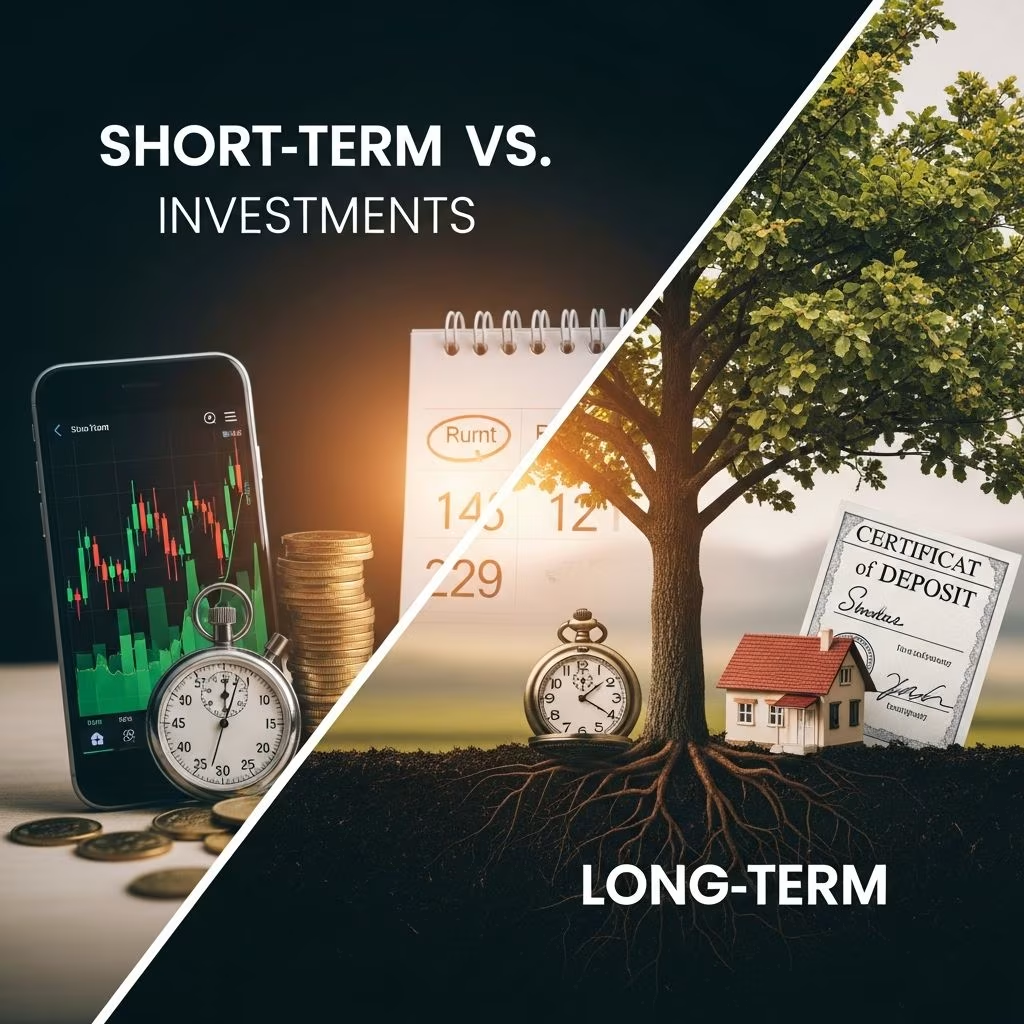
Investing wisely requires understanding the distinction between short-term and long-term approaches, each suited to different financial needs and timelines. Short-term investments typically span less than three years and prioritize capital preservation, while long-term ones extend beyond five years, focusing on wealth accumulation through compounding.
Defining Investment Time Horizons
The core difference lies in the holding period. Short-term investments, often under one year for tax purposes, aim for quick liquidity and stability. Examples include high-yield savings accounts or certificates of deposit (CDs). In contrast, long-term investments, held for years or decades, leverage market growth, such as stocks or real estate.
Time horizon directly influences strategy. Investors with imminent needs opt for short-term options to avoid volatility, whereas those planning for retirement can weather downturns.
Key Characteristics of Short-Term Investments
Short-term investments emphasize accessibility and low risk. They suit goals like building an emergency fund or saving for a vacation.
- Liquidity: Funds available quickly without penalties.
- Low Volatility: Minimal exposure to market swings.
- Lower Returns: Yields often trail inflation slightly.
Common vehicles include money market funds, Treasury bills, and short-term bonds. These provide safety but limited growth potential.
Key Characteristics of Long-Term Investments
Long-term investments harness compounding, where returns generate further gains over time. Ideal for retirement or education funding, they include equities, mutual funds, and index funds.
- Higher Potential Returns: Historical data shows stock market averages around 10% annually over decades.
- Compounding Effect: Reinvested earnings accelerate growth.
- Inflation Hedge: Outpaces rising costs over extended periods.
Despite short-term fluctuations, markets historically recover, rewarding patient investors.
Pros and Cons Comparison
| Aspect | Short-Term Investments | Long-Term Investments |
|---|---|---|
| Pros | High liquidity, low risk, quick access for needs | Higher returns, compounding, beats inflation |
| Cons | Low returns, inflation risk, opportunity cost | Illiquidity, market volatility, commitment required |
| Risk Level | Low to moderate | Moderate to high |
| Time Frame | 1-3 years | 5+ years |
| Tax Implications | Higher rates (ordinary income) | Lower capital gains rates |
This table highlights trade-offs: short-term prioritizes safety, long-term chases growth.
Risk Tolerance and Investor Profiles
Risk tolerance shapes choices. Short-term investors, often conservative, prefer preservation amid short timelines. Long-term investors tolerate volatility, knowing recovery is likely over time. For instance, those decades from retirement can allocate heavily to stocks.
Active short-term traders monitor markets daily, timing entries and exits. Passive long-term holders buy and retain, ignoring noise.
Tax Considerations for Each Approach
Taxes significantly impact net returns. Short-term gains, from assets held under a year, tax as ordinary income (up to 37%). Long-term gains, over a year, qualify for 0-20% rates, favoring extended holds. Frequent trading erodes short-term profits via higher liabilities.
Popular Examples and Vehicles
Short-Term Options
- Savings Accounts/CDs: FDIC-insured, predictable yields.
- Treasury Bills: Government-backed, ultra-safe.
- Money Market Funds: Liquid, slight returns above savings.
Long-Term Options
- Stocks/Index Funds: S&P 500 averages 11.34% historically (1950-2023).
- Bonds/ETFs: Balanced growth and income.
- Real Estate/Retirement Accounts: 401(k)s or IRAs for tax advantages.
Diversify within categories for optimal results.
Aligning Investments with Financial Goals
Match strategies to objectives. Short-term for near-term purchases like cars; long-term for milestones like homeownership or retirement.
- Emergency Fund: 3-6 months expenses in short-term assets.
- College Savings: Long-term with 529 plans.
- Retirement: Decades-long equity exposure.
Intermediate horizons (3-7 years) blend both, shifting conservative as goals near.
Building a Balanced Portfolio
Combine approaches for resilience. Allocate 20-30% short-term for liquidity, remainder long-term for growth. Rebalance annually to maintain targets.
Consider life stage: Young professionals favor long-term aggression; near-retirees emphasize preservation.
Factors Influencing Your Choice
- Time Horizon: Shorter needs demand safety.
- Risk Appetite: Assess comfort with losses.
- Financial Goals: Define clear targets.
- Market Conditions: Long-term less affected by cycles.
- Professional Advice: Advisors tailor mixes.
Common Mistakes to Avoid
- Chasing short-term trends without research.
- Panic-selling long-term holdings during dips.
- Overlooking fees/taxes in planning.
- Ignoring diversification.
- Confusing needs with wants in allocation.
Strategies for Success
Start early for compounding magic. Automate contributions to retirement accounts. Educate via reputable sources. Monitor but avoid over-trading.
FAQs
What counts as a short-term investment?
Typically assets held under three years, or one year for tax purposes, like CDs or bonds.
Are long-term investments always safer?
No, they carry volatility risk but lower overall due to recovery time.
How do taxes differ?
Short-term: ordinary income rates; long-term: preferential capital gains.
Can I mix both in one portfolio?
Yes, for liquidity and growth balance.
What’s the historical stock market return?
About 10-11% annually long-term.
Final Thoughts on Investment Planning
Choosing between short-term and long-term depends on personal circumstances. Assess goals, risks, and timelines to craft a strategy promoting financial security and growth. Regular reviews ensure alignment with evolving needs.
References
- Short-Term vs. Long-Term Investments: Which is Right for You? — BPI. 2023. https://www.bpi.com.ph/about-bpi/news/short-term-versus-long-term-investment
- Long-Term Investments vs. Short-Term Investments — Western & Southern Financial Group. 2024. https://www.westernsouthern.com/investments/long-term-investments-vs-short-term-investments
- Short-Term vs. Long-Term Investing: A Simplified Guide — Stash. 2024. https://www.stash.com/learn/short-term-vs-long-term-investing/
- Long-Term Investments vs. Short-Term Investments — SmartAsset. 2024. https://smartasset.com/investing/long-term-vs-short-term-investment
- Short-Term vs Long-Term Investors — Corporate Finance Institute. 2023. https://corporatefinanceinstitute.com/resources/career-map/sell-side/capital-markets/short-term-vs-long-term-investors/
This article is general information, not personal financial advice. Consider your own situation, or speak with a licensed adviser, before acting on it.


