

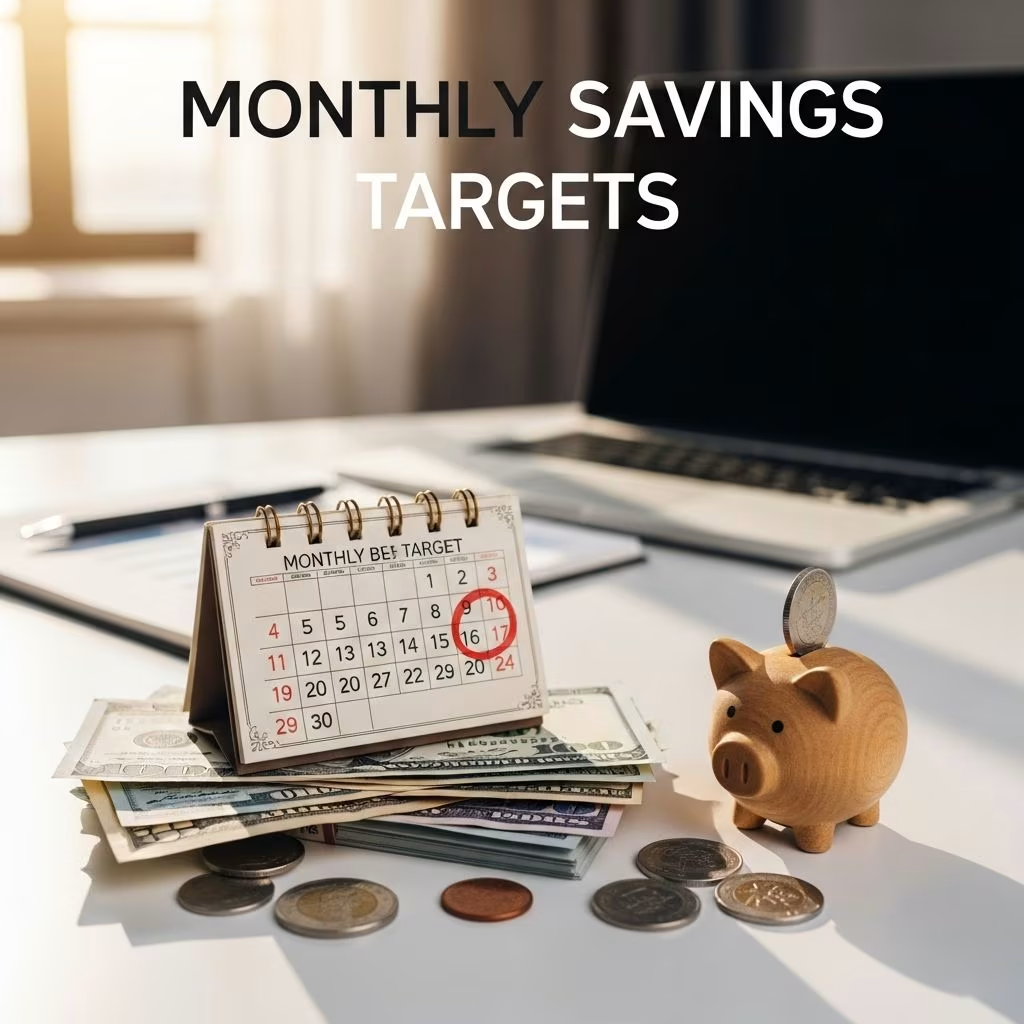
Determining the right amount to save each month forms the cornerstone of financial stability. Financial experts generally advise setting aside **15-20% of gross income** for savings, encompassing retirement, emergencies, and personal aspirations, though this varies by individual circumstances like income, debt, and life stage.
Understanding Core Savings Guidelines
Established budgeting frameworks provide practical starting points for allocating funds effectively. These rules simplify decision-making without rigid constraints.
- The **50/30/20 rule** divides after-tax income: 50% for essentials like housing and groceries, 30% for discretionary spending such as dining out, and 20% for savings plus debt reduction.
- A **15-20% gross income target** includes employer-matched retirement contributions and covers broad savings needs.
- Fidelity’s guideline suggests 60% for necessities, 30% for wants, and 10% for short-term goals, alongside 15% pre-tax for retirement.
These approaches emphasize balance, ensuring savings contribute to security rather than strain daily life.
Factors Influencing Your Savings Rate
No universal formula fits every situation. Income levels, age, and obligations shape realistic targets.
| Income Level | Recommended Savings % | Focus Areas |
|---|---|---|
| Low Income | 5-10% | Starter emergency fund |
| Middle Income | 15-20% | Emergency, retirement balance |
| High Income | 20%+ | Wealth acceleration, tax optimization |
Lower earners should prioritize habit-building with modest amounts, gradually increasing as stability improves. Higher earners can leverage tax-advantaged vehicles for amplified growth. Age also matters: younger savers benefit from compounding by starting small and scaling up.
Prioritizing Your Savings Pyramid
Structure savings hierarchically, addressing immediate risks before distant objectives.
- Emergency Fund First: Target 3-6 months of essential expenses, starting with $1,000. Variable income earners may need more. Contribute $50-300 monthly until complete.
- Debt Management: High-interest debts precede non-essential savings; integrate repayment into the 20% allocation.
- Retirement Building: Aim for 10-15% of income, including matches. Milestones: 1x salary by 30, 3x by 40.
- Short- and Long-Term Goals: Vacations, homes, or education follow foundational layers.
This pyramid ensures resilience against disruptions while progressing toward prosperity.
Optimal Places to Park Your Savings
Choosing the right accounts maximizes returns and matches liquidity to timelines.
- High-Yield Savings Accounts (HYSA): Ideal for emergencies; offer superior interest over standard accounts.
- Certificates of Deposit (CDs) and I-Bonds: Suited for mid-term goals (3-10 years) with inflation protection.
- Retirement Accounts (401(k), IRA): Tax-deferred growth for long-term horizons (10+ years).
- Brokerage and 529 Plans: Flexible investing and education-specific benefits.
Match vehicles to goals: liquidity for emergencies, growth for retirement.
Age-Based Savings Milestones
Tailor contributions to life phases for optimal outcomes.
| Age Group | Monthly Savings Goal | Key Strategies |
|---|---|---|
| 20s | 5-15% of income | Build habits, max employer match, automate transfers |
| 30s-40s | 15-20% | Boost retirement, family funds, debt payoff |
| 50s+ | 20%+ | Catch-up contributions, conservative investments |
Early starters harness compounding; later stages focus on acceleration.
Practical Steps to Implement Savings
Transition from planning to action with these tactics.
- Automate Everything: Set payroll deductions for retirement and transfers to savings post-payday.
- Track Progress: Use apps to visualize net worth and milestones for motivation.
- Start Small, Scale Up: Begin at 5%, increment 1% annually.
- Review Quarterly: Adjust for life changes like raises or expenses.
- Cut Strategically: Trim subscriptions before essentials.
Consistency trumps perfection; even modest starts compound significantly.
Common Pitfalls and Fixes
Avoid these errors to sustain momentum.
- Lifestyle Inflation: Bank raises into savings, not spending.
- Ignoring Matches: Free employer money equals 100% instant return.
- One-Size-Fits-All: Customize beyond rules.
- No Tracking: Blind spending erodes goals; log expenses weekly.
Proactive adjustments keep plans viable long-term.
FAQs
What if I can’t save 20% right now?
Start with what you can—5% builds the habit. Increase gradually as income grows or expenses shrink.
How much for an emergency fund?
3-6 months of essentials; begin with $1,000.
Does employer match count toward my savings rate?
Yes, it boosts your effective rate significantly.
Where to save for a house down payment?
HYSA or CDs for 3-5 year horizons.
Should I save before paying debt?
Prioritize high-interest debt post-mini emergency fund.
Advanced Tactics for Ambitious Savers
Once basics are covered, elevate with tax strategies, windfalls allocation (50% to savings), and diversified portfolios. Consult advisors for personalized optimization.
Savings transform aspirations into achievements. Commit today, adjust tomorrow—financial freedom awaits consistent action.
References
- How Much Should I Save Each Month? — Bankrate. 2024. https://www.bankrate.com/banking/savings/how-much-money-should-i-save-each-month/
- How Much Money Should You Save Monthly? — Best Egg. 2024. https://www.bestegg.com/blog/how-much-money-you-should-save-monthly/
- How much of my income should I save every month? — TIAA. 2024. https://www.tiaa.org/public/learn/personal-finance-101/how-much-of-my-income-should-i-save-every-month
- Spending and Saving — Fidelity. 2024. https://www.fidelity.com/learning-center/personal-finance/spending-and-saving
- What is the 50/30/20 budget rule? — Citizens Bank. 2024. https://www.citizensbank.com/learning/50-30-20-budget.aspx
- Savings by Age — Ally. 2024. https://www.ally.com/stories/save/savings-by-age-how-much-to-save-in-your-20s-30s-40s-and-beyond/
This article is general information, not personal financial advice. Consider your own situation, or speak with a licensed adviser, before acting on it.


