

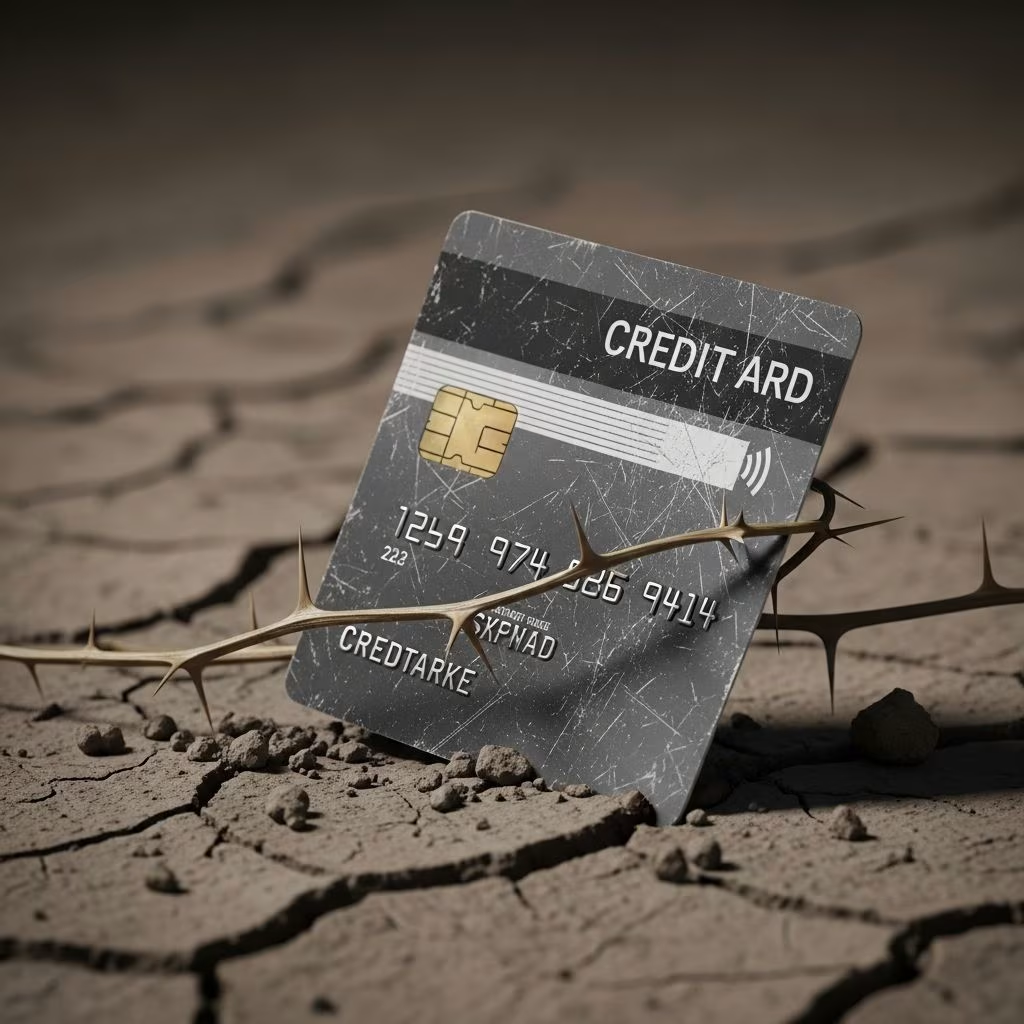
Filing for bankruptcy triggers a sharp decline in credit scores, often by 100 to 240 points depending on prior financial health, and remains visible for 7 to 10 years.
The Instant Credit Hit: Why Scores Plunge
When bankruptcy appears on your credit report, scoring models like FICO treat it as a severe red flag signaling past financial distress. This public record overshadows other factors initially, leading to drops of 160-220 points for many filers. Those starting with strong scores above 780 may lose 200-240 points, landing in subprime territory that limits borrowing options.
Pre-filing credit quality dictates severity: excellent histories suffer more dramatically than already damaged ones. Discharged debts reset utilization ratios but spike them temporarily if revolving credit vanishes, compounding the damage.
Chapter 7 vs. Chapter 13: Key Differences in Credit Fallout
| Aspect | Chapter 7 | Chapter 13 |
|---|---|---|
| Reporting Duration | 10 years from filing | 7 years from filing or discharge |
| Score Drop Range | 150-240 points typical | 100-200 points, often less severe |
| Debt Handling | Full discharge for eligible debts | Repayment plan over 3-5 years |
| Long-Term Perception | Harsher due to liquidation stigma | Milder as it shows repayment effort |
Chapter 7, liquidating non-exempt assets for debt erasure, casts a longer shadow at 10 years. Chapter 13’s structured repayments signal commitment, fading faster after seven years.
Timeline of Credit Recovery Post-Bankruptcy
- Months 1-6: Deepest impact; scores bottom out as lenders shun applications. Utilization may worsen sans credit lines.
- Years 1-3: Gradual climb if payments stay perfect; negative marks dilute as fresh positive history builds.
- Years 3-5: Notable rebound possible, nearing fair credit (580-669) with discipline.
- Years 7-10: Bankruptcy ages off; scores can rival pre-filing levels for diligent rebuilders.
Paradoxically, scores can rise 69 points within a month post-filing for low starters, as collections halt and debts vanish.
Hidden Positives: When Bankruptcy Boosts Credit Long-Term
Counterintuitively, bankruptcy halts collections, slashes utilization by erasing balances, and frees income for timely payments on survivors. This ‘clean slate’ often elevates scores faster than spiraling debt would. Studies confirm average improvements soon after discharge, prioritizing holistic profiles over single events.
Practical Roadmap to Reclaim Your Credit Score
- Secure Secured Cards: Deposit-backed cards report positives without risk; aim for under 30% utilization.
- Automate Payments: Payment history (35% of FICO) demands perfection post-bankruptcy.
- Diversify Credit Mix: Blend installment (auto, student) and revolving types gradually.
- Monitor Reports: Dispute errors weekly via AnnualCreditReport.com; track via free services.
- Boost Income, Cut Costs: Low debt-to-income aids lender views beyond scores.
Expect secured loans first, then unsecured after 1-2 years of positives. Avoid subprime traps with high APRs.
Real-World Scenarios: Credit Trajectories After Filing
| Pre-Filing Score | Immediate Drop | 2-Year Projection | 5-Year Projection |
|---|---|---|---|
| 780 (Excellent) | 540-580 | 620-680 | 720+ |
| 680 (Good) | 530-550 | 600-650 | 680-740 |
| 550 (Poor) | 530-550 (Minimal change) | 580-620 | 650-700 |
These estimates assume flawless post-filing behavior; lapses prolong pain.
Navigating Lenders and Life Post-Bankruptcy
Banks may deny unsecured credit until discharge, then offer ‘second chance’ products. Mortgages demand 2-year seasoning for FHA, 4 for conventional. Rentals and jobs scrutinize less over time, especially after 2 years.
Build alternatives: piggyback via trusted cosigners, credit-builder loans, or rent-reporting services.
Frequently Asked Questions
Does bankruptcy always tank my score forever?
No; impacts fade with time and habits, often outperforming unchecked debt cycles.
Can I get new credit right after filing?
Rarely unsecured; secured options or credit unions possible post-discharge.
Chapter 7 or 13: Which hurts less?
Chapter 13 typically milder due to shorter report time and repayment proof.
How soon can I buy a home after bankruptcy?
FHA: 2 years; VA: 2 years; conventional: 4 years post-Chapter 7.
Will bankruptcy stop collections?
Yes, automatic stay halts most immediately upon filing.
Proven Metrics from Credit Bureaus and Studies
FICO data shows bankruptcy’s weight heaviest early, diminishing as history lengthens. Experian notes 200-point max hits rare but real for pristine profiles. Holistic rebuilding trumps the mark alone.
References
- How Bankruptcy Affects Your Credit Score — O’Connell & Aronowitz. 2023. https://oalaw.com/blog/bankruptcy/how-bankruptcy-affects-your-credit-score/
- How Does Bankruptcy Affect Your Credit Score? — Lewis Van Sickle. 2024. https://lewisvansickle.com/blog/how-does-bankruptcy-affect-your-credit-score/
- Understanding the Impact of Bankruptcy on Your Credit Score — Matthews and Megna. 2023. https://www.matthewsandmegna.com/posts/understanding-the-impact-of-bankruptcy-on-your-credit-score
- How Will Filing Bankruptcy Impact My Credit Score? — Debt.org. 2025-02-01. https://www.debt.org/bankruptcy/how-will-filing-bankruptcy-impact-my-credit-score/
- How Does Filing Bankruptcy Affect Your Credit? — Experian. 2025. https://www.experian.com/blogs/ask-experian/how-does-filing-bankruptcy-affect-your-credit/
- Bankruptcy and Your Credit Score FAQs — Nolo. 2024. https://www.nolo.com/legal-encyclopedia/bankruptcy-your-credit-faq.html
- Will Bankruptcy Ruin My Credit Score? — Acker Warren. 2024. https://www.ackerwarren.com/blog/will-bankruptcy-ruin-my-credit-score
- Bankruptcy Types and Their Impact on FICO Scores — myFICO. 2025. https://www.myfico.com/credit-education/faq/negative-reasons/bankruptcy-types
This article is general information, not personal financial advice. Consider your own situation, or speak with a licensed adviser, before acting on it.


