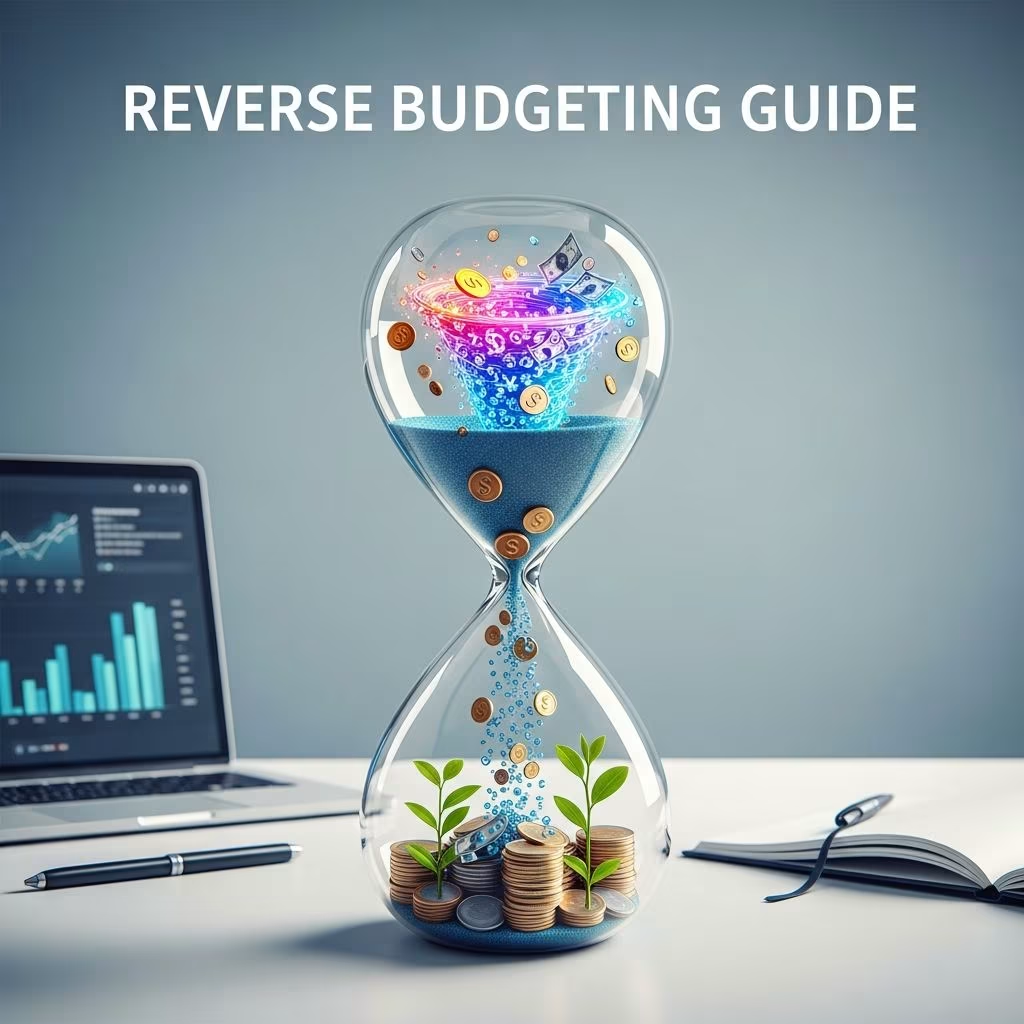
Reverse budgeting flips traditional financial planning by allocating funds to savings and key goals immediately upon receiving income, leaving the remainder for daily spending. This method fosters discipline and long-term security without rigid category restrictions.
Understanding the Core Principles of Reverse Budgeting
At its heart, reverse budgeting embodies the “pay yourself first” philosophy, directing a fixed portion of income straight to savings, investments, or debt reduction before addressing any other outflows. Unlike conventional systems that itemize every expense category upfront, this approach assumes the leftover amount suffices for lifestyle needs after essentials and priorities are secured.
This strategy gained traction among those seeking simplicity in personal finance management. Financial educators highlight its effectiveness in building habits that align daily choices with future aspirations, such as retirement funds or emergency reserves. By automating transfers, individuals remove decision fatigue, ensuring consistency even during busy periods.
Step-by-Step Implementation Process
Adopting reverse budgeting requires a structured yet straightforward rollout. Begin by reviewing recent bank statements to gauge average monthly expenditures on necessities like housing, utilities, groceries, and transportation. This baseline informs realistic surplus calculations.
- Define Priorities: Establish specific targets, e.g., 20% of net income to savings, 10% to debt payoff, covering fixed obligations first.
- Automate Allocations: Set up direct deposits or app-based transfers on payday to high-yield savings or investment accounts.
- Monitor Remainder: Use the balance for variable spending, tracking loosely to avoid deficits.
- Adjust Quarterly: Reassess based on income changes or goal progress for sustainability.
For example, with a $10,000 monthly income, allocate $2,000 to savings, $1,000 to extras like retirement contributions, $4,000 to bills, leaving $3,000 for discretionary use. Tools from banks or apps like those from Prudential facilitate seamless execution.
Key Advantages for Modern Lifestyles
Reverse budgeting excels in delivering psychological and practical wins. Its minimal oversight appeals to professionals juggling careers and families, as it curtails the tedium of daily logging.
- Goal Acceleration: Funds hit targets reliably, compounding wealth faster than sporadic savings efforts.
- Stress Reduction: Freedom from categorization liberates mental energy, promoting sustainable adherence.
- Lifestyle Inflation Guard: Raises automatically boost savings, preventing spending creep.
- Flexibility: Variable expenses adapt naturally month-to-month without predefined limits.
Studies and expert analyses affirm higher savings rates among practitioners, with automation key to bypassing impulse decisions.
Potential Challenges and Mitigation Strategies
No method suits universally; reverse budgeting demands surplus income post-essentials. Those living paycheck-to-paycheck risk shortfalls if savings precede bill payments. Fluctuating earnings, common in gig economies, amplify this vulnerability.
| Challenge | Impact | Solution |
|---|---|---|
| Insufficient Buffer | Overdraft Fees | Build 1-3 months’ expenses first |
| Income Volatility | Inconsistent Savings | Use conservative averages; hybrid with zero-based |
| Limited Visibility | Spending Creep | Weekly balance checks via apps |
| High Debt Load | Missed Opportunities | Prioritize debt in allocations |
Address visibility gaps by pairing with spending alerts. For debt-heavy situations, integrate payments as “savings” equivalents until cleared.
Real-World Applications and Success Stories
Professionals report transformative outcomes. A mid-career earner automating 15% to retirement saw their nest egg double in five years without lifestyle sacrifices. Freelancers blend it with envelope systems for irregular inflows, maintaining progress.
Families leverage it for college funds, deducting contributions pre-spending. Post-raise, many report 50% of increments saved, countering inflation. These cases underscore adaptability across demographics.
Comparing Reverse Budgeting to Traditional Alternatives
Reverse budgeting contrasts sharply with granular methods:
- Zero-Based: Assigns every dollar, ideal for precision but labor-intensive.
- Envelope: Cash allocations curb overspending, suiting cash users.
- 50/30/20: Fixed ratios for needs/wants/savings, less automated.
Choose reverse for simplicity; opt for others if detailed control is paramount.
Tools and Technologies to Enhance Effectiveness
Digital aids amplify success. Banking apps auto-transfer surpluses; platforms like PocketSmith forecast balances. High-yield accounts maximize idle funds. Integrate with goal trackers for motivation.
Frequently Asked Questions
What if my expenses exceed the remainder?
Refine estimates or trim non-essentials; temporarily lower savings targets until stable.
Does it work for variable incomes?
Yes, base on conservative averages and adjust frequently.
Can I use it with high-interest debt?
Prioritize debt repayment in the “first” allocation to balance urgency.
How much should I save initially?
Start at 10-20% of income, scaling with comfort.
Is tracking necessary?
Minimal; focus on inflows/outflows, not categories.
Long-Term Financial Transformation
Consistent reverse budgeting cultivates wealth-building habits, evolving from survival to prosperity. It empowers informed choices, fostering security amid economic shifts. Pair with education for holistic growth.
References
- Reverse budgeting: Is it right for you? — Brigit Blog. 2023. https://www.hellobrigit.com/learn/reverse-budgeting-is-it-right-for-you
- Reverse Budgeting: A Simpler Approach to Managing Finances — LifeManaged. 2024. https://lifemanaged.com/reverse-budgeting-a-simpler-approach-to-managing-finances/
- Reverse Budgeting — PocketSmith. 2024. https://www.pocketsmith.com/methodologies/reverse-budgeting/
- Pay yourself first: How to reverse budget — Prudential Financial. 2023-10-01. https://www.prudential.com/financial-education/how-to-reverse-budget
- Pay Yourself First: Reverse Budgeting Explained — NerdWallet. 2024. https://www.nerdwallet.com/finance/learn/pay-yourself-first-reverse-budgeting
This article is general information, not personal financial advice. Consider your own situation, or speak with a licensed adviser, before acting on it.