

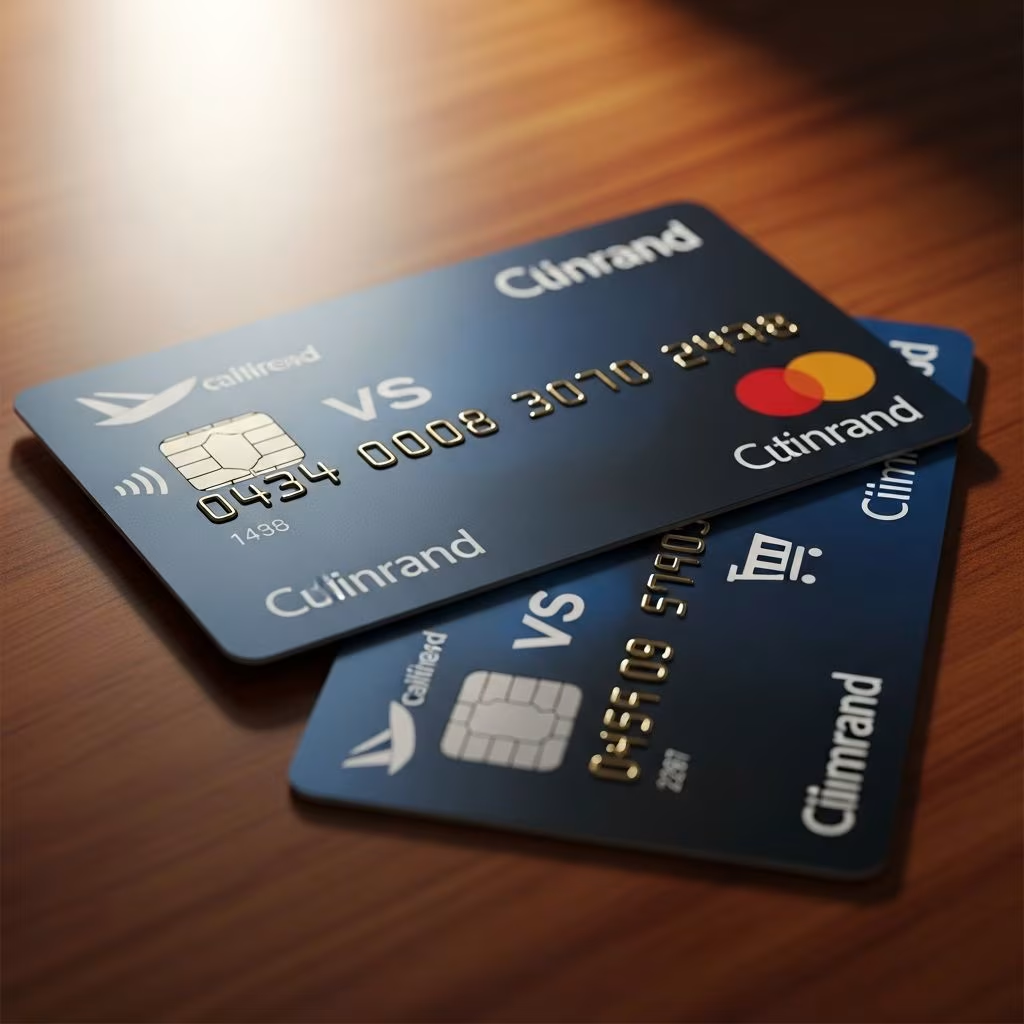
Co-branded credit cards represent collaborative financial products issued by banks or networks like Visa and Mastercard in partnership with specific retailers, airlines, hotels, or other brands. These cards display logos from both the financial institution and the partner brand, offering rewards optimized for frequent users of that brand while remaining usable anywhere the network is accepted.
Understanding the Partnership Model
At their core, co-branded cards emerge from alliances where a card issuer handles credit approval, billing, and account management, while the partner brand designs loyalty incentives such as points, miles, or exclusive discounts. This setup allows non-financial companies to extend their loyalty programs into everyday payments without building their own banking infrastructure.
For consumers, the appeal lies in accelerated rewards on brand-specific spending. Airlines might award bonus miles per dollar flown, hotels could provide points toward free nights, and retailers often boost cash back on in-store purchases. Unlike store-only cards, these function broadly via networks like Visa, ensuring versatility.
Key Advantages for Cardholders
These cards shine for those with predictable spending patterns tied to one or two brands. Common benefits include:
- Higher earning rates: Up to 5x points or more on partner purchases, far exceeding general cards.
- Elite status acceleration: Spending thresholds unlock priority boarding, lounge access, or room upgrades.
- Statement credits and perks: Annual vouchers for free bags, shipping discounts, or merchandise credits.
- Travel protections: Many include insurance for trips booked with the card, plus purchase safeguards.
A table comparing typical rewards illustrates this:
| Brand Type | Example Reward Rate | Signature Perk |
|---|---|---|
| Airline | 3-5x miles on flights | Free checked bag |
| Hotel | 4-6x points on stays | Elite status match |
| Retail | 5% cash back in-store | Exclusive sales access |
How Businesses Benefit from These Partnerships
Companies launch co-branded cards to foster long-term customer relationships. By tying rewards to their ecosystem, they encourage repeat business—every swipe reinforces brand affinity.
Additional gains include:
- Data analytics: Transaction insights reveal spending habits for targeted marketing.
- Revenue sharing: Partners earn from interchange fees and interest on carried balances.
- Brand expansion: Cardholders act as walking advertisements, exposing the logo during daily use.
Visa emphasizes how these cards drive engagement, with issuers gaining portfolio growth and merchants seeing sales lifts.
Comparing Co-Branded to Other Card Types
Co-branded cards differ distinctly from alternatives:
| Card Type | Usage Scope | Rewards Focus | Best For |
|---|---|---|---|
| Co-Branded | Anywhere network accepted | Partner-specific bonuses | Loyal brand users |
| Private Label | One retailer only | Store discounts | Single-shoppers |
| General Rewards | Universal | Flexible categories | Diverse spenders |
Private-label cards limit use to one merchant, lacking network acceptance, while general cards offer redeemable points without brand ties. Co-branded strike a balance, rewarding loyalty without full restriction.
Potential Drawbacks and Risks
Despite perks, limitations exist. Rewards lose value if you rarely use the partner brand, and high annual fees (often $95+) demand heavy utilization to offset. Welcome bonuses tempt overspending, potentially harming credit utilization ratios.
- Limited flexibility: Points often redeem best within the ecosystem, reducing transfer options.
- Opportunity cost: Forgoing flat-rate cash back cards might mean lower overall returns for varied spending.
- Credit impact: Multiple applications for brand cards can ding scores via hard inquiries.
Monitor for devaluations, where issuers reduce reward values over time.
Steps to Choose the Right Co-Branded Card
Selecting involves aligning with your habits:
- Assess spending: Calculate annual spend with the brand; ensure bonuses exceed fees.
- Review terms: Check earning caps, redemption minimums, and waiver conditions.
- Compare offers: Use tools to match cards to lifestyles, prioritizing sign-up bonuses.
- Check eligibility: Good credit (670+ FICO) typically required.
For travelers, airline/hotel cards excel; shoppers favor retail options.
Real-World Examples Across Industries
Diverse sectors leverage these cards effectively. Delta SkyMiles cards by American Express award medallion qualification dollars toward status. Marriott Bonvoy cards from Chase provide automatic Silver elite status and free night awards after spend milestones. Retail examples like the Target Circle card offer 5% off RedCard purchases.
Automotive brands like Ford provide 3-5% back on services, while entertainment ties like the MLB card give stadium perks. These illustrate tailored value.
Maximizing Value Through Strategic Use
Optimize by pairing with brand memberships. Hit minimum spends for bonuses quickly via planned purchases, then maintain low balances. Transfer points between programs if possible, and time applications around credit rebuilds.
Track via apps for category bonuses and pair with cash back for non-partner spend. Cancel strategically after perks, but retain useful ongoing benefits.
Frequently Asked Questions
What credit score do I need for a co-branded card?
Most require good to excellent credit (670-850 FICO), though some entry-level options accept fair scores.
Can I use a co-branded card anywhere?
Yes, wherever the network (Visa, Amex, etc.) is accepted, not just the partner.
Are annual fees worth it?
Often yes for heavy users; calculate value from perks against costs.
How do rewards redeem?
Typically as travel, merchandise, or statements credits within the brand’s program.
Do they build credit?
Like any card, responsible use improves scores via payment history and utilization.
References
- What Are Co-Branded Credit Cards? — American Express. 2024. https://www.americanexpress.com/en-us/credit-cards/credit-intel/co-branded-credit-cards/
- Co-branded credit cards: How they differ from other cards — GR4VY. 2023-10-10. https://gr4vy.com/posts/co-branded-credit-cards-how-they-differ-from-other-card/
- What Is a Co-Branded Credit Card? — NerdWallet. 2025. https://www.nerdwallet.com/credit-cards/learn/what-is-a-co-branded-credit-card
- How Co-Branded Credit Cards Work and Their Unique Benefits — O1NE Mortgage. 2024. https://o1nemortgage.com/how-co-branded-credit-cards-work-and-their-unique-benefits/
- What Are Co-Branded Credit Cards? — Bankrate. 2025-01-15. https://www.bankrate.com/credit-cards/advice/co-branded-credit-cards-guide/
- What are co-branded credit cards? A guide for businesses — Stripe. 2024. https://stripe.com/resources/more/what-are-co-branded-credit-cards
- Visa Co-Branded Cards — Visa. 2025. https://usa.visa.com/products/cobranded-cards.html
This article is general information, not personal financial advice. Consider your own situation, or speak with a licensed adviser, before acting on it.


