

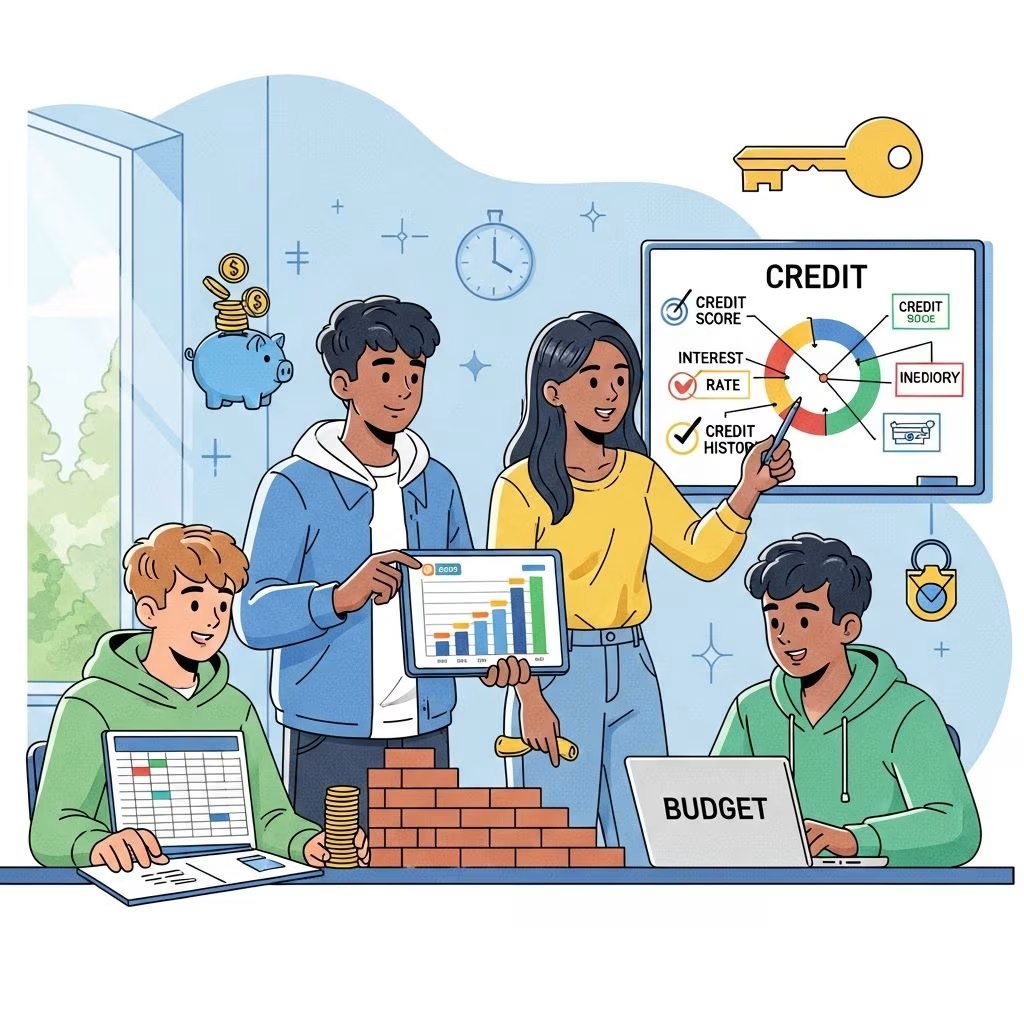
Starting credit building during the teenage years lays a foundation for financial independence and future opportunities like loans or rentals. Parents play a crucial role in guiding teens through this process safely and effectively, fostering habits that lead to strong credit scores over time.
Why Early Credit Building Matters for Young People
A solid credit history opens doors to favorable interest rates on car loans, apartments, and even jobs that check credit. For teens, beginning early means more time to demonstrate reliability to lenders. According to financial experts, the length of credit history is a key factor in scoring models, so starting in the mid-teens can provide a significant advantage by adulthood.
Without guidance, young people risk common pitfalls like high debt or missed payments, which can haunt scores for years. Educating teens now instills discipline, teaching them that credit is a tool for responsibility, not spending sprees.
Fundamental Steps to Launch a Teen’s Credit Journey
Before diving into credit products, ensure teens grasp basics through real-world experience. Encourage part-time jobs to build income and accountability. Earnings from work allow teens to practice budgeting, saving, and understanding income limits.
- Get a first bank account: A teen checking or savings account with no fees teaches transaction tracking. Products like campus checking often include debit cards for controlled spending.
- Track expenses: Use apps or spreadsheets to log income versus outflows, preventing overspending.
- Set savings goals: Aim for an emergency fund covering 3-6 months of expenses to build security alongside credit.
These habits create readiness for credit, as lenders favor those with proven money management.
Option 1: Becoming an Authorized User on a Parent’s Card
One of the simplest entry points is adding a teen as an authorized user on a parent’s well-managed credit card. This leverages the parent’s payment history and account age, which appear on the teen’s credit report.
Key guidelines for success:
- Choose a card with low utilization (under 30% balance-to-limit ratio) and on-time payments.
- Issue a separate card for the teen with spending caps to monitor usage.
- Review statements monthly together, ensuring full payoff before due dates.
After 6 months, pull the teen’s free credit report to discuss impacts. This method builds history without the teen bearing primary liability, but parental oversight is essential to avoid misuse.
Option 2: Secured Credit Cards for Independent Building
For teens seeking their own accounts, secured cards require a refundable deposit matching the credit limit, typically $200-$500. This lowers issuer risk, making approval easier for beginners.
| Feature | Benefits for Teens | Potential Drawbacks |
|---|---|---|
| Deposit Requirement | Sets spending limit; refundable upon upgrade | Ties up funds initially |
| Approval Odds | High, even with no history | May have higher fees |
| Reporting | To all major bureaus | Requires responsible use |
| Upgrade Path | To unsecured after 6-12 months | Depends on payment history |
Examples include cards offering cash back, motivating responsible use. Teens should charge small, recurring items like streaming subscriptions and pay in full monthly to keep utilization low.
Option 3: Credit-Builder Loans as a Savings-Credit Hybrid
Credit-builder loans flip traditional borrowing: the lender holds $300-$1,000 in a savings account while the teen makes fixed monthly payments. Funds release upon completion, building both credit and savings.
Ideal for disciplined teens, these report positively if payments stay current. Interest may apply, but some return it at term end. Terms last 6-24 months, perfect for steady history growth without temptation to spend.
Leveraging Student Loans and Other Payments
For college-bound teens, federal student loans report to bureaus once repayment begins. Deferments don’t hurt if payments follow on-time post-graduation.
Other bill payments like rent or utilities can report via services, though coverage varies. Parents should verify reporting before relying on them.
Core Habits Every Teen Must Master
Regardless of method, these principles drive credit success:
- Pay everything on time: Most influential factor; set alerts for due dates.
- Keep utilization below 30%: E.g., $300 max on $1,000 limit.
- Avoid new applications: Multiple hard inquiries signal risk.
- Maintain old accounts: Length matters; use lightly to keep active.
- Monitor reports: Free weekly via AnnualCreditReport.com; dispute errors early.
Demonstrate consequences: show how late payments drop scores 100+ points temporarily.
Common Mistakes and How to Avoid Them
Teens often falter by treating cards like free money. Counter this with rules:
- No carrying balances—pay full to avoid interest.
- Limit to needs, not wants.
- Steer clear of cash advances or high-fee features.
Parents: Co-sign only if confident in repayment ability, as it risks your score too.
Long-Term Benefits and Monitoring Progress
Good credit by 18 eases auto loans, apartments, and jobs. Track via free scores from banks or bureaus. Aim for 700+ FICO for prime rates.
Graduate to unsecured cards after proving responsibility, expanding history.
Frequently Asked Questions
Can teens under 18 build credit?
Yes, via authorized user status or secured cards; full cards require 18+ in most states.
How long until credit history shows?
1-2 months after first activity and payment.
Does a part-time job help credit?
Indirectly, by funding payments and teaching budgeting.
What if my teen misses a payment?
One late mark fades in 2 years; focus on recovery with on-time payments.
Should I close old teen accounts?
No—age boosts scores; keep active with small use.
Final Thoughts on Parental Involvement
Guiding teens through credit builds lifelong skills. Regular talks on scores, reports, and goals ensure sustained success. Start small, stay consistent, and watch their financial confidence grow.
References
- Teen Talk: How Building Credit Instills Hard Work, Spending Habits and Financial Responsibility — Adirondack Bank. 2023. https://www.adirondackbank.com/blog/teen-talk-how-building-credit-instills-hard-work-spending-habits-and-financial-responsibility
- How to Establish Credit as a Young Person — Experian. 2025-02-01. https://www.experian.com/blogs/ask-experian/how-to-establish-credit-as-a-young-person/
- Help Your Teen Build a Solid Credit History — Mercer Advisors. 2024. https://www.merceradvisors.com/insights/family-finance/a-gift-that-lasts-a-lifetime-help-your-teen-build-a-strong-credit-history/
- 6 Credit Card Tips to Teach Your Teen — Navy Federal Credit Union. 2024-06-15. https://www.navyfederal.org/makingcents/credit-debt/teen-credit-card-tips.html
- Credit Scores 101: A Beginner’s Guide For Teens and Young Adults — Piscataqua Savings Bank. 2025. https://www.piscataqua.com/credit-scores-101-a-beginners-guide-for-teens-and-young-adults/
This article is general information, not personal financial advice. Consider your own situation, or speak with a licensed adviser, before acting on it.


