

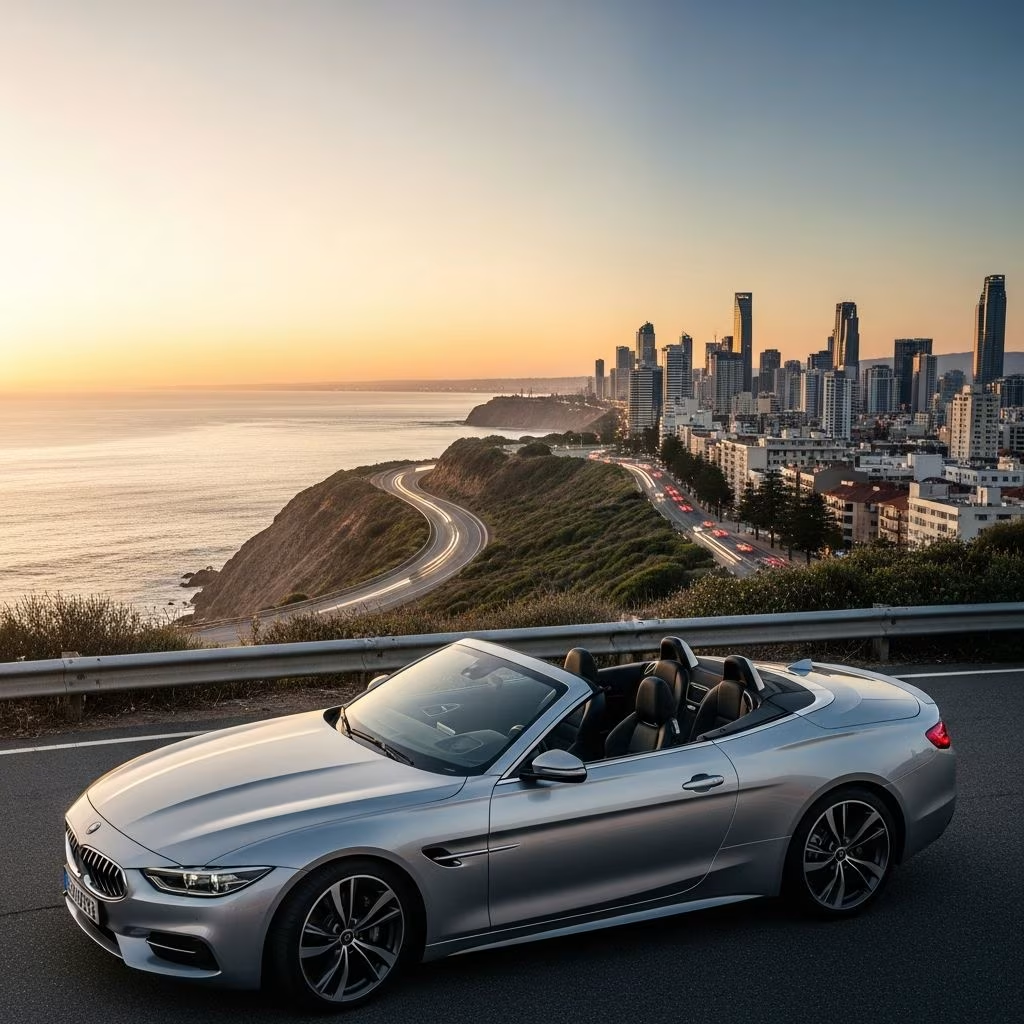
Convertible vehicles capture the essence of carefree driving, offering an unmatched sense of liberation under the open sky. Yet, their appeal comes with trade-offs that potential buyers must carefully evaluate. This article delves into the key factors influencing whether a convertible aligns with your lifestyle, budget, and driving needs.
The Allure of Open-Air Driving
Nothing rivals the exhilaration of cruising with the wind rushing past and sunlight warming your skin. Convertibles transform ordinary commutes into joyful escapes, fostering a deeper connection with the environment. Owners often report heightened happiness levels compared to those in enclosed cars, attributing this to the sensory immersion provided by removable roofs.
- Enhanced Visibility: The absence of a fixed roof and thick pillars grants a panoramic view, simplifying maneuvering in tight spaces and improving overall awareness on the road.
- Versatility in Weather: Modern designs allow quick transitions from open-top mode to a fully enclosed cabin, adapting seamlessly to sudden rain or dropping temperatures.
- Premium Aesthetic: Convertibles exude sophistication and uniqueness, standing out from standard sedans and appealing to those seeking a distinctive ride.
This blend of sensory delight and practicality makes convertibles ideal for scenic drives, coastal routes, or weekend getaways.
Financial Realities: Upfront and Ongoing Costs
While the emotional pull is strong, the price tag demands scrutiny. New convertibles typically command a premium of $5,000 to $9,000 over equivalent coupes or sedans due to specialized engineering. For instance, a base 2022 Ford Mustang coupe retailed around $28,865, while its convertible counterpart started at $34,365—a notable jump.
| Cost Factor | Convertible Premium | Standard Car |
|---|---|---|
| Purchase Price | $5,000–$9,000 higher | Base model pricing |
| Insurance | 17–19% more | Standard rates |
| Fuel Efficiency | Lower due to weight | Better MPG |
Insurance providers view convertibles as higher-risk for theft and repairs, inflating premiums accordingly. Fuel consumption rises from added weight of roof mechanisms and reinforcements, impacting long-term ownership expenses. Opting for used models can mitigate initial outlays, as these cars hold value well despite the premium construction.
Structural Compromises and Ride Quality
Removing a fixed roof weakens the chassis, often resulting in noticeable shudder over uneven surfaces. Manufacturers add underbody bracing, but it rarely fully compensates, leading to a less rigid feel than hardtop siblings. This can manifest as vibrations during high-speed travel or on bumpy roads, potentially detracting from the premium experience.
Performance enthusiasts note slower acceleration in some models; for example, certain diesel convertibles require more time to reach speed due to extra mass. While handling remains sharp, the elevated center of gravity in hardtop variants may slightly hinder agility.
Roof Options: Soft Tops vs. Hard Tops
Choosing between fabric soft tops and metal hard tops is pivotal, each with distinct merits and drawbacks.
| Feature | Soft Top | Hard Top |
|---|---|---|
| Cost | Lower upfront and repairs | Higher due to mechanics |
| Weight | Lighter, better performance | Heavier, reduced efficiency |
| Noise Levels | More wind/road noise | Quieter insulation |
| Security | Vulnerable to cuts/theft | More robust protection |
| Maintenance | Weather-sensitive fabric | Complex mechanisms |
| Aesthetics | Classic convertible look | Sleeker but less distinct |
Soft tops deliver authentic open-air vibes with lighter construction but demand vigilant care against UV damage and punctures. Hard tops offer superior noise suppression and security yet encroach on trunk space when stowed and add significant weight.
Safety Considerations in Convertibles
Rollovers loom large in buyers’ minds, but engineering advancements mitigate risks. Reinforced windshield frames double as roll bars, supplemented by pop-up or fixed bars behind seats that deploy in milliseconds. Side curtain airbags extend upward for head protection, and studies indicate convertibles are less prone to accidents overall, possibly due to cautious driving habits.
- Visibility Aids: Tiny rear windows necessitate rearview cameras, blind-spot monitors, and parking sensors.
- UV Exposure: Prolonged top-down driving increases skin cancer risk; apply sunscreen liberally.
- Noise Exposure: Highway speeds amplify wind and tire roar, potentially leading to fatigue.
Despite these, convertibles pass rigorous crash tests, proving safer than stereotypes suggest.
Practicality and Daily Usability
Convertibles sacrifice utility for style. Trunk space shrinks with hard tops, and soft tops resist automated car washes. Rain drumming on fabric roofs creates excessive din, and extreme temperatures seep in more readily. They’re best as secondary vehicles for fair-weather use rather than all-season family haulers.
Features like heated seats and steering wheels extend usability into cooler months, while strong insulation in newer soft tops combats weather woes.
Smart Strategies for Purchasing a Convertible
Timing matters: Fall and winter deals abound as inventory lingers from summer sales. For used buys, inspect torsional stiffness, roof frame rust, seals, and operational smoothness. Test drive extensively, especially over potholes and in varied weather.
- Verify roof functionality in all conditions.
- Check for chassis vibrations or cowl shake.
- Assess insurance quotes pre-purchase.
- Prioritize models with modern safety tech.
- Research resale value for long-term savings.
Who Thrives with a Convertible?
Ideal owners embrace leisure driving in temperate climates, value aesthetics over maximal practicality, and accept premium costs for joy. Families or heavy commuters may find them less suitable due to space and efficiency constraints.
Frequently Asked Questions
Are convertibles safe in rollovers?
Yes, with roll bars, reinforced structures, and airbags, they offer comparable protection to fixed-roof cars.
Do convertibles have poor fuel economy?
They consume more due to weight, but differences are often marginal in efficient models.
How do I maintain a convertible top?
Clean regularly, apply protectants, avoid car washes for soft tops, and store properly to prevent wear.
Is buying used a good idea?
Absolutely—depreciation makes them affordable, but thorough inspections are essential.
Soft or hard top: which is better?
Depends on priorities: soft for lightness and look, hard for quiet and security.
References
- Should You Buy a Convertible Car? — Nationwide Blog. 2023-05-15. https://blog.nationwide.com/vehicle/vehicle-safety/what-you-need-know-about-convertibles/
- 5 Reasons to Think Twice Before Buying a Convertible — AARP. 2022-06-10. https://www.aarp.org/auto/car-buying/convertible-concerns/
- Buy a convertible? Advantages and disadvantages at a glance — Ultramar XL. 2024-03-22. https://www.ultramarxl.com/en/blogs/blog/convertible-buying-for-and-disadvantages
- BUYER’S GUIDE: Tips For Buying a Convertible — BestRide Blog. 2023-11-08. https://blog.bestride.com/research/buyers-guide/buyers-guide-convertible/
- What you need to know before buying a convertible — Top10s (YouTube). 2023-07-19. https://www.youtube.com/watch?v=ta38o0O2B7A
- Buying a Convertible Car: Should You Worry About the Roof? — AutoTrader. 2024-01-14. https://www.autotrader.com/car-shopping/buying-a-convertible-should-you-worry-about-the-roof-240724
This article is general information, not personal financial advice. Consider your own situation, or speak with a licensed adviser, before acting on it.


