

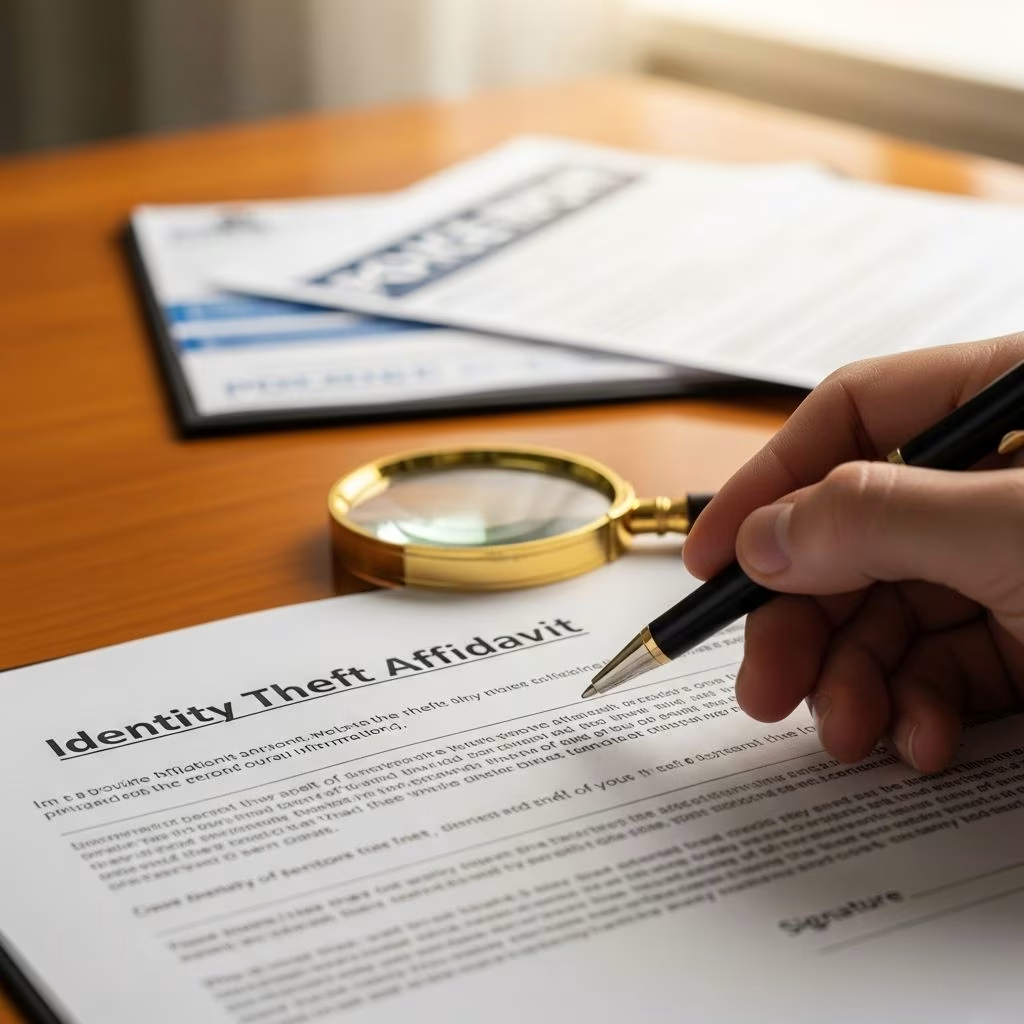
Victims of identity theft can use a standardized form known as an identity theft affidavit to report fraudulent activities, challenge unauthorized accounts, and assist investigations by authorities. This document streamlines the process of notifying creditors, credit bureaus, and government agencies about the crime.
Understanding Identity Theft and Its Impact
Identity theft happens when criminals misuse someone’s personal details, such as Social Security numbers or addresses, to open accounts, make purchases, or file taxes without permission. This crime affects millions annually, leading to financial losses, damaged credit scores, and emotional distress. Early detection and proper reporting are crucial to minimize long-term damage.
Common signs include unfamiliar charges on statements, new accounts on credit reports, or tax refund issues. Prompt action with tools like affidavits helps victims regain control and hold thieves accountable.
Purpose and Benefits of Filing an Affidavit
The primary goal of an identity theft affidavit is to provide a single, uniform document that proves the fraud to multiple parties. Instead of creating custom reports for each creditor or bureau, victims submit this form alongside supporting evidence. It enables organizations to verify claims quickly and remove fraudulent entries from records.
Key benefits include:
- Simplified fraud disputes with banks and credit agencies.
- Support for police reports and potential prosecutions.
- Protection against liability for thief-incurred debts.
- Assistance in correcting credit reports and stopping further misuse.
Organizations like the FTC designed this form to reduce victim burden while empowering thorough investigations.
Official Sources for the Identity Theft Affidavit
The Federal Trade Commission (FTC) offers the main identity theft affidavit through IdentityTheft.gov. Victims start by filing a report online, which generates a personalized affidavit. This FTC Identity Theft Report serves as official proof for disputes.
State attorneys general, like Illinois, provide similar forms tailored for local use. For tax-related cases, the IRS uses Form 14039, but only under specific conditions.
Tip: Always check with the recipient organization, as some require their own forms or additional details.
Step-by-Step Guide to Completing the Form
Filling out the affidavit requires careful attention to detail. Here’s how to proceed:
- Access the Form: Visit IdentityTheft.gov or download from FTC/state sites.
- Gather Documents: Collect IDs, account statements, and police reports.
- Fill Personal Section: Enter name, SSN, address, and ID numbers.
- Detail the Fraud: List affected accounts, dates, and inaccuracies.
- Sign and Notarize: Many require notarization for validity.
- Submit Copies: Send via certified mail with receipts.
Keep originals safe and track all submissions.
Required Personal Information
To verify your identity, the form demands precise details:
| Category | Examples | Purpose |
|---|---|---|
| Identification | Full name, DOB, SSN | Match to fraudulent records |
| Contact | Phone, email, address | Follow-up communication |
| Government ID | Driver’s license, passport | Prove authenticity |
Accuracy prevents delays in processing.
Describing the Fraudulent Activities
The core of the affidavit details the theft. Specify:
- New accounts opened without consent, including account numbers and dates.
- Existing accounts with unauthorized charges.
- Inaccurate credit report entries from the fraud.
- Any benefits received (must declare none to maintain credibility).
Attach a separate statement per company for clarity. Use copies of statements or letters as evidence.
Declarations and Legal Commitments
Victims must swear under penalty of perjury:
- No authorization given to others for using the information.
- No personal gain from the fraudulent acts.
- Willingness to aid law enforcement prosecutions.
- Truthfulness of all provided details.
These statements build trust and support legal actions.
When to Use an Affidavit for Different Scenarios
New vs. Existing Accounts
For newly opened fraudulent accounts, the affidavit is essential. Contact each creditor first to confirm acceptance. For existing accounts with unauthorized use, call the company directly—many handle disputes internally without a full affidavit.
Tax-Related Identity Theft
The IRS advises filing Form 14039 only if you suspect tax fraud and haven’t received their notice letters. Most cases are caught automatically. Submit online or mail, but avoid FTC for non-tax issues.
Credit Bureau Disputes
Send the affidavit to Equifax, Experian, and TransUnion with your report. They must investigate within 30 days under the Fair Credit Reporting Act.
Supporting Documents to Strengthen Your Case
Enhance credibility with:
- Police report filed within 24-48 hours of discovery.
- Credit reports showing discrepancies.
- Correspondence from creditors acknowledging fraud.
- Notarized copies of IDs.
Never send originals; use certified mail for proof of delivery.
Post-Filing: Monitoring and Recovery Steps
After submission:
- Place fraud alerts on credit files (free for 1 year, extended 7 years).
- Freeze credit to block new accounts.
- Review reports weekly initially.
- Follow up if no response in 30 days.
- Consider credit monitoring services.
Recovery can take months, but persistence pays off.
Common Mistakes to Avoid
- Submitting without notarization where required.
- Omitting details or evidence.
- Not contacting companies first for their policies.
- Delaying filing, which worsens damage.
- Ignoring follow-ups on disputes.
Frequently Asked Questions (FAQs)
What if a company rejects my affidavit?
Provide whatever additional form they request and resubmit promptly.
Do I need a police report?
It’s highly recommended and often required for full effectiveness.
How long does resolution take?
Creditors have 30 days; credit bureaus similar timelines.
Is the affidavit free?
Yes, available online at no cost.
Can someone else file for me?
Legal guardians or power of attorney holders can, with proof.
Preventing Future Identity Theft
Proactive measures include shredding documents, using strong passwords, enabling two-factor authentication, and regularly checking accounts. Educate family on risks, especially for vulnerable groups like seniors.
In summary, mastering the identity theft affidavit equips victims to fight back effectively, restoring financial security through organized reporting and vigilance.
References
- What Is an Identity Theft Affidavit? — Experian. 2024-09-06. https://www.experian.com/blogs/ask-experian/what-is-an-identity-theft-affidavit/
- ID Theft Affidavit Instructions and Form — Illinois Attorney General. N/A. https://www.illinoisattorneygeneral.gov/Page-Attachments/ID_Theft_Affidavit_Instructions_and_Form.pdf
- What is an Identity Theft Affidavit? — Lehrman Law. N/A. https://lehrmanlaw.com/what-is-an-identity-theft-affidavit/
- When to File an Identity Theft Affidavit — Internal Revenue Service. 2022-04. https://www.irs.gov/newsroom/when-to-file-an-identity-theft-affidavit
- Federal Trade Commission Announces ID Theft Affidavit — Federal Trade Commission. 2002-02. https://www.ftc.gov/news-events/news/press-releases/2002/02/federal-trade-commission-announces-id-theft-affidavit
- IdentityTheft.gov – Assistant — Federal Trade Commission. N/A. https://www.identitytheft.gov/assistant
This article is general information, not personal financial advice. Consider your own situation, or speak with a licensed adviser, before acting on it.


