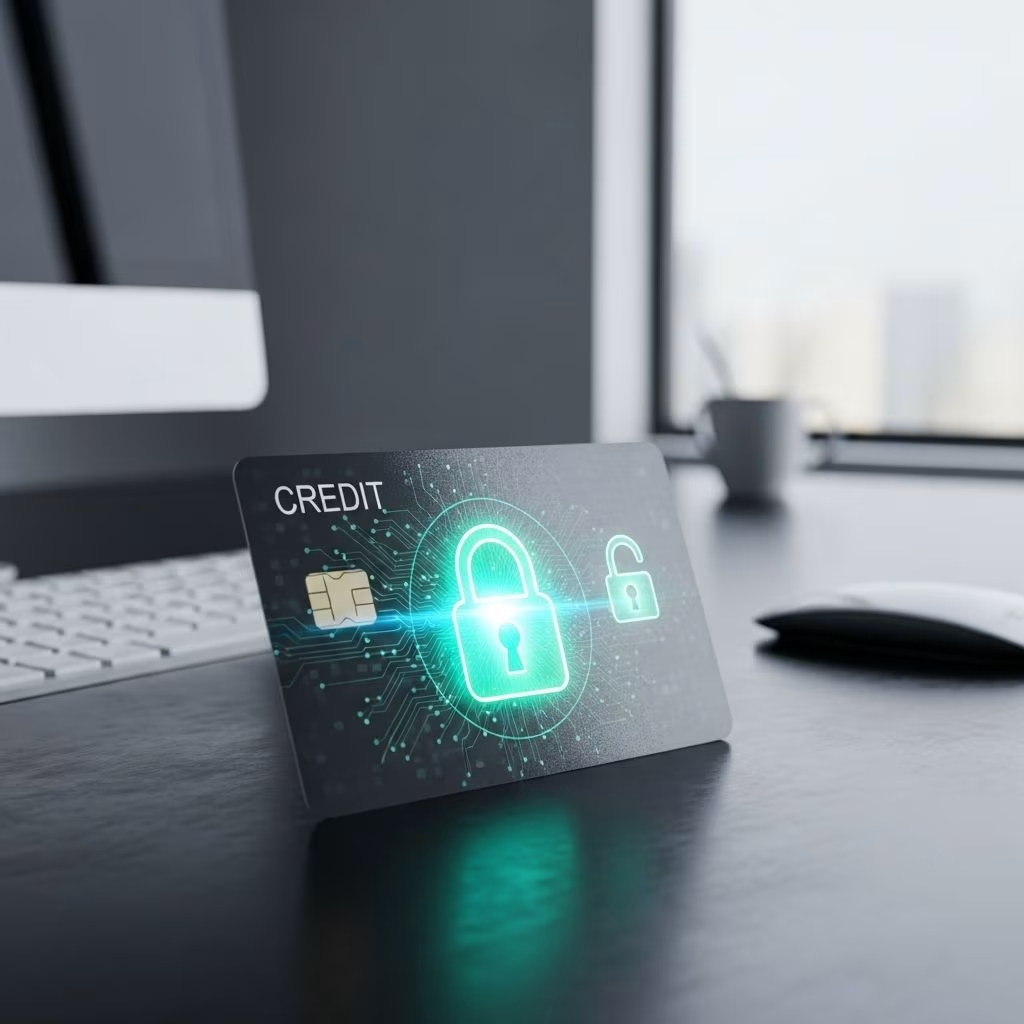
Business credit cards offer flexibility for managing expenses, but they also expose companies to fraud risks. Temporarily locking your card provides a quick way to block unauthorized transactions without permanent cancellation, while unlocking restores access instantly. This feature empowers business owners to balance security and convenience effectively.
Why Locking Business Cards Matters for Security
In today’s digital landscape, business credit card fraud costs companies millions annually. Locking a card acts as an immediate barrier against misuse, especially useful when a card is misplaced, an employee departs, or suspicious activity appears. Unlike full cancellation, locking preserves the account while halting new charges.
Modern issuers equip cards with advanced controls, including real-time alerts and automated monitoring. These tools detect anomalies like unusual spending patterns or high-velocity transactions, prompting users to lock proactively.
Step-by-Step: How to Activate Card Lock Features
Most major providers offer mobile apps or online portals for seamless card management. Here’s a general process applicable across platforms:
- Access your account: Log into the issuer’s app or website using secure credentials and multi-factor authentication.
- Locate card controls: Navigate to the ‘Cards’ or ‘Security’ section, where lock options appear for physical and virtual cards.
- Select and confirm: Choose the specific card, toggle the lock switch, and verify via push notification or code.
- Monitor status: Locked cards display a status indicator, blocking purchases, cash advances, but allowing recurring payments in some cases.
This process typically takes under a minute, making it ideal for urgent situations. Providers like those using Visa or Mastercard networks integrate chip technology and neural networks for enhanced detection.
Unlocking Your Card: Quick Restoration Process
Once the risk passes—such as recovering a lost card or verifying legitimate charges—unlocking follows a similar path. Simply reverse the toggle in the app or portal. Some systems require secondary verification to prevent unauthorized reactivation.
| Action | Locking | Unlocking |
|---|---|---|
| Speed | Instant | Instant |
| Effect on Recurring Bills | Often Allowed | Resumes Fully |
| Best Use Case | Suspicious Activity | Safe Recovery |
These controls ensure minimal disruption to business operations.
Advanced Security: Virtual Cards and Spend Limits
Virtual cards represent a step beyond basic locking. Each generates unique numbers for one-time or merchant-specific use, shielding primary account details. Set limits like $500 daily caps or restrict to categories such as office supplies.
- Issue unlimited virtual cards per employee.
- Lock to vendors, preventing broad misuse.
- Track via audit trails and real-time alerts.
Platforms emphasize role-based permissions, ensuring only authorized users issue or modify cards.
Preventing Fraud Through Proactive Monitoring
Combine locking with ongoing vigilance. Enable transaction alerts for amounts over thresholds or unusual locations. Use AI-driven gateways that flag risks via address verification (AVS), CVV checks, and pattern analysis.
Implement 3D Secure protocols like Verified by Visa for online buys, adding authentication layers. Regular statement reviews catch discrepancies early.
Employee Training and Policy Enforcement
Internal threats account for significant fraud. Train staff on phishing recognition, secure handling, and reporting protocols. Establish policies: no shared cards, PIN secrecy, and immediate lock on loss.
Individual cards with tailored limits per role reduce risks. Automate enforcement to block out-of-policy spends.
Compliance Standards: PCI DSS Essentials
Adhering to Payment Card Industry Data Security Standard (PCI DSS) mandates encryption, access controls, and audits. Non-compliance invites fines and breaches. Tools aiding compliance include encryption services and monitoring software.
Responding to Fraud Incidents
- Lock immediately: Halt further damage.
- Report to issuer: Use dedicated fraud lines for disputes.
- Document everything: Retain receipts and timelines.
- Notify stakeholders: Alert affected parties.
- Audit and fortify: Update practices post-incident.
Benefits of Modern Card Platforms
Issuers provide zero-liability policies, though business cards differ from personal under Fair Credit Billing Act. Features like digital wallets, chip tech, and velocity limits bolster defenses.
Common Pitfalls and How to Avoid Them
- Avoid emailing card details; use secure portals.
- Don’t overlook small charges—they signal testing.
- Regularly update software to patch vulnerabilities.
Frequently Asked Questions (FAQs)
Does locking stop all transactions?
Most locks block new purchases but may allow debits or subscriptions. Check provider specifics.
Is business card fraud covered like personal cards?
Protections vary; many offer zero liability, but review terms.
Can I lock individual employee cards?
Yes, granular controls target specific cards without affecting others.
What if I forget to unlock?
Set reminders or auto-unlock timers if available.
How does 3D Secure help?
It verifies identity for online transactions, curbing card-not-present fraud.
References
- How to protect your business from credit card fraud — Worldpay. 2023. https://www.worldpay.com/en/insights/guides/protect-your-business-from-credit-card-fraud
- Small business card security — M&T Bank. 2024. https://www.mtb.com/business/education-portal/small-business-fraud-prevention/stopping-business-credit-card-fraud
- Business Credit Card Fraud: Types & How to Stop It — Ramp. 2025-01-15. https://ramp.com/blog/business-credit-card-fraud
- Small Business Credit Card Features — Delta Community Credit Union. 2024. https://www.deltacommunitycu.com/business-banking/visa-business-platinum-rewards-credit-card/security-features.html
- What are the security features? — American Express. 2024. https://www.americanexpress.com/en-us/business/blueprint/help-center/business-card/virtual-card/faq.what-are-the-security-features.html
- Business credit card fraud: Prevention tips for startups — Mercury. 2024-06-10. https://mercury.com/blog/business-credit-card-fraud-prevention
This article is general information, not personal financial advice. Consider your own situation, or speak with a licensed adviser, before acting on it.