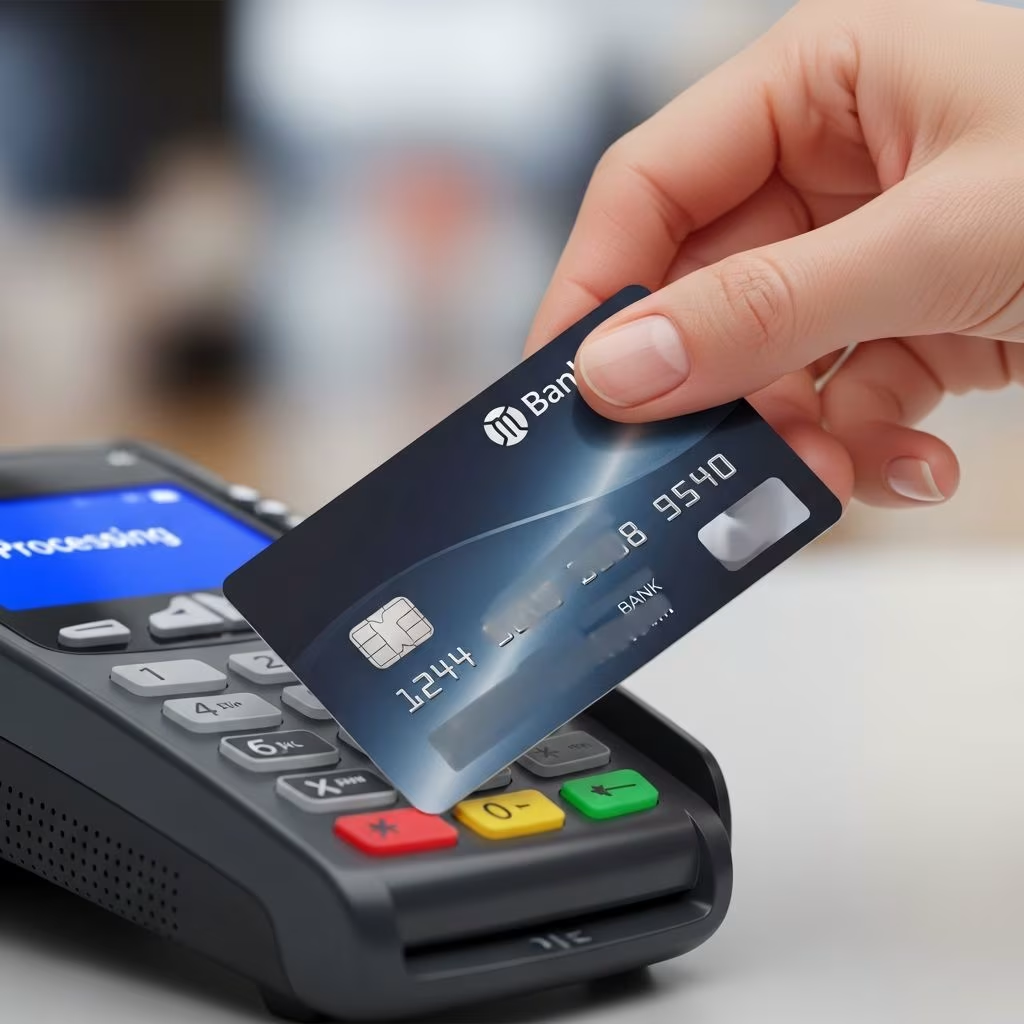
Your first debit card marks a pivotal moment in achieving financial autonomy. Unlike credit cards that borrow funds, debit cards draw directly from your checking account, promoting disciplined spending without accruing debt. This comprehensive guide equips newcomers with essential knowledge on activation, everyday transactions, security measures, budgeting strategies, and more to ensure responsible usage.
Understanding Debit Cards: The Fundamentals
A debit card serves as a direct gateway to your bank account funds, enabling purchases, bill payments, and cash withdrawals without the need for physical cash. Issued by banks or credit unions upon opening a checking account, these cards typically feature network logos like Visa or Mastercard, allowing acceptance at millions of locations worldwide.
Key characteristics include:
- Immediate deductions: Transactions reduce your balance instantly or within 1-2 days, preventing overspending beyond available funds.
- PIN protection: A four-digit Personal Identification Number (PIN) secures ATM access and select point-of-sale (POS) transactions.
- Contactless capability: Many modern cards support tap-to-pay via EMV chips or NFC for quick, secure payments.
Debit cards differ from prepaid cards, which load fixed amounts and aren’t tied to a bank account, or credit cards, which extend borrowed money with interest potential. For beginners, they foster spending awareness since every swipe uses real money.
Getting Started: Activation and PIN Setup
Upon receiving your card—usually 7-10 days after account opening—activation is the first step. Banks offer multiple methods for convenience and security.
| Method | Steps | Pros |
|---|---|---|
| Phone Activation | Call the number on the sticker; follow prompts to verify identity and set PIN. | Quick; no app needed. |
| Online/App | Log into banking portal or app; select ‘Activate Card’ and create PIN. | 24/7 access; tracks history. |
| ATM | Insert card, enter temporary PIN from letter, follow change PIN menu. | Combines with cash needs. |
Choose a strong PIN: avoid birthdays, sequences like 1234, or phone numbers. Memorize it and never share or write it down. Post-activation, test with a small transaction to confirm functionality.
Everyday Usage: Purchases, ATMs, and Digital Payments
In-Store Transactions
At checkout, present your card for swipe, insert, or tap. Terminals may prompt ‘Debit’ (requires PIN, enables cash back) or ‘Credit’ (signature-based, no credit impact). Debit processes faster; credit offers signature convenience but delays deduction slightly. Funds deduct promptly, so monitor balance to avoid declines.
ATM Withdrawals
Opt for in-network ATMs to dodge fees (up to $5 per use out-of-network). Insert/tap card, enter PIN securely (cover keypad), select checking account, input amount within daily limits (often $300-$500), and collect cash/receipt.
Online and Mobile Wallets
For e-commerce, input 16-digit number, expiration, and CVV (no PIN needed). Add to Apple Pay/Google Pay for phone-based contactless payments, ideal for speed and lost-phone protection. Verify sites use HTTPS for safety.
Pro tip: Request cash back at grocery stores to bypass ATM fees—many offer $20-$100 without extra charge.
Smart Budgeting: Building Healthy Habits
Debit cards excel at enforcing budgets since spending halts at zero balance. Leverage them to cultivate discipline:
- Track daily: Use bank apps for real-time balances and transaction alerts.
- Set limits: Enable spending caps via app for categories like groceries.
- Prioritize needs: Distinguish essentials from wants; pause 24 hours on impulses.
- Save first: Transfer portions of deposits to savings before card access.
Review statements weekly to categorize expenses (e.g., food, transport). Tools like bank dashboards reveal patterns, curbing overspending.
Steering Clear of Fees and Overdrafts
Common pitfalls include overdraft fees ($30-$35 per transaction) if spending exceeds balance. Opt out of overdraft protection during account setup or via app to decline transactions instead. ATM surcharges add up—use your bank’s locator app.
Other fees:
- Foreign transactions: 1-3% on international buys; notify bank of travel.
- Inactivity: Rare, but check terms.
- Replacements: $5-$15 for lost/stolen cards.
Maintain a $50 buffer in your account as a safeguard.
Security Essentials: Protecting Your Card
Fraud risks are real—$billions lost annually. Safeguard with these practices:
- Inspect ATMs/POS: Check for skimmers (loose readers/keypads).
- Enable alerts: Texts/emails for every transaction over $1.
- Phishing vigilance: Banks never request full details via email/call.
- Lock virtually: App-based temporary freezes for lost cards.
- Monitor routinely: Report anomalies within 60 days for zero liability.
For youth cards, parental controls limit spending and teach via supervised use.
Debit vs. Credit: When to Choose Each
| Aspect | Debit Card | Credit Card |
|---|---|---|
| Spending Source | Your money | Borrowed funds |
| Fees/Rewards | Overdraft risk; few rewards | Interest if unpaid; points/cashback |
| Credit Building | None | Positive history |
| Fraud Protection | Good, but funds gone temporarily | Superior; disputed charges easier |
Use debit for routine expenses; credit for travel/hotels needing holds.
Frequently Asked Questions (FAQs)
How do I change my debit card PIN?
ATM: Insert card, enter current PIN, select ‘Change PIN.’ Online/app options available per bank.
Can I use my debit card internationally?
Yes, with Visa/Mastercard; alert bank to avoid blocks. Watch for 3% fees.
What if my card is lost?
Freeze via app, call issuer immediately (24/7 lines provided). Request replacement.
Does debit usage affect my credit score?
No, as it doesn’t involve loans.
Are there debit cards for kids?
Yes, family plans with controls teach responsibility.
Advanced Tips for Long-Term Success
Integrate debit with digital tools: Automate bill pays, link to budgeting apps like Mint for visualizations. Periodically review limits and upgrade to premium accounts for perks like fee waivers. As habits solidify, transition to hybrid use with credit for rewards while prioritizing payoff.
Empower yourself: Your debit card is a tool for growth, not just transactions. Consistent monitoring and mindful choices pave the way to financial wellness.
References
- How Does a Debit Card Work? Your Simple Guide to Using Debit — Remitly. 2023. https://www.remitly.com/blog/finance/how-does-a-debit-card-work-a-simple-explanation/
- How does a debit card work? A beginner’s guide — Greenlight. 2024. https://greenlight.com/partner-resources/budgeting/how-does-a-debit-card-work
- Debit Cards: What They Are and How They Work — NerdWallet. 2025-01-15. https://www.nerdwallet.com/banking/learn/what-is-a-debit-card
- Basics of Debit Cards Explained — Academy Bank. 2024. https://www.academybank.com/article/basics-of-debit-cards-explained
This article is general information, not personal financial advice. Consider your own situation, or speak with a licensed adviser, before acting on it.