

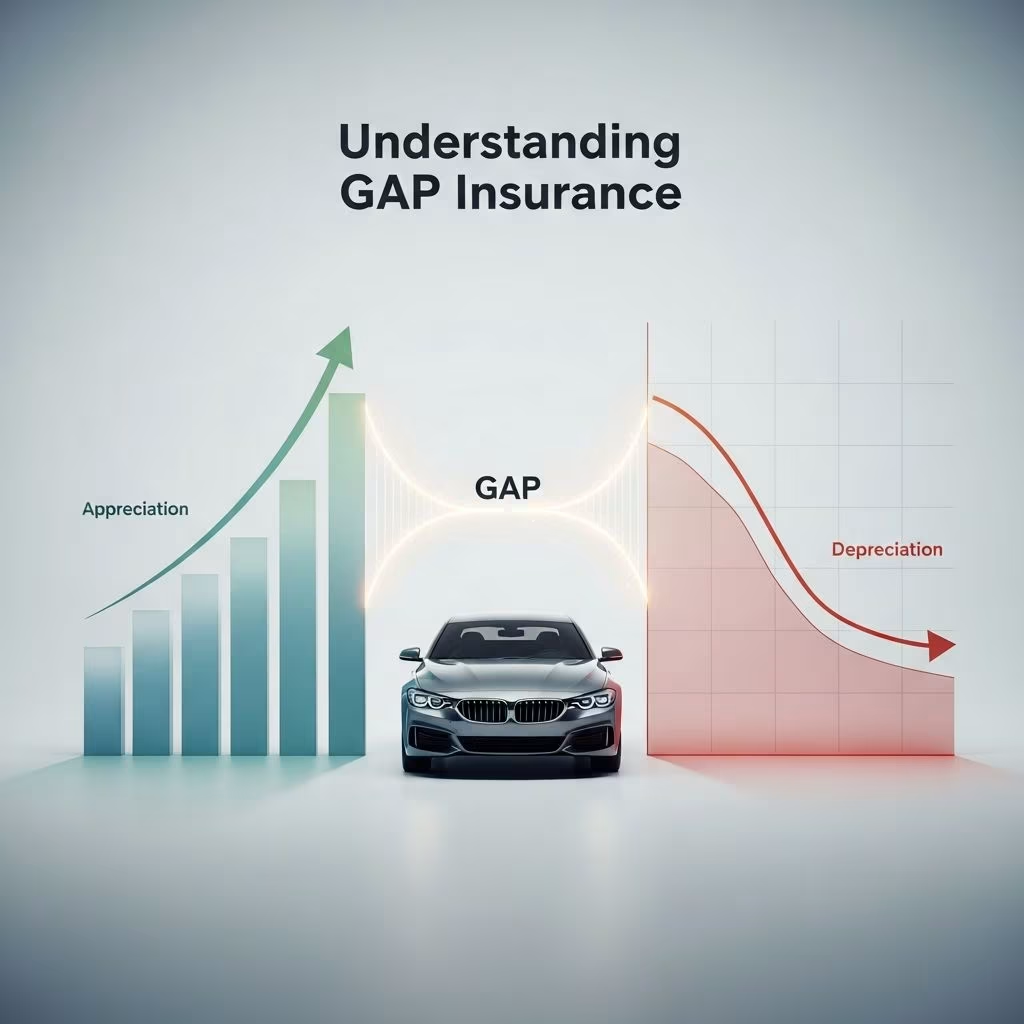
Guaranteed Asset Protection, commonly known as **GAP insurance**, serves as a financial safety net for vehicle owners facing the rapid depreciation of cars. When a financed or leased vehicle is declared a total loss due to theft or irreparable damage, standard auto policies pay only the current market value, often leaving owners with outstanding loan balances they must cover personally. GAP steps in to eliminate this discrepancy, ensuring borrowers aren’t stuck paying for a vehicle they no longer possess.
The Reality of Vehicle Depreciation and Financial Risk
Cars lose value swiftly upon purchase. A new vehicle can drop **20%** in worth within the first year alone, influenced by factors like mileage accumulation, market demand, and wear. For buyers financing large portions of the purchase price—especially with minimal down payments—this creates an ‘upside-down’ loan where the owed amount exceeds the car’s actual cash value (ACV).
Consider a scenario: You finance a $30,000 sedan with a 10% down payment. After two years of payments, the car depreciates to $20,000, but $25,000 remains on the loan. If totaled, collision or comprehensive coverage reimburses $20,000 minus your deductible, leaving you $5,000 short—plus any deductible costs. Without protection, this deficit burdens your savings or credit.
Core Functionality of GAP Coverage
GAP insurance activates specifically in total loss events, defined as when repair costs surpass a state’s threshold (often 70-80% of ACV) or the vehicle is stolen and unrecovered. Primary auto insurance first settles the ACV payout to the lender. GAP then covers the shortfall up to the loan or lease balance, sometimes including deductibles depending on the policy.
- Total Loss Claims: Applies to collisions, theft, or natural disasters covered under comprehensive/collision policies.
- Loan/Lease Payoff: Pays remaining principal, excluding fees like late charges or excess mileage penalties on leases.
- Deductible Forgiveness: Certain plans waive or reimburse the out-of-pocket deductible from standard insurance.
This coverage requires existing comprehensive and collision insurance, as GAP doesn’t replace but supplements them.
Who Benefits Most from GAP Insurance?
Not every driver requires GAP, but it’s invaluable for specific profiles. Lenders or lessors may mandate it for high-risk financing, such as loans exceeding 60 months or those with low equity.
| Profile | Why GAP is Recommended | Example Scenario |
|---|---|---|
| New Car Buyers with Low Down Payments | High depreciation risk leaves large gaps early in loan term | 5% down on luxury SUV; totals in year 1 |
| Long-Term Loan Holders (60+ months) | Extended payments amplify upside-down periods | 72-month auto loan on sedan |
| Lessees | Leases demand full payoff on total loss | 3-year lease with residual value shortfall |
| Owners with Negative Equity | Already owe more than ACV | Refinanced used car purchase |
Conversely, outright owners or those with substantial equity (owing less than ACV) gain little benefit, as no gap exists.
Acquisition Options: Dealerships, Insurers, or Credit Unions?
Providers vary, each with pros and cons. Dealerships offer GAP at purchase, often financing it into the loan for convenience, but at premium rates—sometimes double standalone costs.
- Auto Insurers: Cheapest option, added as an endorsement to your policy (e.g., $20-40/year). Requires comprehensive/collision; limits may cap at 25% of ACV in some states.
- Credit Unions/Banks: Competitive waivers for members, unregulated but similar to insurance.
- Dealership Waivers: Non-insurance contracts promising payoff forgiveness; check state regulations.
Shop around: Insurer quotes often undercut dealer markups. Refunds may apply if the vehicle sells early or refinances, prorating unused premiums.
Costs Associated with GAP Protection
Expect a one-time fee of $400-700 at dealerships, or $15-50 annually via insurers. Factors influencing price include vehicle type, loan amount, and provider. Financing spreads costs but adds interest. Always compare: A Progressive-style loan/lease payoff might limit to 25% ACV, suiting moderate gaps.
Navigating the Claims Process
Upon total loss:
- File with primary insurer for ACV settlement.
- Lender provides payoff quote.
- Submit GAP claim with proof of shortfall.
- Approval hinges on policy terms; appraisers confirm total loss.
Delays arise from disputes over ACV or exclusions like commercial use. Document meticulously for smooth payouts.
Alternatives to Traditional GAP Insurance
Beyond add-ons:
- Higher Down Payments: 20%+ reduces initial gap.
- Shorter Loans: Pay down principal faster.
- New Car Replacement Coverage: Some insurers offer full MSRP replacement.
- Self-Insurance Funds: Build savings for potential shortfalls.
Weigh these against GAP for personalized protection.
Frequently Asked Questions (FAQs)
Is GAP insurance worth the cost?
Yes for high-depreciation vehicles or thin-equity loans; calculate your gap risk via online tools.
Does GAP cover deductibles?
Some policies do; verify terms—standard excludes them unless specified.
Can I buy GAP for used cars?
Limited to near-new (under 2-3 years old) by most providers due to lower depreciation risk.
What if my lease includes GAP?
Many do implicitly; review contract to avoid double coverage.
Is GAP available in all states?
Regulations vary; unavailable or restricted in a few like NY, WI.
Strategic Tips for Buyers
Before signing:
- Estimate depreciation using Kelley Blue Book.
- Negotiate GAP from insurers post-purchase.
- Avoid rolling negative equity into new loans.
Proactive planning minimizes risks in volatile auto markets.
References
- GAP insurance – Wikipedia — Wikipedia. 2023-10-15. https://en.wikipedia.org/wiki/GAP_insurance
- What Is Gap Insurance and How Does It Work? — Progressive. 2025-01-20. https://www.progressive.com/answers/gap-insurance/
- What You Need To Know About Gap Insurance — Lesser Law Firm. 2024-08-12. https://lesserlawfirm.com/blog/what-you-need-to-know-about-gap-insurance/
- What is Gap Insurance and do I need it? — Nationwide. 2025-02-01. https://www.nationwide.com/lc/resources/auto-insurance/articles/what-is-gap-insurance
- What is gap insurance? — Insurance Information Institute (III). 2024-11-10. https://www.iii.org/article/what-gap-insurance
This article is general information, not personal financial advice. Consider your own situation, or speak with a licensed adviser, before acting on it.


