

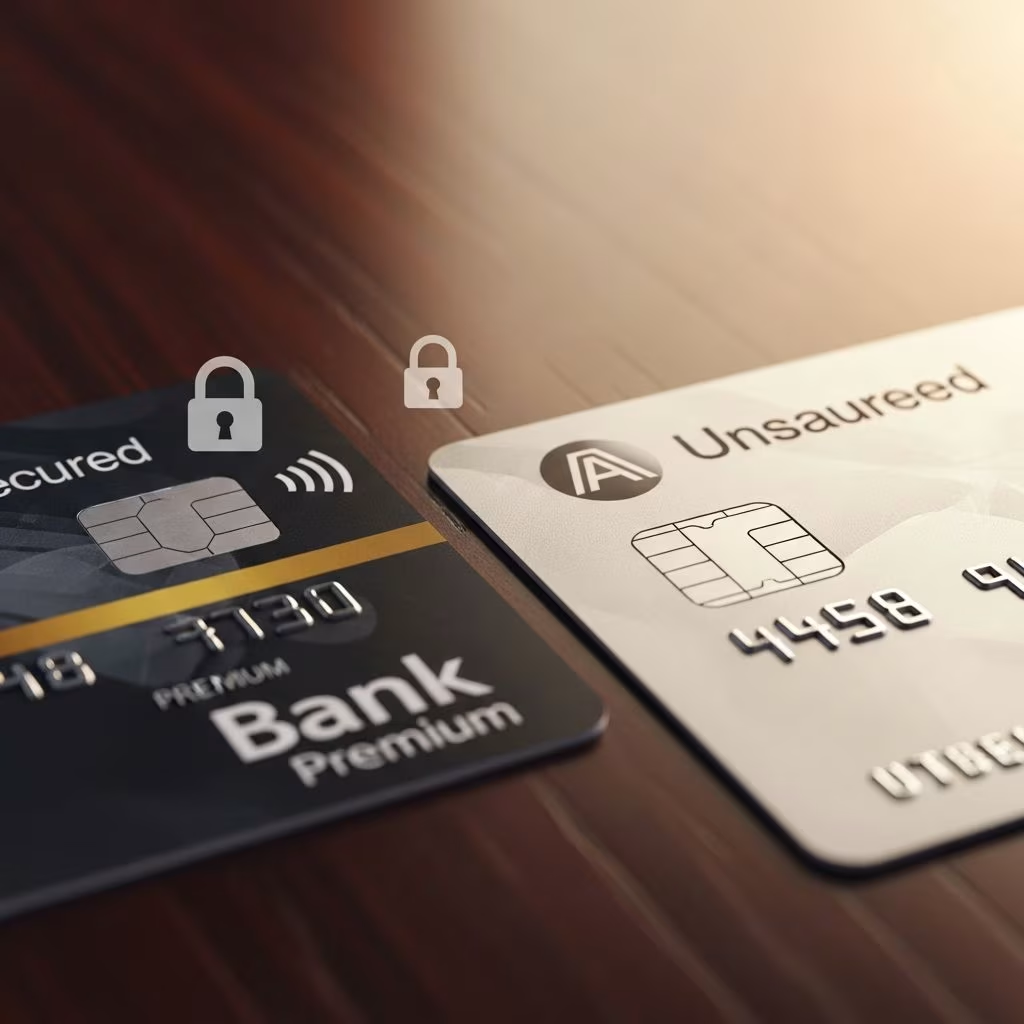
Secured credit cards serve as an essential tool for individuals establishing or repairing their credit profiles. By providing a security deposit that acts as the credit limit, these cards enable users to demonstrate financial reliability. Once creditworthiness is proven, upgrading to an unsecured card becomes feasible, eliminating the deposit requirement and often unlocking enhanced features like rewards programs. This transition marks a significant milestone in personal finance management.
Understanding Secured vs. Unsecured Credit Cards
Secured cards differ fundamentally from unsecured ones in their structure and accessibility. A secured card demands an upfront deposit, typically ranging from $200 to $2,500, which sets the spending limit and protects the issuer against default. In contrast, unsecured cards extend credit based solely on the applicant’s credit history, income, and score, without any collateral.
This upgrade process, often termed ‘graduating’ or ‘unsecuring,’ preserves your payment history on the account, benefiting your credit score longevity. Issuers like Capital One and Discover frequently offer pathways for loyal, responsible cardholders to advance.
| Feature | Secured Card | Unsecured Card |
|---|---|---|
| Deposit Required | Yes (equals credit limit) | No |
| Credit Score Needed | Poor/Fair (under 580) | Fair/Good (580+) |
| Annual Fees | Often higher | Variable, often lower |
| Rewards | Rare | Common (cash back, points) |
| Upgrade Path | Possible after responsible use | N/A |
Signs You’re Ready for an Unsecured Card Upgrade
Determining readiness involves assessing several key indicators of financial discipline. Primary among these is a track record of on-time payments spanning at least 12 months, as issuers monitor this closely. A credit score in the fair range (580-669) signals improvement, making unsecured options viable.
- Consistent Payments: No late payments for 6-12+ months across all accounts.
- Low Utilization: Keep balances under 30% of limits to optimize scores.
- Score Improvement: Aim for 580+; check free via issuer tools or annualcreditreport.com.
- Issuer Notification: Some send pre-approval alerts for upgrades.
- Account Age: Minimum 7-12 months of activity.
Maintain these habits to avoid setbacks like recent delinquencies or high debt, which can disqualify upgrades.
Step-by-Step Guide to Requesting Your Upgrade
The upgrade process varies by issuer but follows a predictable sequence. Start by reviewing your account status through online portals or apps for eligibility hints.
Step 1: Review Your Credit Profile
Obtain your FICO or VantageScore from reliable sources. Ensure no negative marks like bankruptcies hinder progress. Tools from issuers provide snapshots without impacting scores.
Step 2: Contact Your Issuer Directly
Call the number on your card or use secure chat. Inquire about ‘graduation’ options. Provide account details; representatives assess in real-time. Discover reviews after 7 months; Capital One periodically evaluates.
Step 3: Await Review and Approval
Issuers analyze payment history, utilization, and overall credit. Approval may be instant or take days. If denied, ask for specific improvement areas.
Step 4: Receive New Card and Deposit Refund
Upon approval, your account converts: deposit refunds via check or direct deposit (4-8 weeks). Old card deactivates; new unsecured version activates with potentially higher limits.
If no internal upgrade exists, apply externally while keeping the secured card open temporarily to preserve history.
Timelines and Expectations by Issuer
Upgrade eligibility timelines differ significantly, reflecting issuer policies.
| Issuer | Review Period | Key Requirements | Deposit Refund |
|---|---|---|---|
| Discover it Secured | 7 months | Good standing | Full refund + limit increase |
| Capital One Secured | Periodic reviews | On-time payments | Processed post-upgrade |
| General (e.g., Bankrate notes) | 12-18 months | Fair score, low utilization | After account closure/upgrade |
Expect 6-24 months overall, faster with exemplary use.
Benefits of Transitioning to Unsecured Cards
Beyond deposit recovery, unsecured cards offer expanded perks:
- Higher Limits: Often double initial secured limits.
- Rewards Programs: Earn cash back (1-5%) or travel points.
- Lower Fees: Reduced APRs and annual charges.
- Prestige Boost: Improves future loan approvals.
- Security Maintained: Fraud protections remain intact; ‘unsecured’ refers only to deposit.
Retaining the account history (up to 10 years positive data) further strengthens scores.
Common Challenges and Solutions
Not all transitions are seamless. Address these proactively:
- No Upgrade Option: Shop competitors like Chase Freedom Rise or Wells Fargo Active Cash for fair-credit applicants.
- Denial: Continue good habits; reapply in 3-6 months.
- Refund Delays: Confirm payoff; follow up weekly.
- Credit Dips: Hard inquiries from new apps temporary (under 12 months).
Avoid closing secured cards prematurely to prevent score drops from reduced credit age/mix.
Best Practices During the Transition
- Pay balances fully monthly.
- Monitor scores weekly.
- Diversify credit (add installment loans if needed).
- Update income info for limit increases.
- Compare unsecured offers pre-application.
Frequently Asked Questions (FAQs)
Can anyone upgrade their secured card?
No, eligibility requires responsible use, typically 6-12 months of on-time payments and fair credit.
How long until I get my deposit back?
Usually 4-8 weeks post-upgrade or closure, once final statements clear.
Does upgrading hurt my credit score?
Minimal impact if internal; external apps may cause temporary 5-10 point dip.
What if my issuer doesn’t offer upgrades?
Apply for new unsecured cards elsewhere, then close secured after approval.
Are unsecured cards riskier?
No, they retain full fraud protection; the term only denotes no deposit.
Long-Term Credit Building After Upgrade
Post-upgrade, sustain momentum:
- Target excellent credit (740+) for premium cards.
- Leverage rewards wisely.
- Monitor reports annually via AnnualCreditReport.com (government site).
- Consider balance transfers for debt consolidation.
This progression from secured to unsecured exemplifies disciplined credit stewardship, paving paths to mortgages, auto loans, and financial independence.
References
- Can You Change A Secured Credit Card To An Unsecured Card? — Bankrate. 2024. https://www.bankrate.com/credit-cards/building-credit/secured-card-to-unsecured-card/
- How to Upgrade a Secured Credit Card to an Unsecured Card — Experian. 2024-03-30. https://www.experian.com/blogs/ask-experian/how-to-upgrade-secured-credit-card-to-unsecured-card/
- Upgrading from a secured to an unsecured credit card — Capital One. 2024. https://www.capitalone.com/learn-grow/money-management/unsecuring-capital-one-secured-card-upgrade/
- Can I Change a Secured Credit Card to an Unsecured Card? — NerdWallet. 2024. https://www.nerdwallet.com/credit-cards/learn/credit-card-secured-unsecured-change-switch
- Changing a Secured Credit Card to an Unsecured Card — SoFi. 2024. https://www.sofi.com/learn/content/transitioning-from-secured-to-unsecured-credit-card/
- How to Graduate From a Secured Credit Card to Unsecured — Discover. 2024. https://www.discover.com/credit-cards/card-smarts/doing-what-it-takes-to-graduate-from-your-secured-card/
This article is general information, not personal financial advice. Consider your own situation, or speak with a licensed adviser, before acting on it.


