

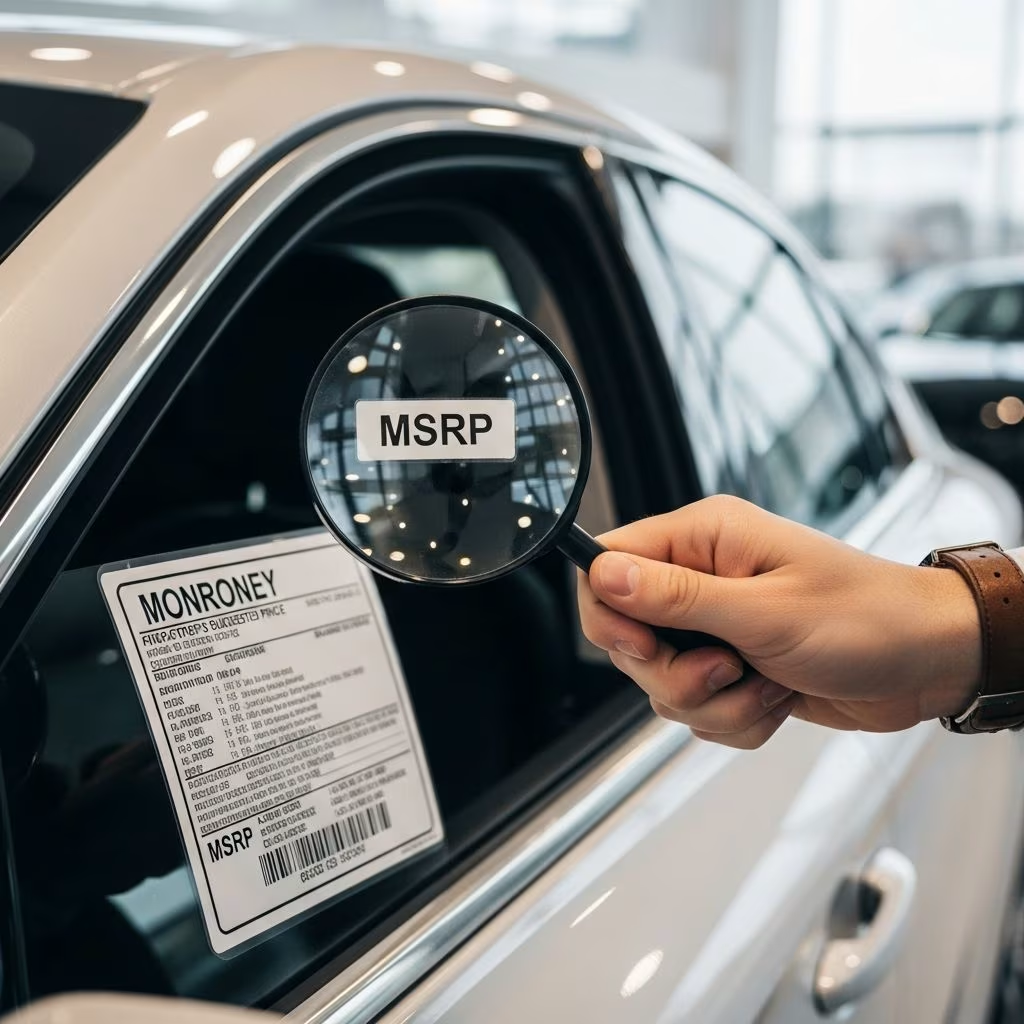
The automotive market is filled with pricing terms that can confuse even seasoned buyers. At the forefront is **MSRP**, or Manufacturer’s Suggested Retail Price, a benchmark figure that shapes every new car transaction. Understanding MSRP empowers you to navigate dealerships confidently, spot genuine deals, and avoid overpaying. This comprehensive guide breaks down its origins, calculations, comparisons, and real-world applications to help you drive away with the best value.
Understanding the Fundamentals of MSRP
**MSRP** represents the price point recommended by a vehicle’s manufacturer for retailers to charge consumers. Often called the sticker price or window price, it appears prominently on new cars’ Monroney labels—the federally mandated window stickers providing detailed cost breakdowns. Unlike fixed retail goods, cars operate in a negotiation-driven ecosystem where MSRP serves as a starting reference rather than a final obligation.
Manufacturers establish MSRP uniformly for identical models and trims across all dealerships nationwide. This standardization ensures fairness in baseline pricing but allows local market dynamics to influence actual sale prices. For instance, a 2026 Ford F-150 base model might list at $38,500 MSRP everywhere, yet final tags could vary by thousands based on demand and promotions.
- Uniformity Across Dealers: Same make, model, year equals identical MSRP.
- Visibility: Check manufacturer sites, dealer inventories, or window stickers.
- Not Binding: Dealers can adjust below or—rarely—above MSRP.
How Automakers Determine MSRP Values
Setting an MSRP involves intricate market analysis. Automakers blend production costs, competitive positioning, projected demand, and profitability targets. Base MSRPs cover entry-level configurations without optional extras, while escalating trims and packages inflate the figure proportionally.
Key influences include:
- Material and Labor Costs: Steel, electronics, and assembly expenses form the core.
- Market Research: Competitor pricing and consumer willingness to pay.
- Brand Positioning: Luxury brands command higher MSRPs than economy ones.
- Destination Fees: Included in MSRP; covers shipping from factory to lot (typically $1,000-$2,000).
Higher demand for models like electric SUVs can push sales closer to MSRP, while oversupplied sedans often discount heavily. During supply shortages, such as chip crises, premiums over MSRP have occurred, though federal guidelines and competition usually curb this.
| Factor | Impact on MSRP | Example |
|---|---|---|
| Base Model | Lowest Price | $30,000 Sedan |
| Premium Trim | +20-50% | $45,000 with Leather/Tech |
| High Demand | Sells Near MSRP | Popular EV at Full Price |
| Low Demand | Discount Potential | Sedan -$5,000 Off |
MSRP Versus Invoice Price: Critical Distinctions
A common point of confusion is distinguishing MSRP from **invoice price**, the amount dealers pay manufacturers. Invoice typically sits 5-10% below MSRP, representing the dealer’s breakeven after holdback (a 2-3% manufacturer rebate) and incentives.
Key Differences:
- MSRP: Suggested consumer price; profit buffer for dealers.
- Invoice: Dealer’s acquisition cost; not always disclosed.
Buyers armed with invoice data gain leverage. Tools like Edmunds or TrueCar provide averages, revealing typical dealer margins. Aim for 2-5% above invoice as a fair target, leaving room for dealer profit without excess.
| Metric | MSRP | Invoice Price |
|---|---|---|
| Definition | Suggested Retail | Dealer Cost |
| Who Sets It | Manufacturer | Manufacturer |
| Typical Gap | 5-10% Higher | Base + Holdback |
| Negotiation Role | Ceiling Start | Floor Target |
What MSRP Covers and Excludes
MSRP encapsulates the base vehicle, factory options, standard warranty, and destination charge. It reflects a fully equipped unit as shipped but omits post-sale add-ons.
Included:
- Trim-specific features (e.g., engine, infotainment).
- Standard safety/tech packages.
- Factory warranty terms.
- Delivery fees.
Excluded:
- Taxes, title, registration.
- Dealer-installed accessories (e.g., mats, alarms).
- Extended warranties or financing fees.
- State-specific emissions compliance.
Always scrutinize the window sticker for a full itemized list to avoid surprises.
Strategic Negotiation Tactics Using MSRP
MSRP is your negotiation anchor—start low, citing invoice and market data. Research via Kelley Blue Book, NADA Guides, or Cars.com for regional averages. Timing matters: end-of-month quotas or model-year closeouts yield bigger discounts.
- Research Thoroughly: Compile competing quotes and invoice estimates.
- Target Invoice + 2-4%: Fair for dealer, savings for you.
- Leverage Incentives: Stack rebates, loyalty discounts.
- Walk Away Power: Multiple dealer bids create competition.
- Total Out-the-Door: Negotiate full price including fees.
Premium vehicles offer more wiggle room; economy models less so due to thin margins.
Real-World Scenarios: MSRP in Action
Consider a mid-size SUV with $40,000 MSRP and $37,500 invoice. Low-demand periods might net $38,000 (invoice + $500). Hot sellers like trucks could hold at $39,500. Post-pandemic supply issues saw some models add $5,000 markups, but 2026 markets favor buyers with normalized inventory.
Electric vehicles introduce unique dynamics: federal tax credits ($7,500) effectively lower effective MSRP, while battery costs elevate base figures.
Frequently Asked Questions (FAQs)
What exactly does MSRP stand for?
Manufacturer’s Suggested Retail Price—the recommended selling price from the automaker.
Can I pay less than MSRP?
Yes, often 5-15% below via negotiation, especially on slow-movers.
Is invoice price public?
Not always; request it or use online estimators.
Does MSRP include taxes?
No—add sales tax, fees separately for out-the-door total.
Why do some cars sell above MSRP?
High demand exceeds supply; rare in balanced markets.
Advanced Tips for Maximizing Savings
Beyond basics, consider leasing (MSRP caps residuals), fleet programs, or credit unions for financing. Track holdback via manufacturer portals. In 2026, with EV incentives peaking, hybrid shoppers save most by pitting dealers.
Digital tools revolutionized this: apps like AutoTempest aggregate listings, flagging MSRP outliers instantly.
References
- What Is MSRP? — Al Packer’s White Marsh. 2023. https://www.alpackerswhitemarsh.com/finance/finance-insurance-information/what-is-msrp/
- What Does MSRP On A New Car Mean? — Car and Driver. 2023-10-12. https://www.caranddriver.com/auto-loans/a43162177/what-does-msrp-mean/
- Monroney Sticker Label Requirements — U.S. Federal Trade Commission (FTC). 2024-05-15. https://www.ftc.gov/legal-library/browse/guides/buying-car
- Vehicle Pricing Guidelines — National Automobile Dealers Association (NADA). 2025-01. https://www.nada.org/nada/research-data
This article is general information, not personal financial advice. Consider your own situation, or speak with a licensed adviser, before acting on it.


