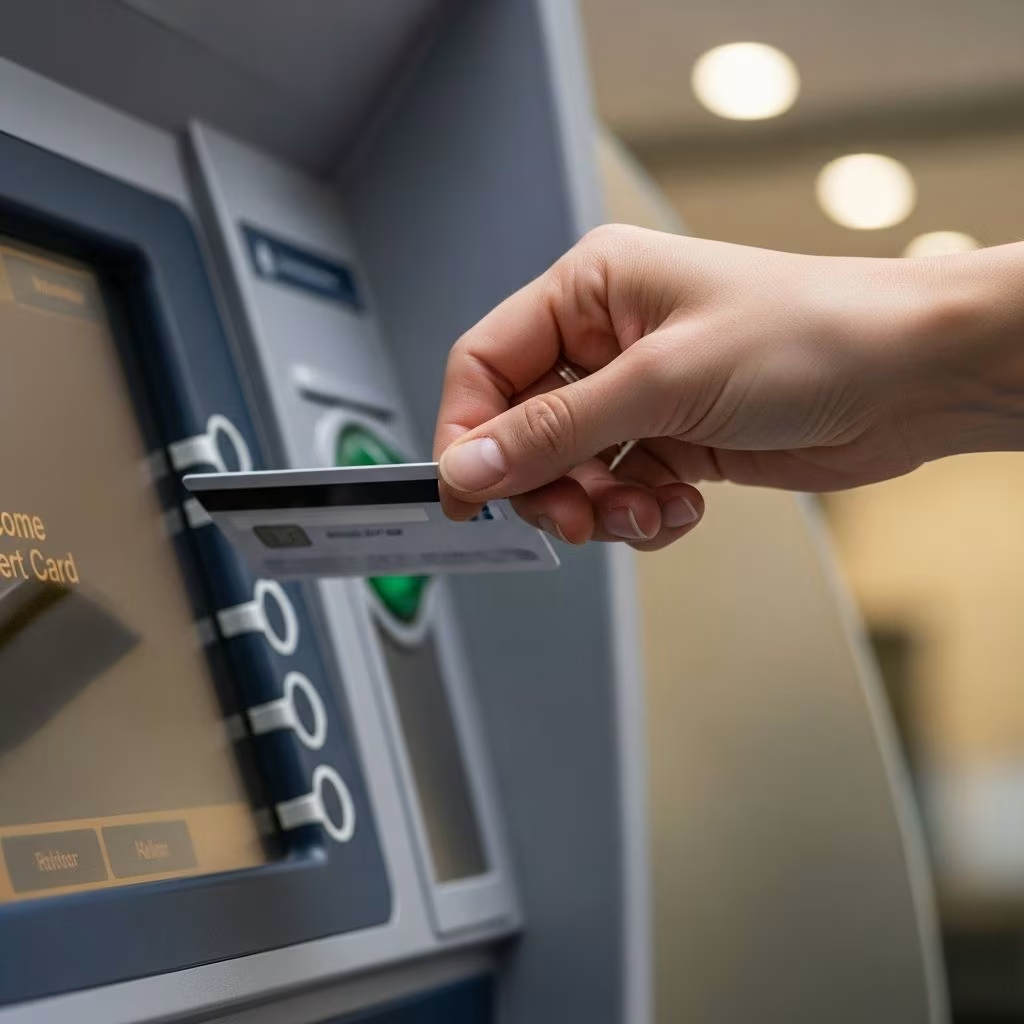
Launching your initial bank account marks a pivotal moment in building financial stability. It enables secure handling of funds, effortless bill payments, and growth through savings. This guide outlines everything from preparation to maintenance, drawing on established practices from financial institutions.
Why Establish a Bank Account Early?
Bank accounts offer protection against cash loss or theft, provide access to digital tools for tracking spending, and facilitate direct deposits for wages or benefits. Unlike keeping money at home, banks insure deposits up to $250,000 per depositor through the FDIC for banks or NCUA for credit unions, ensuring safety.
- Convenience: Pay bills online, use debit cards for purchases, and deposit checks via mobile apps.
- Interest earnings: Savings accounts accrue interest, helping money grow over time.
- Credit foundation: Responsible use supports future loans or credit cards.
For young adults or teens, starting early instills discipline. Parents often co-sign for minors, teaching real-world skills.
Account Types: Matching Your Needs
Select based on purpose. Checking suits daily use; savings builds reserves.
| Feature | Checking Account | Savings Account |
|---|---|---|
| Purpose | Transactions, payments | Accumulating funds |
| Access | Debit card, checks, ATM | Limited withdrawals |
| Interest | Low or none | Higher rates |
| Fees | Possible monthly, overdraft | Minimum balance |
Many opt for both: checking for spending, savings for goals like emergencies. Joint accounts work for families.
Gathering Essential Documents
Institutions verify identity to comply with federal laws like the USA PATRIOT Act. Prepare these:
- Government-issued photo ID: driver’s license, passport, or state ID.
- Social Security Number (SSN) or ITIN for tax purposes.
- Proof of address: utility bill, lease, or bank statement.
- Initial deposit: $25–$100 typically, in cash, check, or transfer.
Minors need a parent/guardian with ID; some accept student ID or birth certificate if accompanied. Have digital scans for online applications.
Researching Banks and Credit Unions
Compare options thoroughly. Traditional banks offer branches; online banks provide higher yields and no fees.
- Fees: Monthly maintenance, ATM, overdraft—seek waivers via direct deposit.
- Access: Branch proximity, ATM networks, mobile apps.
- Rates: APY for savings; aim for competitive.
- Reviews: Customer service, reliability.
Credit unions often have lower fees but membership requirements. Use tools like deposit insurance verifiers.
Step-by-Step Process to Open an Account
Follow these steps for a smooth experience.
- Decide account type: Checking, savings, or joint.
- Select institution: Visit site or branch.
- Apply: Online (preferred for speed) or in-person. Enter details: name, DOB, address, SSN.
- Verify identity: Upload/ present docs.
- Fund account: Deposit minimum via transfer, app, or cash.
- Review agreement: Note fees, rates, rules. Sign digitally or physically.
- Activate: Order debit card, set up alerts.
Online opens in minutes; branches suit complex cases. Approval is instant for most with clean records.
Navigating Fees and Costs
Avoid surprises by understanding charges.
| Fee Type | Average Cost | Avoidance Tips |
|---|---|---|
| Monthly | $5–$25 | Direct deposit, min balance |
| Overdraft | $30–$35 | Opt out, alerts |
| ATM (out-network) | $2–$5 | Use in-network |
| Inactive | $5–$15 | Regular use |
Ask about waivers: students, seniors, military often qualify. No-fee accounts exist online.
Special Considerations for Young Openers
Teens under 18 need adult co-owner. Custodial accounts transfer at 18–21. Student accounts waive fees with enrollment proof. Teach check-writing: signature in cursive for security.
Managing Your New Account Effectively
Post-opening:
- Set up direct deposit for paychecks.
- Enable low-balance alerts.
- Track via app; budget monthly.
- Build emergency fund: 3–6 months expenses in savings.
- Monitor statements weekly.
Avoid overdrafts by linking savings as backup. Use round-up apps for auto-savings.
Online vs. In-Person Opening
| Method | Pros | Cons |
|---|---|---|
| Online | 24/7, fast, no travel | Tech needed, delays in verification |
| In-Person | Immediate help, cash deposit | Branch hours, wait times |
Start online during business hours for support.
Frequently Asked Questions
Can I open a bank account without SSN?
Yes, with ITIN or for non-residents per bank policy.
What’s the minimum age?
18 alone; under with parent.
Do I need a minimum deposit?
Often $25–$100, but some waive.
How long until debit card arrives?
5–10 business days; virtual cards instant.
What if denied?
Check ChexSystems for issues; try credit unions.
Long-Term Benefits and Next Steps
Your first account evolves: add CDs for higher yields, explore money market accounts. Consistent use boosts credit. Review annually for better options.
Empower yourself—open today for a secure tomorrow.
References
- How to open a bank account: a step-by-step guide — Bankrate. 2023. https://www.bankrate.com/banking/how-to-open-a-bank-account/
- What to Know Before Opening Your First Bank Account — Auburn Savings Bank. 2024. https://auburnsavings.com/what-to-know-before-opening-your-first-bank-account/
- A Step-by-Step Guide to Opening Your First Bank Account — Oreate AI. 2024. http://oreateai.com/blog/a-stepbystep-guide-to-opening-your-first-bank-account/9abc6ffcb2d8e0aee9bf19857199a4cf
- Guide to Your First Bank Account — Federal Reserve Bank of Atlanta. 2022. https://www.atlantafed.org/banking-and-payments/publications/guide-to-your-first-bank-account
- How to Open Your First Bank Account — YouTube (Next Gen Personal Finance). 2023. https://www.youtube.com/watch?v=f1Kg9pnTcbs
- Checklist for opening a bank or credit union account — Consumer Financial Protection Bureau. 2023. https://files.consumerfinance.gov/f/documents/cfpb_adult-fin-ed_checklist-for-opening-an-account.pdf
- Bank Account Application FAQs — Bank of America. 2025. https://www.bankofamerica.com/deposits/applying-for-accounts-faqs/
This article is general information, not personal financial advice. Consider your own situation, or speak with a licensed adviser, before acting on it.