

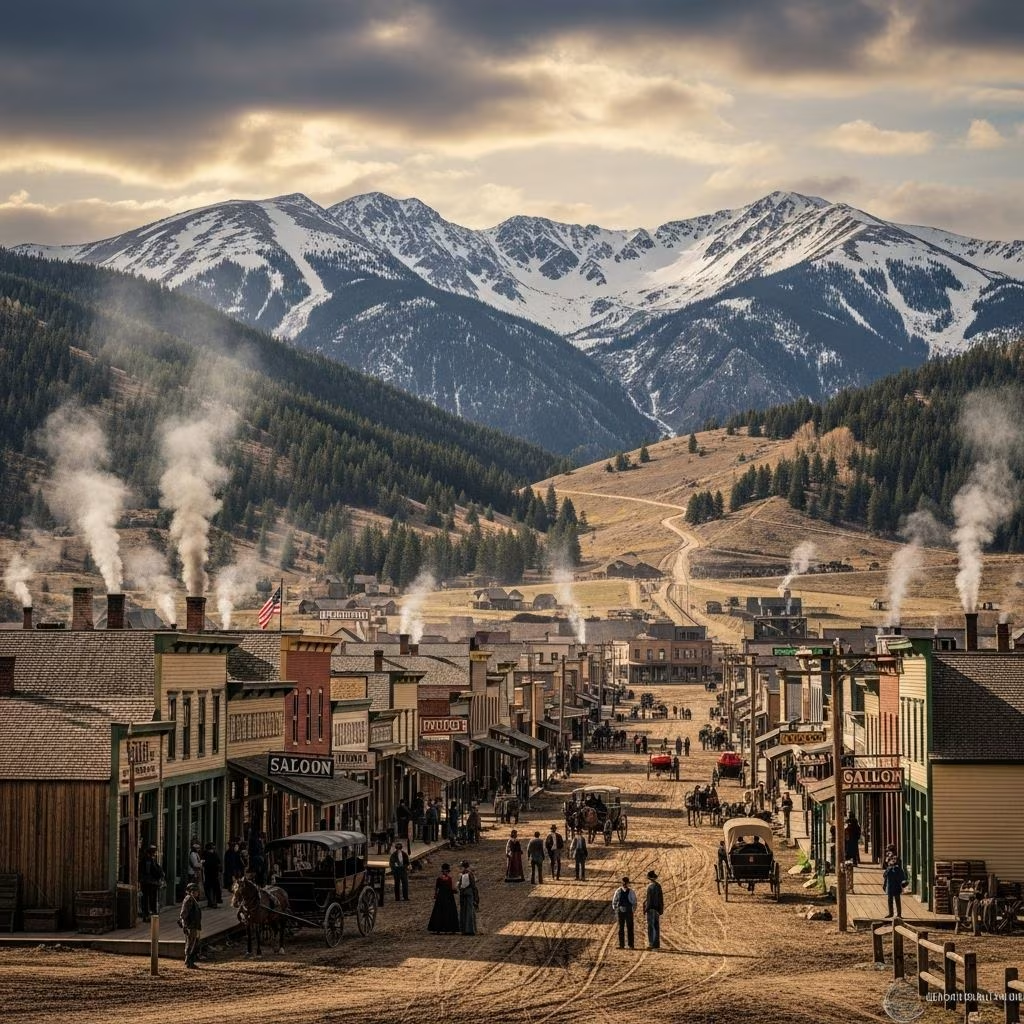
Park City, Utah, stands as a testament to resilience and reinvention. Nestled in the Wasatch Mountains, this vibrant destination transitioned from a rugged silver mining camp in the late 19th century to a global ski mecca and Olympic village. Its story weaves together indigenous heritage, pioneer grit, industrial booms and busts, catastrophic fires, and modern tourism triumphs. Today, it attracts millions for its slopes, festivals, and preserved historic charm.
Ancient Roots and Early Exploration
Long before European settlers arrived, the high alpine valleys around modern Park City served as vital pathways for Native American bands. Around 1600 A.D., indigenous groups traversed these lands in pursuit of game, establishing nomadic camps that date back over 5,000 years. Evidence of their presence lingers in archaeological finds throughout Summit County.
In 1847, Brigham Young led Mormon pioneers through the region en route to Salt Lake City, noting the area’s potential. By 1850, Parley P. Pratt constructed a toll road from Parley’s Park (now Kimball Junction) into the Salt Lake Valley, charging travelers heading to California gold fields and generating significant revenue. This infrastructure opened the remote basin for grazing and settlement, initially called Parley’s Park City.
Tensions arose as Mormon expansion disrupted Native lifeways. Stream diversions for irrigation and timber harvesting sparked conflicts, leading to settler evacuations and fort constructions in nearby areas like Henefer and Peoa. By 1868, treaties relocated tribes to reservations, clearing the path for intensified white settlement.
The Silver Rush Ignites Growth
Park City’s modern chapter began in late October 1868 when soldiers from Big Cottonwood Canyon discovered silver outcrops amid swirling snow. They marked the Flagstaff claim with a bandanna, returning in spring to develop it as the area’s first ore-shipping mine. Rich deposits of silver, lead, zinc, and gold soon drew prospectors, transforming the valley.
By 1869, the transcontinental railroad’s completion at Promontory brought laid-off workers, including many Chinese laborers, boosting the population to 164 by 1870. In 1872, settler George Snyder named the spot Park City for its lush grasses and wildflowers. The 1880s saw explosive growth: The Park Record newspaper launched in 1880, still Utah’s oldest continuous publication, and the Utah Eastern Railroad connected Echo to Park City.
- Key Mining Milestones:
- 1884: Town incorporation and City Hall construction.
- 1889: Population exceeds 5,000; early electric lights installed.
- 1892: Silver King Mine incorporated, becoming a top producer.
Women like Susanna Bransford Emery Holmes, the ‘Silver Queen,’ amassed fortunes, earning $1,000 daily from Silver King interests in 1894. By statehood in 1896, over 7,000 residents called Park City home.
Trials of Fire and Economic Downturn
Prosperity faced severe tests. The 1893 repeal of the U.S. silver standard crashed prices, prompting miner pay cuts at Silver King from $1 to 50 cents daily to sustain operations. Then, in 1898, the Great Fire ravaged Main Street, destroying wooden structures. Remarkably, rebuilding began immediately; George Wanning’s saloon rose first, with brick and stone replacing timber for durability. Within 18 months, the town was fully restored.
Tragedy struck again in 1902 with the Day West Mine explosion, killing 32 miners and hampering recovery. Yet innovations persisted: The 1901 Silver King aerial tramway slashed ore transport costs from $1.50 to 22 cents per ton. World War I briefly revived silver demand, but the 1929 crash and Great Depression decimated the industry.
| Event | Year | Impact |
|---|---|---|
| Great Fire | 1898 | Nearly total destruction; rapid brick/stone rebuild. |
| Day West Explosion | 1902 | 32 deaths; slowed mining momentum. |
| Silver Price Crash | 1929-1930s | Mines closed; population plummeted. |
By 1951, Park City earned ‘ghost town’ status with just 1,150 residents; businesses shuttered as United Park City Mines merged operations.
From Mines to Mountains: The Ski Era Dawns
Salvation came via snow. In 1958, United Park City Mines studied diversifying into skiing on Treasure Mountain (now Park City Mountain Resort). A 1963 federal loan of $1.25 million funded North America’s longest gondola, a chairlift, and J-bars. Opening day passes cost $3.50, drawing nearly 50,000 skier days.
The resort’s success spurred revival. Canyons Resort (formerly ParkWest, opened 1969) expanded options in 1997. By the 1970s, cultural infusions arrived: The 1970 Park City Art Festival debuted on Main Street, followed by the 1976 Kimball Art Center in the historic Eley Garage. Preservation efforts saved landmarks like the Miners Hospital, relocated to City Park in 1979.
Olympic Glory and Modern Renaissance
Park City’s trajectory soared with the 2002 Winter Olympics. As a key venue, it hosted events, showcasing world-class facilities and infrastructure upgrades. Population boomed from 3,585 in 1990 to over 8,500 by 2020, blending historic mining-era buildings with luxury lodges.
Today, Main Street buzzes with galleries, shops, and eateries in preserved Victorian architecture. Annual events like the Sundance Film Festival (nearby) and Park City Art Festival draw crowds. Skiing remains central, with Park City Mountain Resort among North America’s largest.
- Modern Highlights:
- 1996: Silver Mine Adventure Tour opens in Ontario Mine.
- 2002: Hosts Olympic events, global spotlight.
- Ongoing: Historic districts listed on National Register.
Preserving the Legacy
Park City’s Historic District safeguards over 100 structures from its mining past. The Park City Museum offers immersive exhibits, including underground mine tours. Community initiatives balance growth with heritage, ensuring the town’s character endures amid tourism pressures.
Economic diversification includes tech hubs and film production, but mining echoes persist in place names and artifacts. This evolution from silver lode to winter wonderland inspires visitors to explore its multifaceted past.
Frequently Asked Questions (FAQs)
When was silver first discovered in Park City?
Silver was discovered in October 1868 by soldiers marking the Flagstaff claim.
What caused Park City’s decline as a mining town?
The 1893 silver standard repeal, 1898 fire, 1902 mine disaster, and Great Depression led to mine closures and population loss.
How did skiing save Park City?
In 1963, a federal loan funded Treasure Mountain Resort, attracting skiers and revitalizing the economy.
Did Park City host the Olympics?
Yes, it was a major venue for the 2002 Winter Olympics.
What is the population history of Park City?
- 1870: 164 residents.
- 1896: Over 7,000.
- 1951: 1,150 (‘ghost town’).
- 2020: Over 8,500.
References
- Park City Historic Timeline — Park City Museum. Accessed 2026. https://parkcityhistory.org/park-city-historic-timeline/
- Park City’s Incredible History Dating Back to 1870 — Ski Valet Park City. Accessed 2026. https://www.skivaletparkcity.com/park-city-history
- Historic Park City — Utah.com. Accessed 2026. https://www.utah.com/destinations/cities-towns/park-city/historic-park-city/
- History of Park City — Utah History to Go (State of Utah). 2023-10-01. https://historytogo.utah.gov/history-park-city/
- Park City, Utah History | Our Origins — Visit Park City. Accessed 2026. https://www.visitparkcity.com/things-to-do/museums-history/park-city-origins/
- Park City History Summary [PDF] — Park City Chamber & Visitors Bureau. Accessed 2026. https://assets.simpleviewinc.com/simpleview/image/upload/v1/clients/parkcity/History_Timeline_359c66fe-8a1c-4ba5-b9e9-575bab6eb394.pdf
- Park City, Utah — Wikipedia (sourced from official records). Accessed 2026. https://en.wikipedia.org/wiki/Park_City,_Utah
This article is general information, not personal financial advice. Consider your own situation, or speak with a licensed adviser, before acting on it.


