

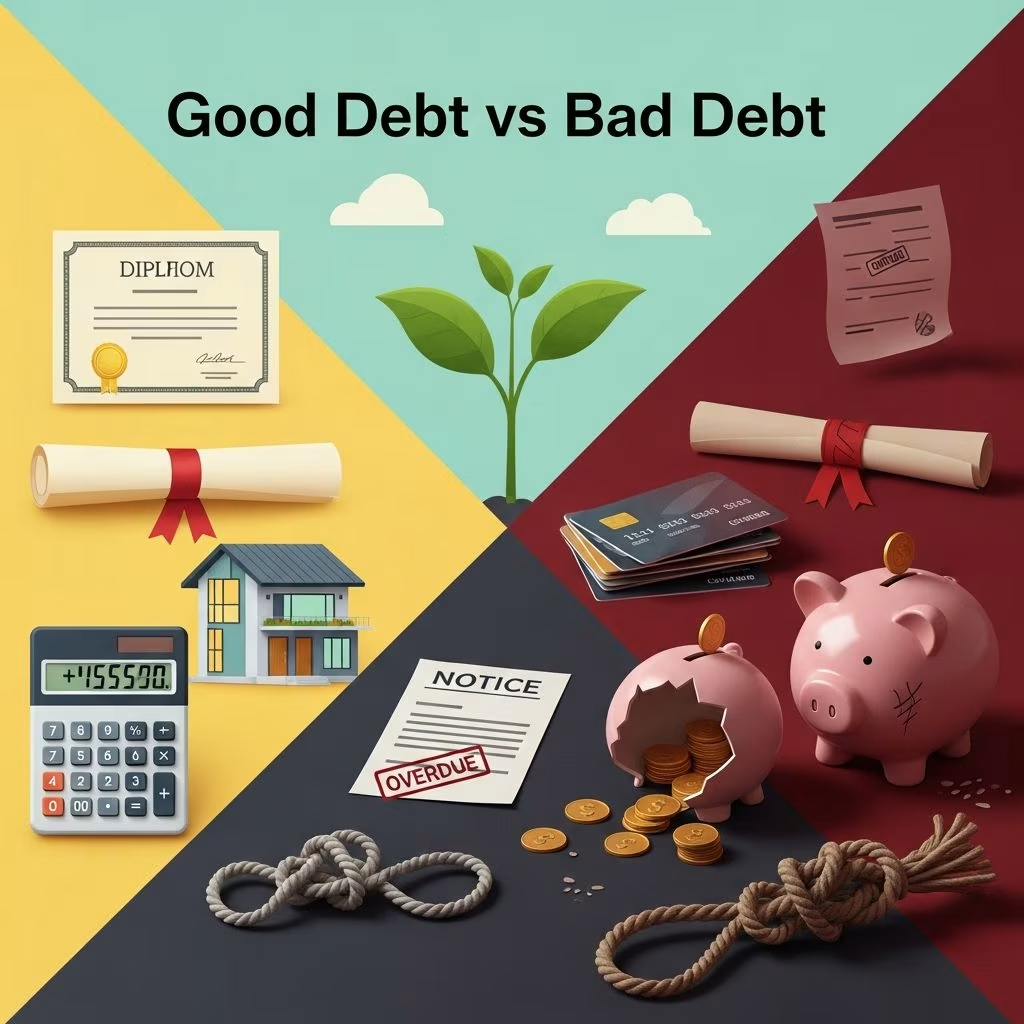
Debt plays a central role in personal finance, but not all borrowing serves the same purpose. **Good debt** fuels long-term growth and wealth accumulation, while **bad debt** often leads to financial strain and diminished resources. Understanding this distinction empowers individuals to make informed decisions that align with their goals.
Defining Good Debt: Investments That Pay Off
Good debt refers to borrowing that enables asset acquisition or skill development likely to generate future income or appreciate in value. These loans typically feature lower interest rates and structured repayment terms that support affordability. Financial experts emphasize that such debt contributes to net worth over time by providing returns exceeding the cost of borrowing.
Key characteristics include:
- Low annual percentage rates (APRs), often under 6%.
- Purpose tied to income-generating or appreciating assets.
- Tax advantages in some cases, like deductible interest.
- Positive impact on credit scores through on-time payments.
Defining Bad Debt: Borrowing That Drains Resources
In contrast, bad debt finances consumption without lasting benefits, frequently carrying high interest rates that compound costs. It arises from impulsive spending or necessities funded poorly, leading to cycles of repayment without progress toward financial goals.
Traits of bad debt encompass:
- High APRs, sometimes exceeding 20%.
- Funds used for depreciating items or luxuries.
- Strain on cash flow, increasing default risk.
- Negative effects on credit utilization and scores.
Prime Examples of Good Debt
Certain loans stand out for their potential to enhance financial stability. Here’s a breakdown:
| Type | Why It’s Good | Typical APR Range | Example Benefit |
|---|---|---|---|
| Mortgage | Builds equity in real estate that appreciates | 3-7% | Home value growth outpaces interest |
| Student Loans | Funds education boosting earning potential | 4-8% | College grads earn ~$32K more annually |
| Business Loans | Supports ventures generating revenue | 5-10% | Export finance drives expansion |
| HELOC/Auto Loan (Essential) | Secures reliable transport or home improvements | 4-9% | Maintains income via commuting |
A mortgage, for instance, allows homeownership where property values often rise, creating equity. Student loans invest in human capital; U.S. Bureau of Labor Statistics data shows higher education correlates with lower unemployment and doubled lifetime earnings.
Common Pitfalls of Bad Debt
Bad debt examples highlight risks of unchecked borrowing:
| Type | Why It’s Bad | Typical APR Range | Risk Example |
|---|---|---|---|
| Credit Cards | High rates on revolving balances | 15-25% | Average balance: $6,730 per person |
| Payday Loans | Extremely high fees for short-term cash | 300%+ | Traps in repayment cycles |
| Discretionary Loans | Funds vacations or gadgets that depreciate | 10-20% | No ROI, pure consumption |
| Overextended BNPL | Multiple plans lead to overspending | 0-30% | Impacts affordability |
Credit card debt exemplifies this, as carrying balances incurs steep interest without asset buildup. High-interest loans like payday options exacerbate issues during cash shortages.
Gray Areas: When Good Debt Turns Sour
Not all debt fits neatly into categories. A vehicle loan might qualify as good if it’s for a primary car at low rates but bad for luxury purchases straining budgets. Student debt becomes problematic if amounts exceed future earnings potential or payments overwhelm income.
- Assess affordability: Debt-to-income ratio should stay below 36%.
- Evaluate ROI: Does the loan’s purpose yield returns > interest?
- Monitor terms: Fixed low rates beat variable high ones.
Strategies to Maximize Good Debt
To leverage good debt effectively:
- Forecast Returns: Project income gains, e.g., salary increases post-education.
- Shop Rates: Compare lenders for lowest APRs from reputable sources.
- Set Repayment Plans: Automate payments to build positive credit history.
- Tax Optimize: Prioritize deductible options like mortgages.
Business owners should model debt impacts on forecasts, ensuring repayments align with projected revenues.
Avoiding and Eliminating Bad Debt
Prevention and reduction tactics include:
- Pay credit cards in full monthly to avoid interest.
- Build emergency funds covering 3-6 months’ expenses.
- Use balance transfer cards for high-rate debt consolidation.
- Prioritize high-APR debts in repayment (debt avalanche method).
For consumers, incentives like discounts for prompt payments can mitigate bad receivables.
Impact on Credit Scores and Financial Health
Responsible good debt management showcases credit mix and payment history, key FICO factors. Bad debt elevates utilization ratios above 30%, harming scores. Equifax notes high debt-to-credit ratios signal risk to lenders.
Long-term, good debt builds wealth; U.S. Bank highlights lower-rate mortgages as leverage for appreciation.
Practical Tips for Debt Evaluation
Before borrowing, ask:
- Will this increase my net worth or income?
- Is the interest rate below potential returns?
- Can I repay comfortably if circumstances change?
Tools like debt calculators help simulate scenarios.
Frequently Asked Questions (FAQs)
What makes debt ‘good’ or ‘bad’?
Good debt invests in appreciating assets or skills with low rates; bad debt funds consumption at high costs with no ROI.
Can auto loans be good debt?
Yes, for essential vehicles at low rates enabling work access; no for luxury or multiples straining budgets.
Is student debt always good?
No, if unmanageable relative to career prospects or high rates outweigh benefits.
How does debt affect my credit score?
Positive payments from good debt help; high utilization from bad debt hurts.
What’s the best way to pay off bad debt?
Prioritize highest interest first and avoid new charges.
Building a Debt-Smart Financial Plan
Integrate debt analysis into budgeting. Aim for leverage that amplifies wealth without overextension. Regularly review portfolios, refinancing when rates drop. This approach fosters resilience and growth.
References
- Good vs bad business debt explained — British Business Bank. 2023-10-12. https://www.british-business-bank.co.uk/business-guidance/guidance-articles/finance/good-debt-versus-bad-debt
- Good Debt vs. Bad Debt: What’s the Difference? — Experian. 2024-05-15. https://www.experian.com/blogs/ask-experian/good-debt-vs-bad-debt-whats-the-difference/
- Financial Leverage: What Is Good Debt vs Bad Debt? — U.S. Bank. 2024-02-20. https://www.usbank.com/wealth-management/financial-perspectives/financial-planning/financial-leverage-what-is-good-debt-vs-bad-debt.html
- Understanding Credit: Good Debt vs. Bad Debt — Equifax. 2023-11-08. https://www.equifax.com/personal/education/credit/report/articles/-/learn/understanding-credit-good-debt-vs-bad-debt/
- Good debt vs bad debt — Fidelity Investments. 2024-07-10. https://www.fidelity.com/learning-center/smart-money/good-debt-vs-bad-debt
This article is general information, not personal financial advice. Consider your own situation, or speak with a licensed adviser, before acting on it.


