

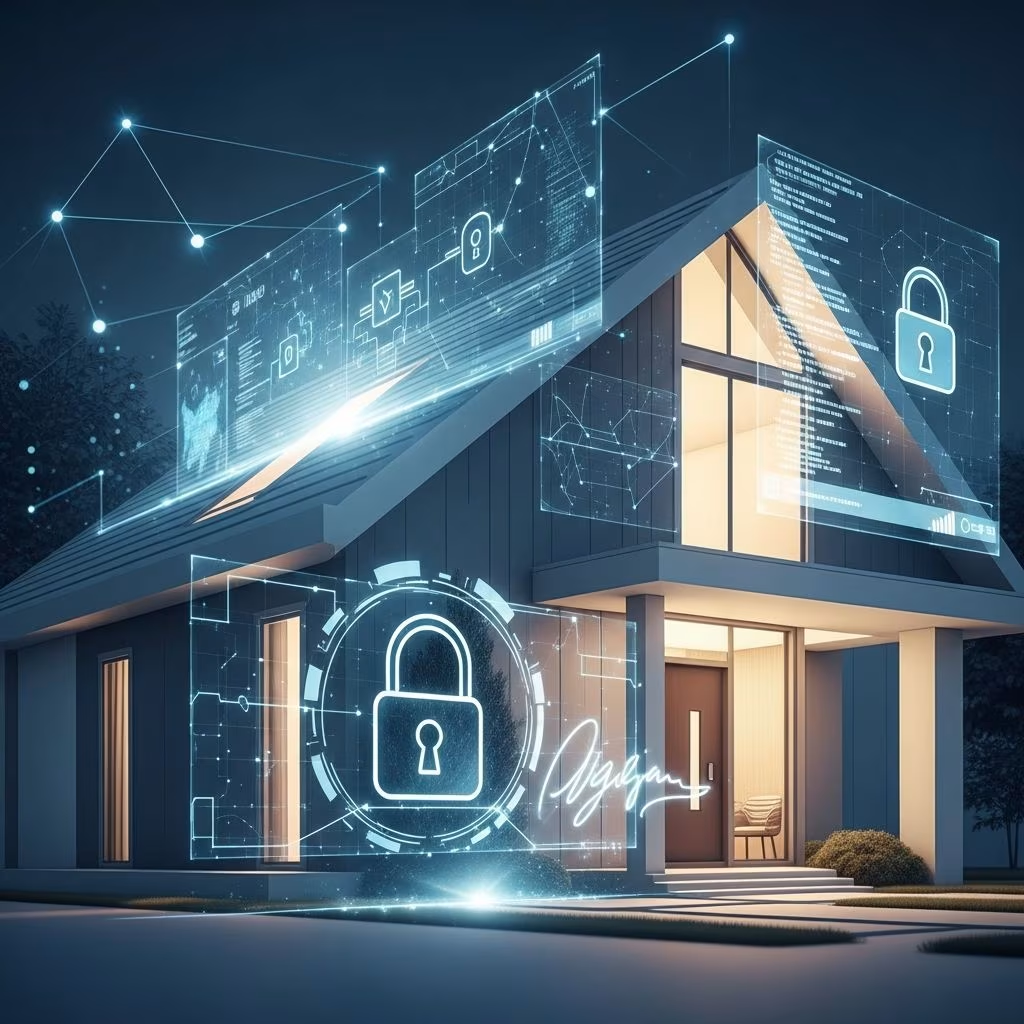
Electronic closing, known as eClosing, revolutionizes the traditional home buying finale by replacing paper documents with secure digital signatures and online platforms. This method allows buyers, sellers, and lenders to complete transactions remotely, reducing time and errors while enhancing security.
Why Choose Electronic Closing for Your Home Purchase
Opting for a digital closing process offers significant advantages in today’s fast-paced real estate market. Homebuyers save time by avoiding in-person meetings, often finalizing deals days faster than paper-based methods. Funds transfer electronically, minimizing risks associated with physical checks.
- Speed: Transactions complete in hours rather than days, ideal for competitive markets.
- Convenience: Sign from any location using a computer or mobile device.
- Cost Savings: Reduced printing, mailing, and notary fees lower overall expenses.
- Environmental Impact: Paperless processes cut down on waste significantly.
According to mortgage industry standards, eClosing adoption has surged, with many lenders now offering it as standard due to its efficiency.
Understanding the Core Components of eClosing
The backbone of electronic closing includes advanced tools like digital signatures, secure portals, and remote online notarization (RON). Buyers access a unified platform to review, sign, and submit documents securely.
| Component | Description | Benefit |
|---|---|---|
| Digital Signatures | Legally binding electronic approvals | Fast and tamper-proof |
| Secure Portals | Encrypted document repositories | 24/7 access with audit trails |
| Remote Notarization | Video-verified identity checks | No travel required |
| eNotary Seals | Digital equivalents of stamps | Compliant with state laws |
These elements ensure compliance with federal and state regulations, making eClosing as valid as traditional methods.
Step-by-Step Guide to Your Digital Closing Journey
Navigating eClosing follows a structured path integrated into the broader homebuying timeline. Preparation begins during underwriting, where documents are digitized for review.
- Pre-Closing Review: Receive the Closing Disclosure digitally 3 days prior to signing. Review terms, fees, and loan details via secure link.
- Identity Verification: Upload government-issued ID for RON; a brief video call confirms authenticity.
- Document Signing: Access portal, e-sign each form with a click. Track progress in real-time.
- Fund Wiring: Transfer down payment and closing costs electronically; no physical funds needed.
- Finalization: Receive confirmation, keys, and deed digitally or via mail.
This process typically wraps up in under a day, contrasting with weeks for mail-based closings.
Security Measures Protecting Your Digital Transaction
Robust safeguards underpin eClosing platforms, addressing common concerns about fraud. Multi-factor authentication, blockchain-level encryption, and session recording prevent unauthorized access.
- End-to-end encryption protects data in transit and at rest.
- Audit logs record every action for transparency.
- Biometric verification adds personal security layers.
- Compliance with ESIGN Act and UETA ensures legal enforceability.
Lenders partner with certified providers vetted by regulatory bodies, minimizing risks compared to outdated paper trails.
Comparing Traditional vs. Digital Closing Methods
Traditional closings demand physical presence, bulky paperwork, and courier services, often delaying possession. Digital alternatives eliminate these hurdles.
| Aspect | Traditional Closing | Digital Closing |
|---|---|---|
| Time Required | 1-2 weeks | 1-2 days |
| Location | In-person at office | Anywhere online |
| Cost | Higher (printing, travel) | Lower (digital only) |
| Error Rate | High (manual entry) | Low (automated checks) |
| Availability | Business hours | 24/7 |
Data shows eClosing reduces errors by up to 80%, streamlining the path to keys in hand.
State Regulations and eClosing Availability
Not all states permit full remote online notarization yet, but adoption grows annually. Check your state’s housing finance authority for RON laws—over 40 states now allow it.
- Fully digital states: Florida, Texas, Virginia.
- Hybrid options: Many others with wet signatures for deeds.
- Upcoming: Federal pushes for nationwide uniformity.
Consult your lender early to confirm eClosing feasibility in your area.
Real-World Benefits: Stories from Digital Closers
Buyers report overwhelming satisfaction with eClosing. A family in a remote area closed without travel, saving weekends. Military personnel stationed abroad finalized purchases seamlessly. These cases highlight accessibility for diverse lifestyles.
“eClosing let us sign from two states away—game-changer for our move.” – Satisfied Buyer
Industry stats confirm higher completion rates and satisfaction scores.
Preparing for Your Seamless eClosing Experience
Start by selecting a lender offering hybrid or fully digital options. Gather digital copies of IDs, pay stubs, and bank statements upfront. Test your internet connection and device compatibility.
- Download required apps for mobile signing.
- Review sample documents online.
- Schedule a tech walkthrough if needed.
Early preparation ensures smooth execution.
Frequently Asked Questions About Digital Home Closings
Is eClosing legally binding?
Yes, digital signatures carry the same weight as handwritten ones under federal ESIGN and state UETA laws.
Do I need special equipment?
A stable internet connection, webcam for RON, and modern browser suffice. Mobile devices work too.
How secure is my personal information?
Bank-grade encryption and compliance standards protect data better than paper.
Can all loans use eClosing?
Most conventional, FHA, and VA loans qualify; confirm with your lender.
What if I prefer paper?
Hybrid options blend digital signing with printed deeds where required.
Embracing eClosing in the Modern Homebuying Era
As 2026 approaches, digital closing stands as the gold standard for efficiency. Integrating it into your mortgage strategy positions you ahead in competitive markets. Partner with forward-thinking lenders to unlock this powerful tool.
References
- Buying a Home in 2026: How to Prepare as a Buyer — Nextar Homes. 2026-01-15. https://www.nextarhomes.com/blog/your-2026-guide-to-buying-a-new-home
- Your Complete Home Buying Checklist for 2026 — Amerisave. 2025-12-01. https://www.amerisave.com/learn/your-complete-home-buying-checklist-for-essential-steps-from-preapproval-to-closing-day
- Buying a Home in 2026: The Homebuying Timeline — Lendfriend Mortgage. 2026-01-10. https://www.lendfriendmtg.com/learning-center/step-by-step-homebuying-timeline
- Buying a Home in 2026? Here’s What to Do First — North Carolina Housing Finance Agency (NCHFA). 2025-11-20. https://www.nchfa.com/news/home-matters-blog/buying-home-2026-here%E2%80%99s-what-do-first
- Confidently Buy Your First Home: Tips Every Buyer Needs for 2026 — HAR.com. 2026-01-05. https://www.har.com/blog_141945_confidently-buy-your-first-home-tips-every-buyer-needs-for-2026
- The First 5 Steps To Buying A Home In 2026 — Ameris Bank. 2025-12-10. https://www.amerisbank.com/Personal/Learn/Financial-Articles-Advice/Buying-A-Home/The-First-5-Steps-To-Buying-A-Home-In-2026
- How to prepare your finances to buy a house in 2026 — Rocket Mortgage. 2025-11-15. https://www.rocketmortgage.com/learn/how-to-prepare-finances-to-buy-2026
This article is general information, not personal financial advice. Consider your own situation, or speak with a licensed adviser, before acting on it.


