

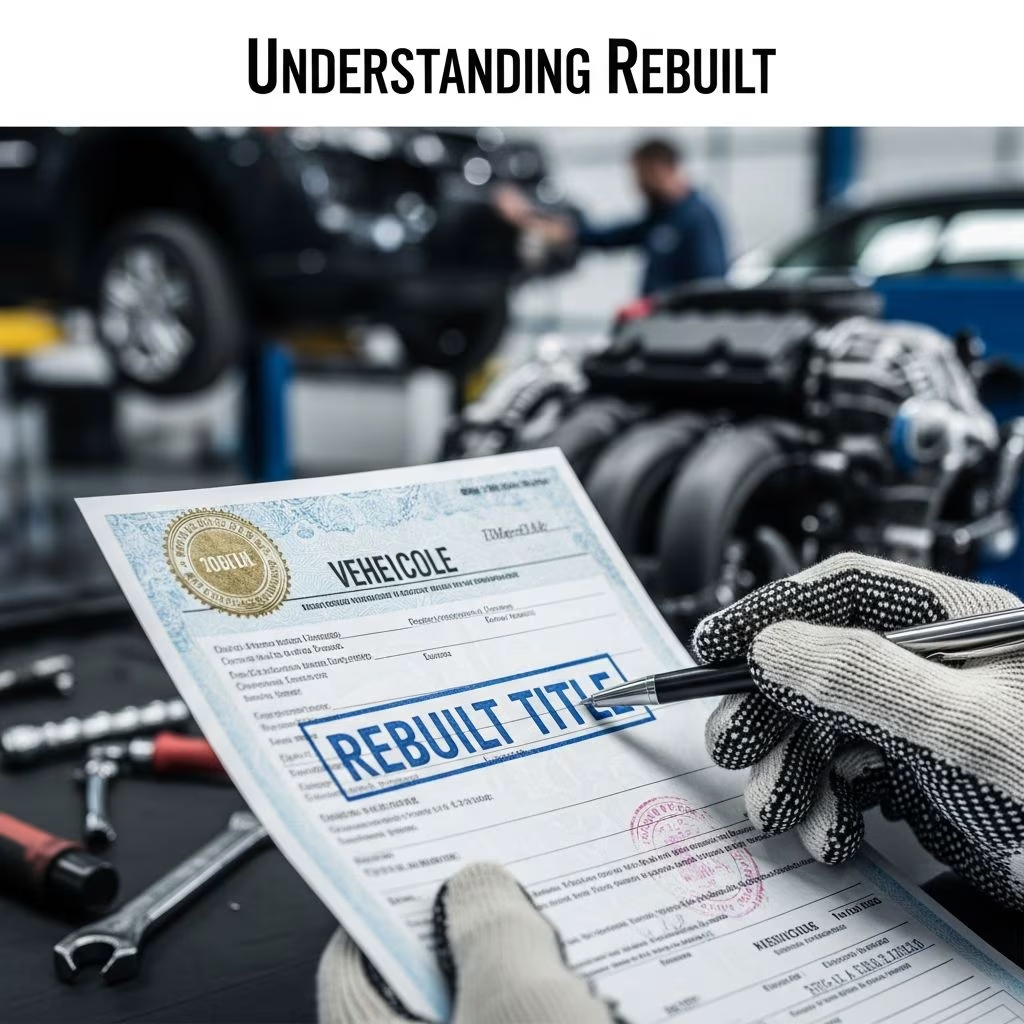
Rebuilt titles mark vehicles that were once declared total losses but have been restored to roadworthy condition after repairs and inspections. These cars often sell at reduced prices, attracting budget-conscious buyers, yet they carry unique risks that demand careful evaluation.
The Journey from Clean to Rebuilt: Key Title Types Explained
Vehicle titles serve as official records of a car’s history, signaling its condition and past incidents. Understanding the progression helps buyers assess options effectively.
- Clean Title: Represents vehicles untouched by major damage or total-loss declarations. It confirms no severe accidents, floods, or fires have compromised the car’s integrity, though minor liens might exist.
- Salvage Title: Issued when repair costs exceed a state-defined threshold of the vehicle’s value, often 70-75%. This status prohibits driving or registration, as the car is deemed unsafe or uneconomical to fix.
- Rebuilt Title: Assigned post-repair and inspection approval. It verifies the vehicle meets safety standards for public roads, but permanently discloses its salvage history.
This sequence—clean to salvage to rebuilt—highlights how insurers and states protect consumers by branding histories transparently.
Common Triggers for Salvage Declarations
Several events can lead to a salvage title, each with varying long-term implications for rebuilt vehicles.
| Damage Type | Description | Potential Rebuilt Risks |
|---|---|---|
| Collision | High-impact crashes exceeding value thresholds. | Structural weaknesses or airbag redeployment issues. |
| Flood | Water submersion from storms or submersion. | Electrical corrosion emerging over time. |
| Hail/Fire | Surface or heat damage totaling the car. | Cosmetic fixes hiding deeper frame or system problems. |
| Theft/Vandalism | Recovery after stripping or major defacement. | Missing parts or improper reassembly. |
Insurers calculate totals based on actual cash value versus repair estimates, with state percentages varying.
State-by-State Variations in Rebuilt Processes
Rebuilt titles aren’t uniform nationwide; regulations differ significantly, affecting safety confidence.
- Most states mandate rigorous inspections covering frame integrity, brakes, lights, and emissions.
- A few locations skip formal checks, relying on owner certifications, heightening buyer caution.
- Terms like “rebuilt salvage,” “reconstructed,” or “restored” appear regionally, but meanings align.
Buyers must research local DMV rules, as lax standards correlate with higher post-purchase failures.
Financial Implications: Value and Resale Hits
Rebuilt titles slash market worth by 20-40% compared to clean equivalents, driven by perceived risks and buyer hesitancy.
Depreciation Cycle: Initial savings appeal, but resale mirrors the discount, locking in losses. For a $10,000 clean car, expect $6,000-$8,000 for rebuilt.
Insurance follows suit: premiums rise or coverage limits drop due to elevated claim probabilities. Comprehensive quotes demand title disclosures.
Financing Hurdles for Rebuilt Vehicles
Lenders view rebuilt titles warily, classifying them as higher-risk collateral.
- Many banks refuse loans outright.
- Approvals often require mechanic certifications or pre-purchase inspections.
- Interest rates climb 2-5% above standard used-car loans.
Cash purchases sidestep this, but financed buyers face upside-down loans if values plummet further.
Smart Inspection Strategies Before Purchase
Mitigate unknowns with proactive checks beyond state mandates.
- Vehicle History Report: Pull CARFAX or AutoCheck to trace salvage origins and repair records. Beware title washing, where states overlook out-of-state brands—reports persist.
- Professional Mechanic Review: Hire ASE-certified experts for frame alignment, weld quality, and component tests. Budget $150-$300.
- Test Drive Thoroughly: Probe for odd noises, handling quirks, or warning lights.
- Visual Undercarriage Scan: Check for rust, mismatched paint, or non-OEM parts signaling shoddy work.
These steps build lender trust and personal assurance.
Pros and Cons: Is It Worth the Gamble?
Weigh attractions against pitfalls objectively.
| Advantages | Disadvantages |
|---|---|
| Steep discounts (20-40% off). | Permanent value penalty on resale. |
| Potentially solid if minor damage (e.g., hail). | Hidden defects post-inspection. |
| Rigorous states ensure baseline safety. | Tougher insurance and financing. |
Ideal for mechanically adept owners keeping long-term; avoid for flippers or risk-averse drivers.
Real-World Buyer Scenarios
Consider profiles:
- DIY Enthusiast: Scores on low-mileage salvage from cosmetic hits, invests in upgrades.
- Daily Commuter: Risks corrosion in flood cars despite inspections.
- Dealer Flip: Faces slim margins post-repair due to branding.
Success hinges on damage type and repair quality.
Frequently Asked Questions
What exactly triggers a total loss declaration?
Repair costs surpassing 70-75% of market value, varying by state and insurer.
Can rebuilt cars pass emissions tests?
Yes, if repairs restore compliance, but underlying issues like flood damage may fail later.
Does every state recognize out-of-state rebuilt titles?
Most do, but title washing schemes exploit discrepancies—always verify reports.
Are rebuilt warranties available?
Rare from dealers; aftermarket options exist but exclude prior damage claims.
How does odometer tampering factor in?
Clean titles guard against rollbacks, but salvage histories demand extra verification.
Final Buyer Checklist
Streamline decisions:
- Confirm title status via VIN checks.
- Review full repair documentation.
- Get independent inspection.
- Compare insurance quotes.
- Calculate total ownership costs.
Rebuilt titles offer bargains for informed buyers, but ignorance amplifies risks.
References
- What Is a Rebuilt Car Title? — J.D. Power. 2023. https://www.jdpower.com/cars/shopping-guides/what-is-a-rebuilt-car-title
- What Is a Rebuilt Title? — CARFAX. 2024. https://www.carfax.com/buying/rebuilt-car-title
- What is a Rebuilt Title? | Rebuilt vs. Salvage Title — ACV Auctions. 2024. https://www.acvauctions.com/blog/what-is-a-rebuilt-title
- What Is a Rebuilt Title? — Experian. 2024. https://www.experian.com/blogs/ask-experian/what-is-rebuilt-title/
- Should You Buy a Car With a Rebuilt Title? — Consumer Reports. 2023-10-17. https://www.consumerreports.org/cars/buying-a-car/should-you-buy-a-car-with-a-rebuilt-title-a1078027599/
This article is general information, not personal financial advice. Consider your own situation, or speak with a licensed adviser, before acting on it.


