

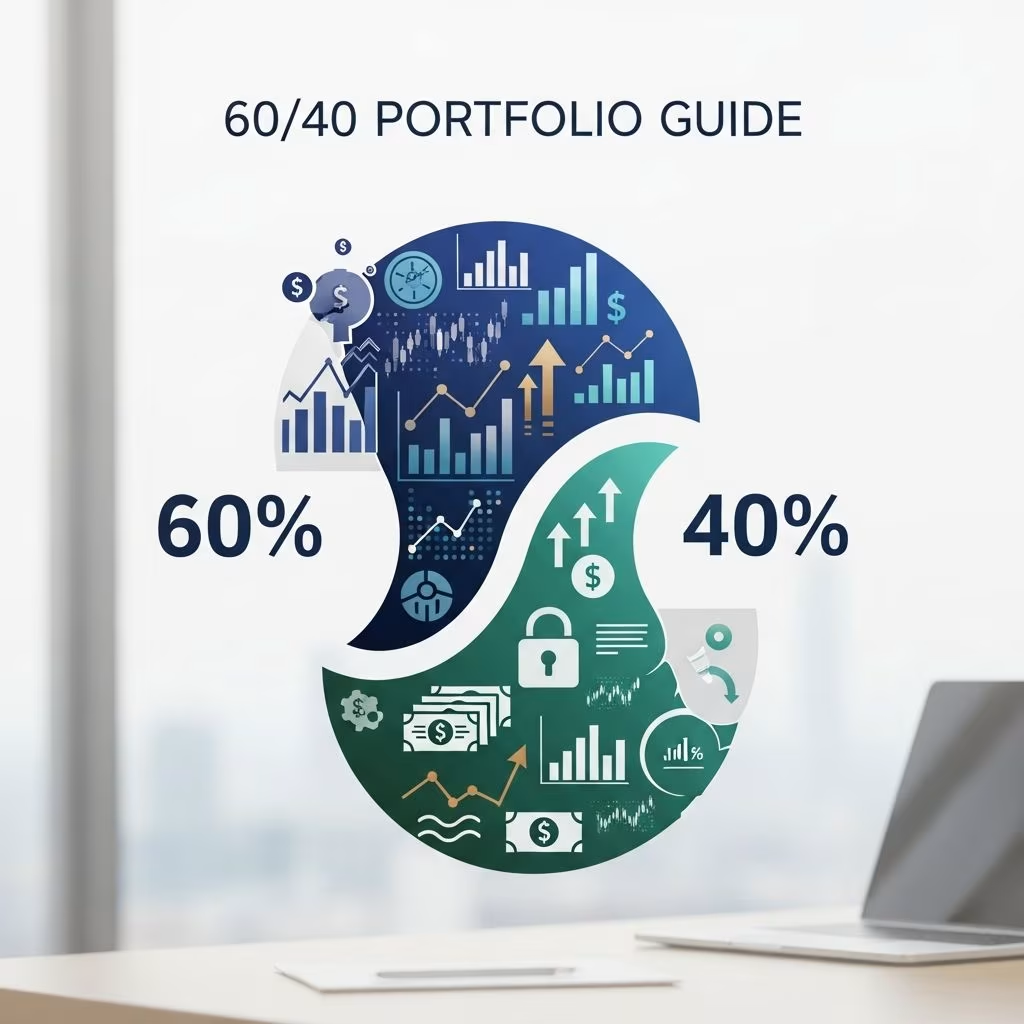
The 60/40 portfolio represents a foundational strategy in asset allocation, allocating 60% to equities and 40% to fixed-income securities like bonds. This approach aims to capture growth from stocks while using bonds to cushion against market downturns, delivering historically consistent results for long-term investors.
Understanding the Core Concept of Balanced Allocation
At its heart, the 60/40 model relies on the complementary nature of stocks and bonds. Equities drive appreciation during economic expansions, while bonds provide stability and income when growth slows. This negative correlation—where one asset class often rises as the other falls—has underpinned its popularity for decades.
Historically, this split has yielded an average annual return of around 9%, or about 5.9% after adjusting for inflation, making it a benchmark for moderate-risk portfolios. Its simplicity appeals to investors seeking growth without excessive volatility.
Historical Performance and Resilience Over Time
Despite occasional setbacks, such as the 16% decline in a global 60/40 portfolio in 2022, the strategy has demonstrated remarkable recovery and consistency. By September 2024, it had achieved a cumulative 29.7% return from year-end 2022 lows, underscoring its long-term viability.
Experts note that the portfolio’s strength lies in diversification across global markets. Yearly returns typically rank in the middle compared to pure stock or bond portfolios, avoiding extremes and compounding steadily over time. Even in tough years, its relative positioning remains average, which translates to reliable wealth building.
Key Advantages Driving Its Enduring Appeal
The 60/40 portfolio offers several compelling benefits:
- Simplicity: Easy to implement using broad index funds like the S&P 500 for stocks and U.S. Treasuries for bonds.
- Low Maintenance: Requires only annual rebalancing to maintain the allocation, ideal for passive investors.
- Risk Mitigation: Bonds offset stock volatility, providing a buffer during recessions.
- Consistent Growth: Delivers steady, inflation-adjusted returns over extended periods.
These traits make it particularly suitable for retirement accounts or those with moderate risk tolerance seeking hands-off investing.
Potential Drawbacks and Limitations in Today’s Environment
No strategy is flawless. Critics highlight vulnerabilities, especially amid rising inflation and shifting correlations:
- Inflation Sensitivity: Bonds may underperform when prices rise rapidly, eroding real returns.
- Limited Diversification: Reliance on just two asset classes can expose portfolios to synchronized declines, as seen in 2022.
- Lower Growth Potential: Compared to equity-heavy portfolios, it may lag in bull markets.
- Correlation Breakdown: Traditional negative stock-bond relationships have weakened, reducing hedging effectiveness.
These issues have prompted questions about its suitability in high-inflation, low-yield bond eras.
Step-by-Step Guide to Constructing Your 60/40 Portfolio
Building this portfolio is straightforward, but choices within asset classes matter. Here’s a practical roadmap:
- Select Equities (60%): Opt for diversified index funds or ETFs tracking the S&P 500, including blue-chip stocks. For broader exposure, incorporate international equities.
- Choose Bonds (40%): Focus on high-grade U.S. government bonds, corporate bonds, or Treasuries. Income-focused investors might add municipal bonds for tax advantages or high-yield options for extra return (with added risk).
- Incorporate Income Generators: Include dividend stocks or REITs within the equity slice for yield.
- Rebalance Regularly: Annually adjust to restore the 60/40 split, selling winners and buying laggards.
For a basic example:
| Asset Class | Allocation | Example Investments |
|---|---|---|
| Stocks | 60% | S&P 500 ETF, International Stock Funds |
| Bonds | 40% | U.S. Treasuries, Investment-Grade Corporates |
This U.S.-centric version minimizes risk while capturing broad market growth.
Modern Evolutions: Enhancing the Traditional Model
Recent market dynamics have inspired refinements. Introducing alternatives addresses correlation breakdowns and boosts returns.
Core Upgrades:
- Add Alternatives (10-20%): Assets like gold, REITs, or long/short equity strategies provide uncorrelated returns, reducing volatility. BlackRock data shows adding 10% alternatives improves Sharpe ratios and performance over 1-3 years.
- Optimize Bonds: Overweight TIPS for inflation protection, mortgage-backed securities for yield, or use futures/options for duration targeting.
- Global Diversification: Extend beyond U.S. assets for broader resilience.
A “modern 60/40” might shift to 50/30/20 (stocks/bonds/alternatives), maintaining growth while enhancing stability.
Comparing Alternatives to the Classic 60/40
Diversifying strategies can complement or replace the 60/40:
| Strategy | Description | Key Benefit |
|---|---|---|
| Permanent Portfolio | 25% each: stocks, bonds, gold, cash | All-weather protection |
| Rule of 110 | Stocks = 110 – age; rest bonds | Age-based risk adjustment |
| Dollar-Cost Averaging | Fixed investments over time | Reduces timing risk |
| Alternatives Mix | Add gold, crypto, REITs | Enhanced diversification |
These options suit varying goals, from aggressive growth to capital preservation.
Is the 60/40 Right for You? Assessing Fit
Suitability hinges on your horizon, risk appetite, and objectives. It’s ideal for:
- Long-term investors (10+ years) prioritizing balance.
- Retirees needing income and stability.
- Beginners avoiding complex tactics.
Avoid it if seeking maximum growth or fearing inflation. Always consult a financial advisor to align with personal circumstances.
Frequently Asked Questions (FAQs)
What is the expected return of a 60/40 portfolio?
Historically, around 9% annually nominal, 5.9% real.
How often should I rebalance?
Annually or when allocations drift significantly (e.g., 5%).
Does it protect against inflation?
Moderately; bonds can lag, so consider TIPS or alternatives.
Can I build it with ETFs?
Yes, low-cost ETFs for stocks (e.g., S&P 500) and bonds simplify implementation.
Has the 60/40 failed recently?
It faced challenges in 2022 but recovered strongly by 2024, affirming long-term strength.
References
- Pros & Cons of the 60/40 Portfolio — SoFi. 2024. https://www.sofi.com/learn/content/60-40-portfolio-pros-and-cons/
- Building a Modern 60/40 Portfolio — Simplify Asset Management. 2024. https://www.simplify.us/etfs-use-case/building-modern-6040-portfolio
- Rebuilding 60/40 portfolios with alternatives — BlackRock. 2024. https://www.blackrock.com/us/individual/insights/60-40-portfolios-and-alternatives
- The global 60/40 portfolio: Steady as it goes — Vanguard. 2024-10-22. https://corporate.vanguard.com/content/corporatesite/us/en/corp/articles/global-60-40-portfolio-steady-as-it-goes.html
- Does a 60/40 Portfolio Still Work? — First Command. 2024. https://www.firstcommand.com/coaching-center/insights/does-a-60-40-portfolio-work/
- 60/40, reinvented: 3 reasons to consider alternatives — J.P. Morgan Private Bank. 2024. https://privatebank.jpmorgan.com/eur/en/insights/markets-and-investing/tmt/60-40-reinvented-3-reasons-to-consider-alternatives
This article is general information, not personal financial advice. Consider your own situation, or speak with a licensed adviser, before acting on it.


