

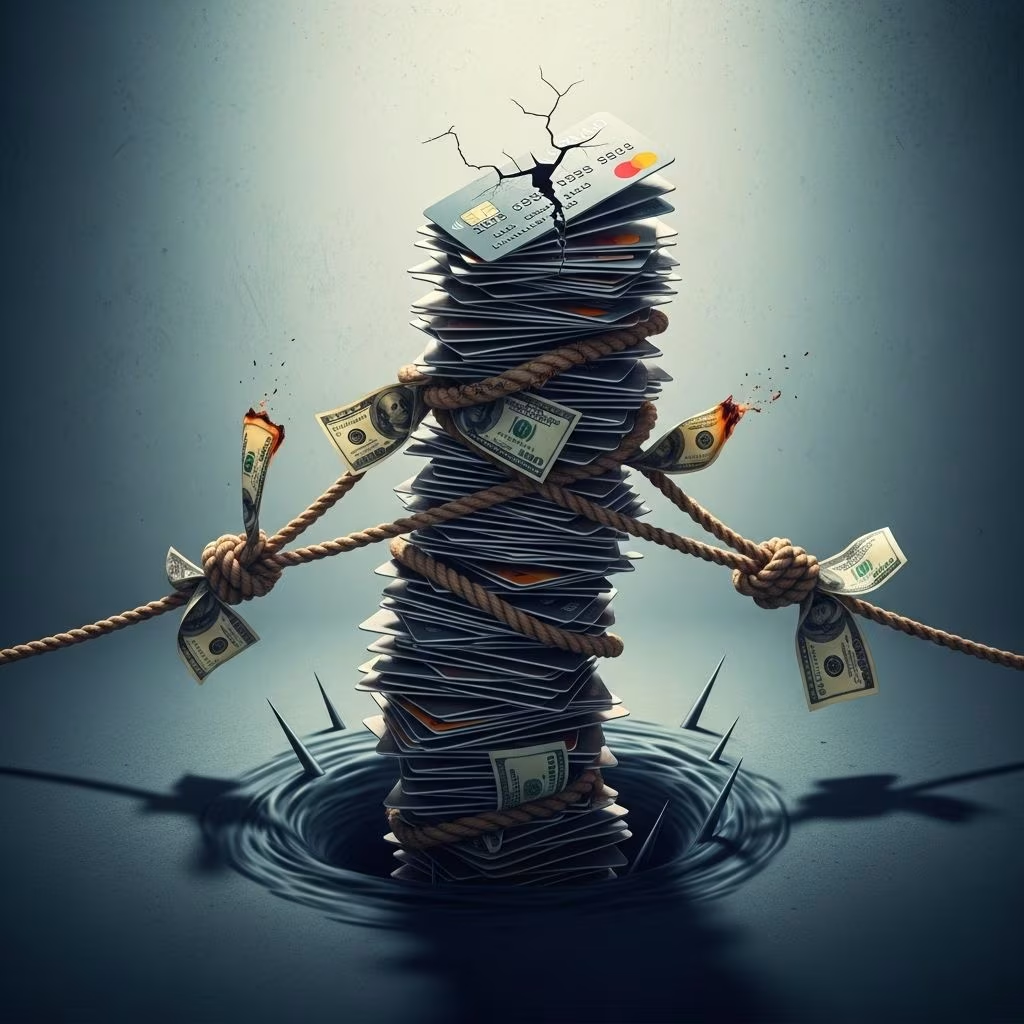
Paying off credit card debt requires discipline and strategy, but many individuals fall into traps that extend their financial burdens. Understanding these errors empowers you to adopt better practices for lasting relief.
Why Debt Repayment Feels Endless
Credit card debt often spirals due to high interest rates averaging around 20-30% annually, compounding daily on unpaid balances. Without targeted actions, even consistent payments barely dent the principal, leading to prolonged repayment periods that can stretch over decades. Building awareness of common missteps is the first step toward efficiency.
The Danger of Minimum Payments Only
Opting for just the minimum payment is among the most frequent errors. These amounts primarily cover accruing interest, leaving the principal largely untouched. For instance, on a $10,000 balance at 25% APR, minimum payments could extend payoff to over 30 years, with total interest exceeding the original debt.
- Interest dominates: Monthly minimums often equal or surpass interest charges alone.
- Timeline extension: Statements now disclose payoff durations, revealing years of extra costs.
- Utilization impact: High balances inflate credit utilization, harming scores.
To counter this, allocate extra funds toward principal reduction. Even $50 more monthly accelerates progress significantly.
Continuing to Use Credit While Repaying
Persistent card usage undermines efforts by replenishing balances as quickly as they’re reduced. This cycle—paying down while adding new charges—perpetuates debt growth, especially with high-interest purchases.
| Mistake | Consequence | Solution |
|---|---|---|
| Ongoing swipes | Net zero progress | Switch to cash/debit |
| Impulse buys | Increased balances | Freeze cards physically |
| Emergency reliance | New debt layers | Build cash reserves |
Commit to a ‘debt-only’ phase: Suspend non-essential spending on credit until balances near zero.
Missing Payment Deadlines
Overlooking due dates triggers penalties, fee hikes, and credit score drops. Late payments can raise APRs by up to 5% and linger on reports for seven years, complicating future borrowing.
- Immediate fees: $30-40 per incident.
- Score damage: 100+ point drops possible.
- Rate penalties: Penalty APRs persist until resolved.
Automate payments or set reminders to ensure timeliness, safeguarding progress.
Ignoring High-Interest Debts First
Failing to prioritize highest-rate accounts allows interest to compound fastest there. Random payments dilute impact, whereas strategic focus minimizes total costs.
Avalanche Method Explained
This approach targets highest APR debts first, after minimums on all. It saves most on interest: For multiple cards, eliminate costliest quickest.
Snowball Method Alternative
Pay smallest balances first for motivational wins, rolling payments forward. Ideal for behavioral boosts, though costlier long-term.
| Method | Focus | Best For | Interest Savings |
|---|---|---|---|
| Avalanche | Highest APR | Math optimizers | High |
| Snowball | Smallest balance | Motivation seekers | Moderate |
Lack of Budgeting and Tracking
Without a spending plan, debt payments compete with unchecked expenses. Many underestimate total debt or fail to monitor progress, leading to derailments.
- Track totals: List all debts with rates, minimums.
- Zero-based budget: Assign every dollar a purpose.
- Apps/tools: Use for real-time oversight.
A simple budget frees 10-20% more income for repayment.
No Emergency Fund in Place
Absence of savings prompts credit use for surprises, restarting debt cycles. Aim for $1,000 starter fund, then expand.
Redirect windfalls—like tax refunds—here first to prevent relapses.
Balance Transfers and Consolidations Gone Wrong
Using new credit for old debt often backfires without low promo rates and swift payoff. High fees (3-5%) and post-promo hikes exacerbate issues.
- Vetting offers: Seek 0% for 12+ months.
- Payoff timeline: Clear before promo ends.
- Alternatives: Personal loans at lower fixed rates.
Impact on Credit Health
These pitfalls harm scores via utilization (30% of FICO), payment history (35%), and new credit. Consistent strategies rebuild profiles within months.
Proven Paths to Debt Freedom
Combine methods: Budget rigorously, employ avalanche/snowball, build buffers, and negotiate rates. Professional counseling aids complex cases.
Frequently Asked Questions
How long to pay off $20,000 at 25% APR with minimums?
Nearly 40 years, costing over $50,000 in interest. Extra payments slash this dramatically.
Does closing cards help repayment?
Often hurts utilization; keep open, unused accounts.
Can I negotiate lower rates?
Yes, call issuers citing loyalty or competitors.
What’s better: avalanche or snowball?
Avalanche saves money; snowball builds momentum.
Should I use retirement funds?
Avoid penalties; explore other options first.
References
- 7 Debt Repayment Mistakes That Are Keeping You In the Red — NoMoreDebts.org. 2023. https://nomoredebts.org/blog/dealing-with-debt/7-debt-repayment-mistakes-that-are-keeping-you-in-the-red
- 5 Common Debt Payoff Mistakes to Avoid — CommonWealth One Federal Credit Union. 2025-01-01. https://www.cofcu.org/learn/education/blog/january-2025/5-common-debt-payoff-mistakes-to-avoid
- Mistakes to Avoid when Paying off Debt — Choice One Credit Union. 2024. https://choiceone.org/mistakes-to-avoid-when-paying-off-debt/
- Credit Card and Debt Management Mistakes — CCCS of Rochester. 2024. https://www.cccsofrochester.org/about/blog/common-credit-card-and-debt-management-mistakes
- Top Credit Mistakes to Avoid — Camino Federal Credit Union. 2024. https://www.caminofcu.org/top-credit-mistakes/
- 7 Common Credit Card Mistakes You Might Be Making — Oklahoma Central Credit Union. 2024. https://www.oklahomacentral.creditunion/blog/seven-common-credit-card-mistakes-you-might-be-making
- Credit Mistakes That May Be Costing You Money — Equifax. 2024. https://www.equifax.com/personal/education/personal-finance/articles/-/learn/credit-mistakes-costing-you-money/
This article is general information, not personal financial advice. Consider your own situation, or speak with a licensed adviser, before acting on it.


