

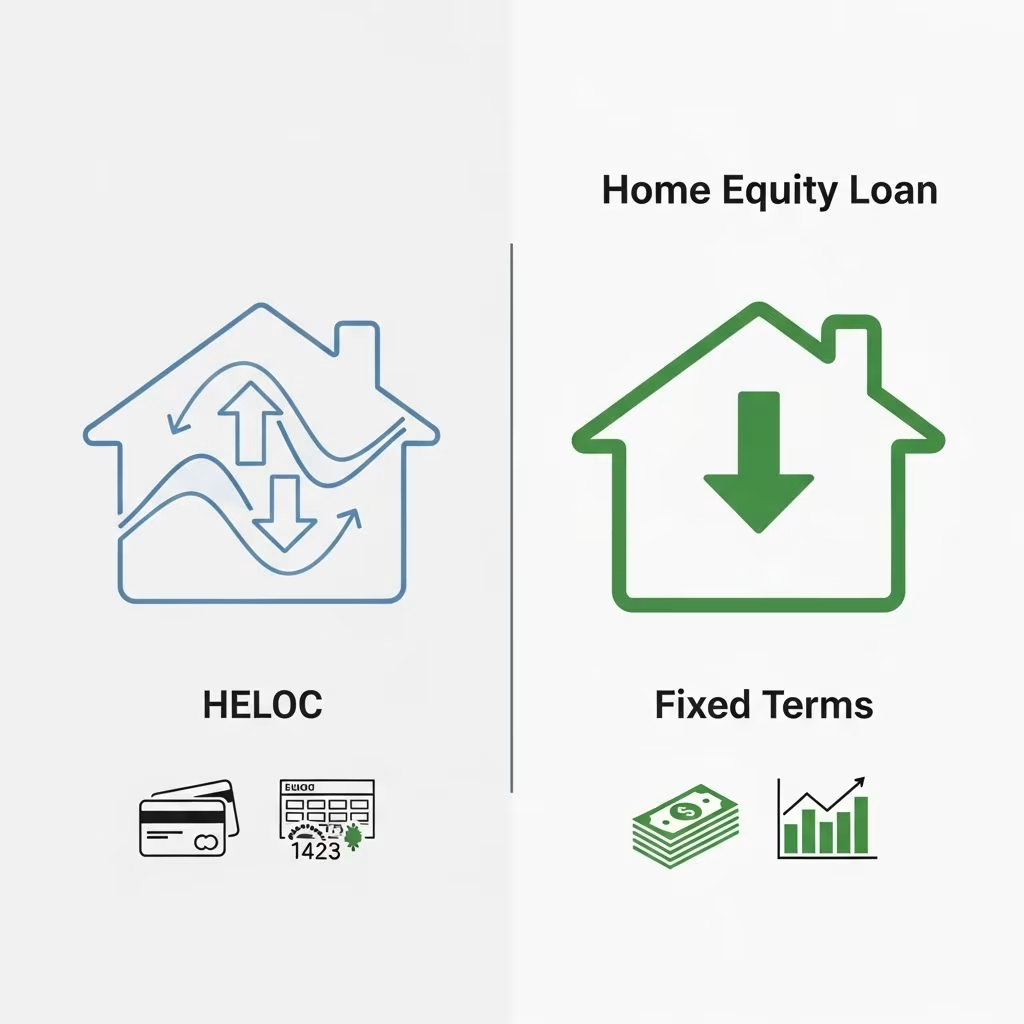
Homeowners often turn to their property’s value to fund major expenses like renovations, education, or debt consolidation. Two primary options stand out: the Home Equity Line of Credit (HELOC) and the traditional home equity loan. Both leverage your home as collateral, offering lower interest rates than unsecured alternatives, but they differ significantly in structure, flexibility, and risk.
Understanding Home Equity: The Foundation of Both Options
Home equity represents the portion of your property’s current market value that you own outright, calculated as the home’s appraised value minus any outstanding mortgage balance. For instance, if your home is valued at $400,000 with a $200,000 mortgage, you hold $200,000 in equity. Lenders typically allow borrowing up to 80-85% of this equity, depending on creditworthiness, income, and debt-to-income ratio.
Building equity occurs through mortgage principal payments, home value appreciation, or improvements. Before applying, verify your equity via a professional appraisal, as this determines eligibility and borrowing limits.
How a Home Equity Loan Works
A home equity loan, sometimes called a second mortgage, provides a one-time lump sum based on your home’s equity. Funds are disbursed at closing, followed by fixed monthly payments over a set term, usually 5 to 30 years.
Key features include:
- Fixed interest rates: Payments remain predictable, shielding borrowers from market fluctuations.
- Defined repayment: Each payment covers principal and interest, building equity steadily.
- Closing process: Involves appraisal, title search, and fees, similar to a primary mortgage.
These loans suit one-off expenses with known costs, such as a kitchen remodel or medical bills. Rates are generally higher than HELOCs initially but lower than personal loans or credit cards due to collateral.
Exploring the Home Equity Line of Credit (HELOC)
A HELOC functions like a credit card secured by your home, offering a revolving credit line up to an approved limit. During the draw period (typically 5-10 years), borrow as needed, repay, and borrow again. Afterward, enters a repayment phase with principal and interest due.
- Variable rates: Tied to the prime rate, they can rise or fall, with some lenders offering fixed-rate locks.
- Interest-only payments: Common in the draw phase, keeping initial costs low.
- Flexible access: Draw funds via checks, cards, or transfers only paying interest on the used amount.
HELOCs excel for ongoing or unpredictable expenses, like phased renovations or emergency funds. Initial rates are often lower than home equity loans.
Interest Rates and Costs: A Side-by-Side Comparison
Interest rates are a pivotal differentiator. Home equity loans lock in fixed rates for stability, while HELOCs start lower with variable rates that adjust periodically. Both beat unsecured loans due to collateral but carry closing costs (1-5% of the loan) and potential fees.
| Feature | Home Equity Loan | HELOC |
|---|---|---|
| Interest Rate Type | Fixed | Variable (fixed options available) |
| Average Rates (as of recent data) | Typically 7-9% | Starts 6-8%, adjustable |
| Tax Deductibility | Possible for home improvements | Possible for home improvements |
| Fees | Appraisal, closing (1-5%) | Appraisal, annual, draw fees |
Note: Rates vary by lender, credit score, and market conditions. Interest may be deductible only if used for home buy/build/improve, per IRS rules.
Pros and Cons of Each Borrowing Method
Advantages and Drawbacks of Home Equity Loans
- Pros: Predictable payments, ideal for budgeted projects, fixed rates protect against hikes.
- Cons: Lump sum limits flexibility; risk of over- or under-borrowing; home foreclosure risk on default.
Advantages and Drawbacks of HELOCs
- Pros: Borrow only what you need, lower initial rates, reusable credit line.
- Cons: Rate increases can raise payments; draw period ends force higher repayments; same foreclosure risk.
Risks and Safeguards When Borrowing Against Your Home
Both options use your home as collateral, meaning default could lead to foreclosure. Safeguards include:
- Maintaining a debt-to-income ratio under 43%.
- Building an emergency fund to cover payments.
- Monitoring rates for HELOCs and considering locks.
- Shopping multiple lenders for best terms.
Approval hinges on credit score (typically 620+), equity (15-20% minimum), and stable income.
Ideal Scenarios for Choosing One Over the Other
Select a home equity loan for fixed-cost projects like debt consolidation or a new roof, where stability matters. Opt for a HELOC for variable needs, such as tuition payments over years or home repairs as they arise.
Consider your risk tolerance: fixed for predictability, variable for potential savings if rates drop.
Application Process and Qualification Tips
Both require similar steps: application, credit/income review, appraisal, and closing (2-6 weeks). Boost approval odds by:
- Improving credit score.
- Reducing existing debt.
- Gathering pay stubs and tax returns.
Online applications simplify starting with many lenders.
Frequently Asked Questions (FAQs)
Which has lower interest rates: HELOC or home equity loan?
HELOCs often start lower but are variable; home equity loans offer fixed rates for consistency.
Can I use home equity funds for any purpose?
Yes, but tax benefits apply mainly to home improvements.
What happens after a HELOC draw period?
Repayment phase begins with principal due, payments rise.
Do I need an appraisal for both?
Usually yes, though some waive for smaller amounts.
Is there a difference in loan limits?
Both cap at 80-85% of equity, up to $500,000+ depending on lender.
Steps to Make an Informed Decision
1. Calculate your equity.
2. Compare rates from 3+ lenders.
3. Assess project needs and risk appetite.
4. Consult a financial advisor.
5. Review all terms before signing.
By weighing these factors, homeowners can harness their equity effectively without undue risk.
References
- What is the difference between a Home Equity Loan and a Home Equity Line of Credit (HELOC)? — Consumer Financial Protection Bureau. 2023. https://www.consumerfinance.gov/ask-cfpb/what-is-the-difference-between-a-home-equity-loan-and-a-home-equity-line-of-credit-heloc-en-247/
- Home Equity Loan vs. HELOC vs. Personal Loan: Which Is Best? — Navy Federal Credit Union. 2024-10-15. https://www.navyfederal.org/makingcents/home-ownership/heloc-home-equity-loan-vs-personal-loan.html
- Home Equity Loan vs HELOC: Key Differences and Comparisons — PNC Bank. 2024. https://www.pnc.com/insights/personal-finance/borrow/heloc-vs-home-equity-loan.html
- Home Equity Loan vs. Line of Credit – What are the Differences? — Bank of America. 2024. https://www.bankofamerica.com/mortgage/learn/home-equity-loan-vs-line-of-credit/
- HELOC vs. Home Equity Loan: What Are The Differences? — CU SoCal. 2024. https://www.cusocal.org/resources/blog/heloc-vs-home-equity-loan/
This article is general information, not personal financial advice. Consider your own situation, or speak with a licensed adviser, before acting on it.


