

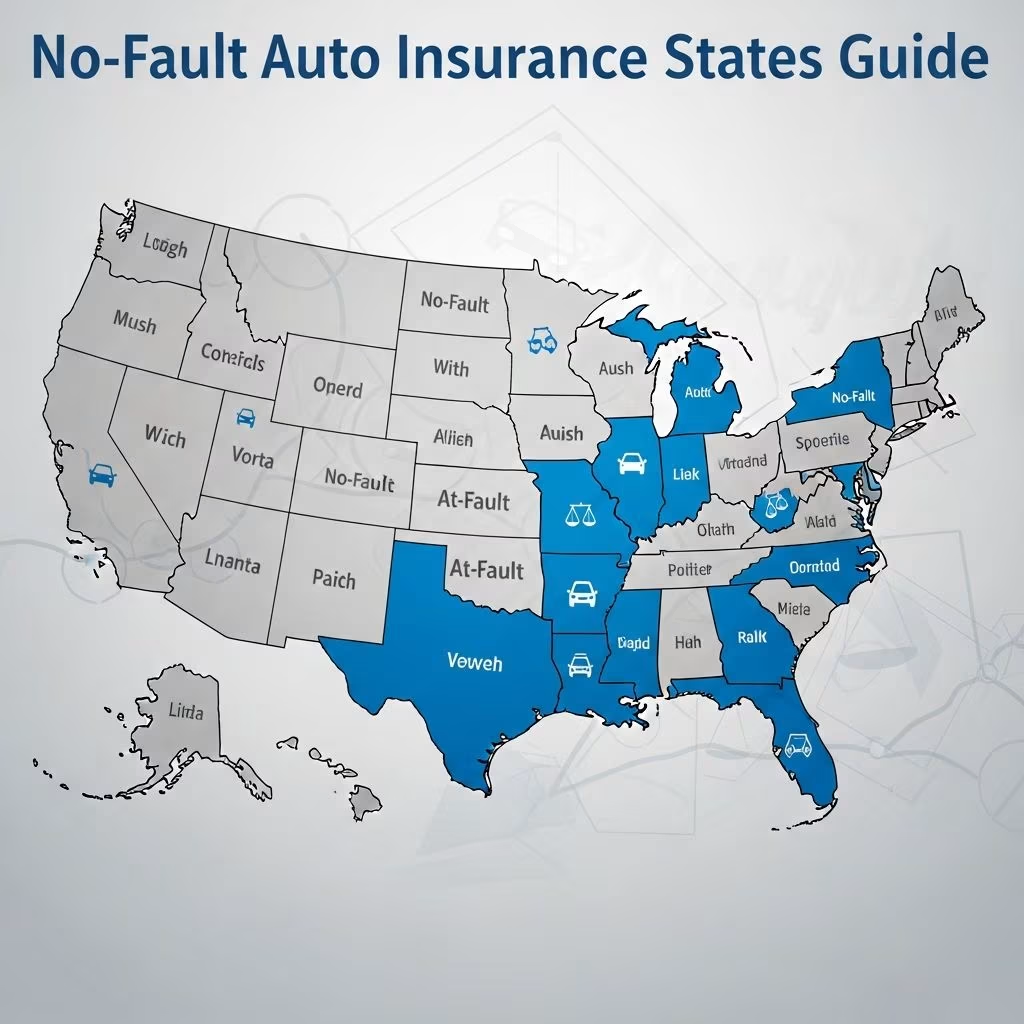
No-fault auto insurance mandates that drivers file injury claims with their own insurer after accidents, regardless of fault, primarily through Personal Injury Protection (PIP) coverage. This system operates in 12 U.S. states plus Puerto Rico, aiming to expedite claims and minimize litigation for minor injuries.
Understanding the Basics of No-Fault Systems
In traditional tort systems, the at-fault driver’s liability insurance covers the injured party’s medical bills and losses. No-fault shifts this: your policy’s PIP pays for your medical costs, lost wages, and related expenses first, irrespective of blame. This covers the policyholder and passengers, often including funeral costs.
PIP typically reimburses 80% of medical expenses and lost income, with caps varying by state. For instance, New York offers up to $50,000 in benefits, including $25 daily for other needs and a $2,000 death benefit. Vehicle damage, however, follows fault rules, paid by the responsible party’s property damage liability.
Current List of No-Fault Insurance States
As of 2026, these 12 states plus Puerto Rico require no-fault insurance with PIP mandates:
- Delaware
- Florida
- Hawaii
- Kansas
- Kentucky (choice no-fault)
- Maryland
- Massachusetts
- Michigan
- Minnesota
- New Jersey
- New York
- Pennsylvania
- Puerto Rico
These jurisdictions limit lawsuits for non-serious injuries, using verbal or monetary thresholds. Kentucky and Pennsylvania offer choice systems, allowing selection between no-fault or tort.
How No-Fault Coverage Protects Drivers
PIP provides immediate access to funds without fault disputes, covering:
- Medical and rehabilitation costs
- Lost wages (often 80% up to limits)
- Essential services like childcare or transportation
- Funeral expenses in some policies
For example, Florida requires $10,000 minimum PIP, covering 80% of medical bills. This ensures quick payouts, reducing financial stress post-accident.
Thresholds for Suing in No-Fault States
No-fault restricts lawsuits to prevent court overload. Exceptions arise for “serious” injuries:
| Threshold Type | Description | Example States |
|---|---|---|
| Verbal | Specific severe injuries like death, disfigurement, or significant organ loss | New York, Florida |
| Monetary | Medical costs exceed a dollar amount (e.g., $5,000+) | Michigan, New Jersey |
New York’s Insurance Law defines serious injury as including fractures or permanent loss. Exceeding thresholds allows pain-and-suffering claims against the at-fault driver.
Advantages of Living in a No-Fault State
No-fault systems offer several benefits:
- Faster Claims: No fault determination needed for PIP, speeding reimbursements.
- Lower Litigation: Keeps minor cases out of court, potentially stabilizing premiums.
- Broad Protection: Covers passengers and uninsured scenarios.
- Privacy: Avoids adversarial processes.
Per the Insurance Information Institute, this reduces small-claim lawsuits, aiding efficiency.
Potential Drawbacks and Criticisms
Critics highlight higher premiums due to universal PIP mandates and limited lawsuit rights for pain and suffering. In pure no-fault states like Michigan, premiums rose significantly. Add-on systems like Oregon provide PIP without lawsuit bans, balancing benefits.
Policyholders bear costs even if not at fault, and PIP limits may not suffice for major injuries.
Filing a Claim in No-Fault Jurisdictions
Post-accident steps include:
- Ensure safety and call authorities.
- Notify your insurer promptly, providing accident details.
- Submit medical records and bills for PIP processing.
- Undergo insurer-requested exams if required.
- For vehicle damage, pursue the at-fault party’s coverage.
Claims involve recorded statements; delays can deny benefits.
No-Fault vs. Traditional Tort Systems
| Aspect | No-Fault | Tort |
|---|---|---|
| Injury Claims | Own insurer via PIP | At-fault driver’s liability |
| Lawsuits | Limited to serious cases | Freely available |
| Speed | Faster for minor injuries | Delayed by fault disputes |
| Costs | Higher premiums often | Variable based on fault |
Most states (78%) use tort, where fault dictates payouts.
State-Specific Variations and Reforms
Systems differ: Michigan’s unlimited PIP faces reform debates for cost control. Florida mandates $10,000 PIP plus property damage liability. New Jersey uses verbal thresholds. Recent changes, like Pennsylvania’s hybrid model, reflect ongoing evolution.
Choice no-fault (e.g., Kentucky) lets drivers opt in/out.
Choosing Insurance in No-Fault Areas
Select adequate PIP limits; some states set minimums (e.g., $10,000-$50,000). Stack policies for multiples if multi-car. Compare providers for competitive rates, as no-fault can elevate costs 20-30%. Shop annually and consider discounts for safe driving.
Frequently Asked Questions
What exactly does PIP cover?
PIP handles medical bills, wage loss, and select expenses for you and passengers, regardless of fault.
Can I sue in a no-fault state?
Yes, if injuries meet serious thresholds like significant disfigurement or high medical costs.
Who covers car repairs?
The at-fault driver’s property damage liability, not PIP.
Are all no-fault states identical?
No; thresholds and PIP minimums vary.
Does no-fault lower my rates?
It aims to via less litigation but often raises premiums due to PIP mandates.
Future Trends in No-Fault Insurance
With rising medical costs and autonomous vehicles, reforms may adjust thresholds or introduce hybrids. States like New York tweak benefits for wage offsets. Monitor legislative updates for changes.
References
- No-fault insurance – Wikipedia — Wikipedia. 2026. https://en.wikipedia.org/wiki/No-fault_insurance
- no-fault insurance | Wex | US Law | LII — Legal Information Institute, Cornell Law School. 2026. https://www.law.cornell.edu/wex/no-fault_insurance
- What is No-fault Insurance? – Nationwide — Nationwide. 2026. https://www.nationwide.com/lc/resources/auto-insurance/articles/what-is-no-fault-insurance
- What Does No-Fault State Mean? | Progressive — Progressive. 2026. https://www.progressive.com/answers/no-fault-state-meaning/
- No-fault insurance states – What are they? – Liberty Mutual — Liberty Mutual. 2026. https://www.libertymutual.com/insurance-resources/auto/what-are-no-fault-insurance-states
- What Is No-Fault Insurance? – Experian — Experian. 2026. https://www.experian.com/blogs/ask-experian/what-is-no-fault-insurance/
This article is general information, not personal financial advice. Consider your own situation, or speak with a licensed adviser, before acting on it.


