

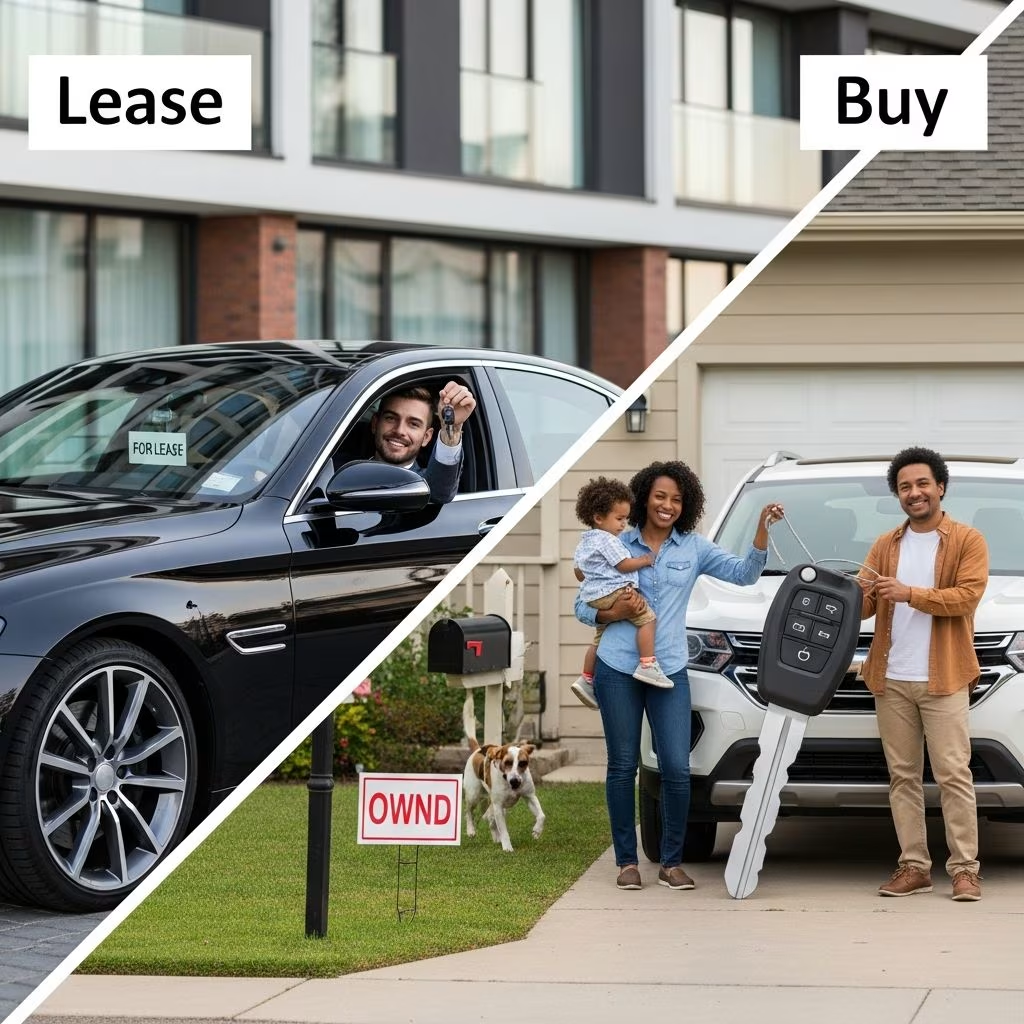
Choosing between leasing and buying a vehicle involves weighing financial implications, lifestyle needs, and long-term goals. Leasing provides flexibility with lower initial costs, while buying leads to ownership and potential savings over time. This guide explores both options in depth to help you decide.
Understanding Vehicle Leasing Basics
Leasing functions like renting a car for a set period, typically 2-4 years. You pay for the vehicle’s depreciation during that time plus interest, without gaining ownership at the end unless you opt to buy it out. This arrangement appeals to those seeking affordability and variety.
- Lower monthly payments make premium models accessible without full purchase commitment.
- Agreements include mileage caps, often 10,000-15,000 miles annually, to protect the lessor’s asset.
- End-of-term inspections check for excess wear, potentially incurring fees.
Financial institutions calculate lease payments based on the difference between the car’s initial value and projected residual value, adjusted for money factor (similar to interest rates).
Core Advantages of Leasing a New Vehicle
Leasing stands out for budget-conscious drivers prioritizing cash flow. Average lease payments trail loan payments, freeing funds for other expenses.
| Benefit | Description |
|---|---|
| Reduced Upfront Costs | Minimal down payments, often just first month’s payment plus fees, versus 10-20% for purchases. |
| Affordable Luxury Access | Drive high-end cars with payments covering only depreciation, not full price. |
| Frequent Upgrades | Swap for newer models every few years, enjoying latest safety tech and features. |
| Warranty Protection | New vehicles stay under manufacturer warranty throughout the lease, minimizing repair bills. |
| No Resale Hassle | Avoid depreciation worries; simply return the car at term end. |
These perks suit urban commuters or those disliking maintenance responsibilities.
Key Drawbacks of Vehicle Leasing
Despite attractions, leasing imposes restrictions that can inflate total costs. No equity builds, meaning payments essentially rent mobility without asset accumulation.
- Mileage penalties: Excess over limits costs 10-30 cents per mile, burdensome for high drivers.
- Wear charges: Dings, stains, or tires beyond norms lead to deductions from deposit.
- Higher insurance: Lenders mandate comprehensive coverage, raising premiums.
- Early exit fees: Terminating prematurely triggers substantial penalties.
- Perpetual payments: Continuous leasing means endless obligations without ownership payoff.
Over multiple cycles, leasing often exceeds buying costs due to repeated fees and no residual value.
How Buying a Car Works Financially
Purchasing secures ownership through loans or cash. Monthly payments cover principal and interest until the vehicle is yours outright. This path builds equity, allowing sale or trade anytime.
Expect higher payments reflecting full vehicle price, but post-loan, costs drop to insurance, fuel, and upkeep. Long-term retention maximizes value.
Top Benefits of Purchasing Your Vehicle
| Advantage | Impact |
|---|---|
| Full Ownership | Equity grows with payments; sell or keep indefinitely post-loan. |
| No Mileage Limits | Drive freely without overage fees, ideal for travelers. |
| Customization Freedom | Modify as desired without lessor approval. |
| Long-Term Savings | After payoff, only operational costs remain; best for 5+ year ownership. |
| Trade-In Value | Use equity toward next purchase. |
Buyers gain control and potential profit if market values hold.
Challenges When Buying a Vehicle
Higher entry barriers and responsibilities define buying. Larger down payments strain savings, and payments exceed leases.
- Depreciation hit: New cars lose 20-30% value in year one.
- Maintenance surge: Post-warranty repairs add up after 3-5 years.
- Resale effort: Market timing and condition affect returns.
- Commitment lock: Switching vehicles mid-loan costs refinancing fees.
These factors favor patient drivers planning extended use.
Financial Comparison: Leasing vs. Buying Costs
Total expense hinges on habits. Leasing shines short-term; buying excels long-term. Assume a $30,000 car, 3-year term, 12,000 miles/year.
| Category | Leasing | Buying (Loan) |
|---|---|---|
| Down Payment | $2,000 | $6,000 |
| Monthly Payment | $400 | $600 |
| 3-Year Total (Payments) | $16,400 | $28,800 |
| End Value | $0 (return car) | $15,000 equity |
| Net Cost (3 Years) | $18,400 | $19,800 (less equity) |
Extend to 7 years: Buying nets savings as payments end. Data shows leases average lower initially but compound over cycles.
Factors Influencing Your Choice
Align decision with lifestyle:
- High mileage? Buy to avoid fees.
- Love new tech? Lease for upgrades.
- Budget tight monthly? Lease eases flow.
- Long keeper? Buy for equity.
- Business use? Lease may offer tax deductions; consult advisor.
Current rates (2026) favor buying if credit strong, as loan terms extend to 72+ months lowering payments.
Steps to Evaluate Leasing vs. Buying
- Calculate driving miles annually.
- Project ownership duration.
- Use online calculators for personalized scenarios.
- Check credit score for best rates.
- Negotiate terms: residual value, money factor.
- Review total lease costs including fees.
Pre-qualify financing to compare offers.
Frequently Asked Questions
Is leasing cheaper than buying overall?
No, leasing costs more long-term without ownership, but monthly it’s lower.
Can I buy out my lease early?
Yes, but expect fees and potential negative equity if value dropped.
What if I exceed mileage limits?
Pay 15-30 cents/mile overage at end; negotiate higher limits upfront.
Does leasing affect credit score?
Inquiries do temporarily; on-time payments help build score.
Are used car leases available?
Less common, higher residuals; new leases dominate.
Expert Tips for Smart Decisions
Shop multiple dealers, read fine print, and consider total ownership cost (TCO). For most, buying and driving 5+ years proves economical. Hybrid approaches like lease-buyouts work if residuals undervalue cars.
Monitor market: Electric vehicle incentives may tilt toward buying in 2026.
References
- Pros and cons of leasing vs. buying a car — Bankrate. 2023-2025. https://www.bankrate.com/loans/auto-loans/leasing-vs-buying-a-car/
- Leasing vs. Buying a Car – Pros and Cons — Navy Federal Credit Union. 2024-2026. https://www.navyfederal.org/makingcents/auto/buying-vs-leasing-a-car.html
- Leasing vs. Buying A Car — PNC Insights. 2024. https://www.pnc.com/insights/personal-finance/borrow/leasing-vs-buying-a-car.html
- Buying or Leasing a Car in 2026: Which Make is Best for You? — Consumer Reports. 2026-01-15. https://www.consumerreports.org/cars/buying-a-car/leasing-vs-buying-a-new-car-a9135602164/
- Pros and Cons of Leasing a Vehicle — Toyota.com. 2025. https://www.toyota.com/car-tips/pros-cons-leasing-vehicle/
This article is general information, not personal financial advice. Consider your own situation, or speak with a licensed adviser, before acting on it.


