

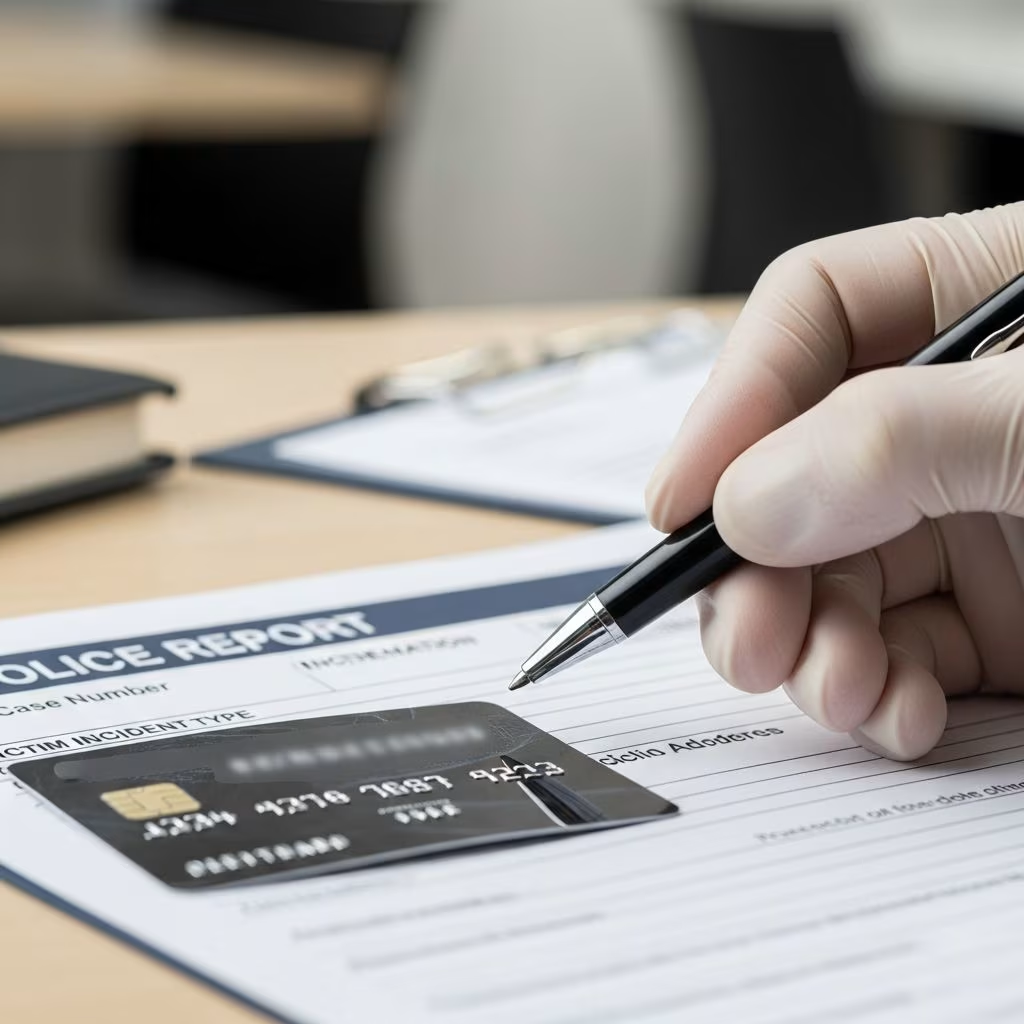
Identity theft represents one of the most disruptive crimes affecting modern consumers. When criminals gain unauthorized access to personal information and use it for fraudulent purposes, victims face considerable financial and emotional hardship. While many people focus solely on contacting their banks and credit card companies after discovering identity theft, an often-overlooked but critical step involves filing a police report. Understanding the role of law enforcement documentation in your recovery process can significantly strengthen your position when disputing fraudulent charges and reclaiming your identity.
Understanding the Foundation: Why Documentation Matters
When identity theft occurs, victims need concrete evidence to support their claims of victimization. A police report serves as an official governmental record acknowledging that a crime has been committed against you. This document carries substantial weight with financial institutions, credit reporting agencies, and collection agencies. Rather than simply relying on your word that fraud occurred, you can present an authoritative record created by law enforcement personnel.
The significance of this documentation extends beyond mere bureaucratic formalities. Many major financial institutions and creditors now require police reports before they will acknowledge fraud claims or begin investigating unauthorized accounts opened in your name. Without this official record, you may face delays in resolving fraudulent charges or even encounter resistance from companies unwilling to take action.
When Police Reports Become Essential Requirements
Not every identity theft situation automatically necessitates a police report, though most situations benefit from having one. Understanding specific circumstances where law enforcement documentation becomes particularly important can help you prioritize your recovery efforts.
Mandatory Scenarios for Police Documentation
- Creditor and Lender Demands: When banks, credit card companies, or other financial institutions explicitly require police reports as part of their fraud investigation process, filing becomes non-negotiable
- Government Fraud Cases: If criminals used your identity to commit tax fraud, fraudulently claim Social Security benefits, or engage in other government-related crimes, law enforcement reports become critical supporting documentation
- Police Encounters: If your stolen identity resulted in a fraudulent arrest, criminal record, or negative police interaction, filing a report creates an official counter-record
- Government Document Replacement: Obtaining replacement Social Security cards, driver’s licenses, or other government-issued identification often requires police documentation proving that your original documents were stolen or misused
Beneficial Scenarios for Police Reports
- When you possess specific information identifying the perpetrator or strong evidence suggesting their identity
- When you have gathered substantial documentation of fraudulent charges spanning multiple accounts or businesses
- When disputing accounts or debts that have already appeared on your credit report
- When coordinating recovery efforts across multiple jurisdictions or financial institutions
Gathering Critical Documentation Before Your Report
Arriving at a police station unprepared wastes everyone’s time and may result in officers refusing to file your report. Proper preparation involves assembling comprehensive documentation that demonstrates the reality and scope of the identity theft.
Essential Documents to Compile
Begin by creating a complete portfolio of evidence. Gather your Federal Trade Commission identity theft report, which you can obtain by filing at IdentityTheft.gov. This report, combined with your identity theft affidavit, provides law enforcement with structured information about your case. Additionally, compile copies of fraudulent charges from your bank and credit card statements, collection notices addressed to you for accounts you never opened, and credit reports clearly showing unauthorized accounts.
Always bring a valid government-issued photo identification and proof of your current address. Proof of address can take various forms, including utility bills, rental agreements, mortgage statements, or recent credit card statements. The more documentation you present, the stronger your case appears to law enforcement.
Document Organization Strategy
Rather than arriving with a chaotic pile of papers, organize your materials logically. Create a clear timeline showing when you first noticed fraudulent activity, what accounts were affected, and the approximate dollar amounts involved. Highlight specific fraudulent charges in different colors if possible. Include a brief written summary explaining how you discovered the identity theft and what steps you have already taken. This organization demonstrates seriousness and helps officers understand your case quickly.
The Federal Trade Commission Connection
Filing with the Federal Trade Commission serves as a foundational step that complements police reporting. While the FTC lacks criminal investigative jurisdiction, this government agency maintains the Identity Theft Data Clearinghouse, a nationwide database that assists law enforcement agencies in investigating and prosecuting identity thieves.
When you file your FTC report at IdentityTheft.gov, you receive two critical documents: an official identity theft report and a personalized recovery plan. The recovery plan walks you through subsequent steps, helping you understand what needs to happen next and in what order. For overwhelmed victims struggling to know where to begin, this structured guidance proves invaluable.
The FTC process is straightforward. Visit IdentityTheft.gov and click “get started,” or call 877-438-4338 if you prefer telephone reporting. Answer detailed questions about your identity theft incident, providing as much information as possible. Receive your identity theft report and recovery plan documents. If you do not create an account during this process, print and securely save these documents since you cannot access them later.
Filing Your Police Report: Practical Steps
Once you have gathered your documentation and completed your FTC report, you are ready to approach your local police department. The process involves several straightforward steps, though specific procedures may vary slightly by jurisdiction.
Contact and Presentation
Visit your local police station or sheriff’s office in person, though some jurisdictions now allow online reporting or telephone filing. Check your police department’s website before visiting to determine if online reporting options exist. When you speak with officers, clearly state that you are a victim of identity theft and want to file a police report.
Present your complete documentation portfolio and your FTC identity theft affidavit. Some jurisdictions allow officers to attach your FTC affidavit directly to the police report, creating a unified document that carries additional weight. Request that the officer do this if your department’s procedures allow.
Dealing with Resistant Officers
Occasionally, police departments prove reluctant to file identity theft reports, claiming lack of resources or unclear jurisdiction. Do not accept refusal. Under California Penal Code Section 530.6 and similar laws in many jurisdictions, law enforcement agencies must take identity theft reports when you provide supporting documentation. If an officer resists taking your report, ask to speak with the watch commander and reference your state’s identity theft statute.
Obtaining Your Copy
After filing your report, request a copy and keep it with your records. You will likely need this document multiple times throughout your recovery process. Write down your police report number and keep this information in a safe, accessible location. Creditors may specifically request this report number when you contact them about fraudulent accounts.
What Actually Happens After Filing
Understanding realistic expectations helps you prepare mentally and plan your next steps. Filing a police report does not automatically mean your case will be solved or that law enforcement will actively pursue the perpetrator.
After you file, your local law enforcement agency may investigate your case. They might pursue and prosecute the identity thief, bringing them to justice. However, this outcome is not guaranteed. Identity theft can create jurisdictional complications if the fraudster operated across state or international lines, potentially requiring you to file reports with multiple departments. Additionally, some police departments may lack the resources or organizational priority to actively investigate identity theft cases after the initial report is filed.
Despite these limitations, your report still serves critical purposes. It creates an official record acknowledging that you are a crime victim. This record becomes invaluable when you need to dispute fraudulent charges, request credit file corrections, or claim rights under federal identity theft laws.
Leveraging Your Police Report for Maximum Impact
Your police report transforms into a powerful tool when used strategically throughout your recovery process. After obtaining your report copy, you can submit it to creditors, collection agencies, and credit bureaus to support your claims of victimization.
Credit Bureau Actions
You have the right to place a free one-year fraud alert on your credit report, which requires creditors to take extra verification steps before opening accounts in your name. Once you place this fraud alert with any one of the three national credit bureaus—Experian, TransUnion, or Equifax—the other two are automatically notified and will add matching alerts to their reports. If you filed a police report for the fraud, credit bureaus can place an extended fraud victim alert on your credit report for seven years, providing substantially more protection.
Dispute Resolution Enhancement
When disputing fraudulent accounts or erroneous information on your credit report, attaching your police report significantly strengthens your position. If a company has already reported these unauthorized accounts or debts on your credit report, providing an Identity Theft Report will require them to stop reporting that fraudulent information. Your police report gives teeth to your dispute claims.
Frequently Asked Questions About Police Reports and Identity Theft
- Do I absolutely have to file a police report after identity theft?
- While not always legally mandatory, police reports are strongly recommended. Many creditors require them, and they significantly strengthen your legal position when disputing fraudulent charges.
- Can I file a police report online?
- Some jurisdictions offer online reporting options. Check your local police department’s website to determine if this capability exists in your area.
- What if my police department refuses to file a report?
- Contact the watch commander and reference your state’s identity theft statute. Most jurisdictions legally require police to accept identity theft reports when you provide supporting documentation.
- How long does a police investigation typically take?
- Investigation timelines vary dramatically based on jurisdiction, caseload, and available evidence. Some cases may be resolved within weeks, while others may take months or remain inactive.
- Can I file a police report if I am not sure who stole my identity?
- Yes, absolutely. You do not need to know the perpetrator’s identity to file a report. Your documentation of fraudulent activity is sufficient.
- How many police reports do I need to file?
- You typically file one report with your local police department. However, if the fraud occurred in a different jurisdiction, you may need to file with that location’s police department as well.
Moving Forward After Filing
Filing a police report represents one critical step in your identity theft recovery journey, not the complete solution. After obtaining your police report, continue working with your financial institutions, credit bureaus, and the FTC to fully resolve the situation. Use your report as supporting documentation for all your disputes and communications.
Keep your police report in a secure location and remember your report number. You may need to reference this information months or even years later as you continue addressing residual issues from the identity theft. Your law enforcement documentation becomes a permanent part of your identity theft protection toolkit.
References
- How a Police Report Can Help After Identity Theft — Equifax. Accessed March 31, 2026. https://www.equifax.com/personal/education/identity-theft/articles/-/learn/police-report-can-help-after-identity-theft/
- How to File a Police Report for Identity Theft — Experian. Accessed March 31, 2026. https://www.experian.com/blogs/ask-experian/should-you-file-a-police-report-after-identity-theft/
- Filing an Identity Theft Police Report — Los Angeles County Department of Consumer and Business Affairs. Accessed March 31, 2026. https://dcba.lacounty.gov/portfolio/filing-an-identity-theft-police-report/
- Lessons From the Field – Steps for Victims of Identity Theft or Fraud — Office for Victims of Crime, U.S. Department of Justice. Accessed March 31, 2026. https://ovc.ojp.gov/sites/g/files/xyckuh226/files/pubs/ID_theft/stepsforvictims.html
- What to do if you are a victim — Louisville Metro Police Department. Accessed March 31, 2026. https://www.lmpd.gov/372/What-to-do-if-you-are-a-victim
- Identity Theft — New York State Attorney General. Accessed March 31, 2026. https://ag.ny.gov/publications/identity-theft
- Report Identity Theft — Federal Trade Commission. Accessed March 31, 2026. https://www.ftc.gov/news-events/topics/identity-theft/report-identity-theft
This article is general information, not personal financial advice. Consider your own situation, or speak with a licensed adviser, before acting on it.


