

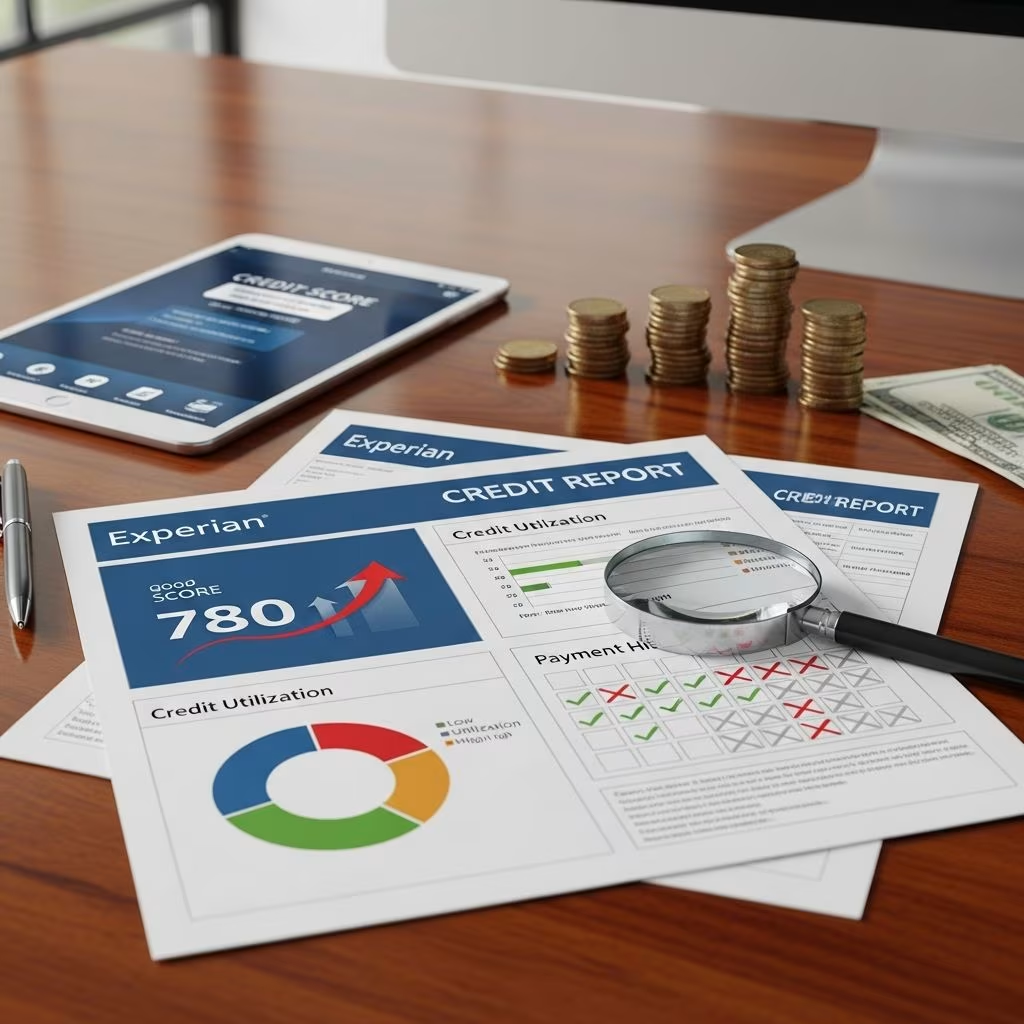
Your Experian credit report is a comprehensive record of your financial behavior, detailing how you’ve managed credit over time. It influences everything from loan approvals to interest rates, making it crucial to understand its contents thoroughly.
Why Your Credit Report Matters
A credit report from Experian serves as a financial snapshot, compiled from data provided by lenders, collection agencies, and public records. Unlike a credit score, which is a numerical summary, the report offers the raw data that lenders review. Regularly checking it helps spot errors, track progress, and plan for major financial moves like buying a home or applying for a card.
Under federal law, you’re entitled to a free copy weekly from each major bureau, including Experian, via AnnualCreditReport.com. Experian also provides free access through its platform for ongoing monitoring.
Core Components of the Report
Experian structures its report into distinct sections for clarity. Each part reveals specific aspects of your credit profile, allowing you to assess strengths and areas for improvement.
Identifying Personal Details
The opening section lists your core identifiers: full name (including variations or aliases reported by creditors), date of birth, Social Security number, current and former addresses, phone numbers, and employment history. This information verifies your identity and ensures data accuracy across accounts.
- Names and aliases prevent mix-ups with similar individuals.
- Addresses, ordered by recency and source reliability, show your history.
- Employment details, if reported, link to your professional background.
Mismatches here, like an incorrect SSN, can signal fraud or errors needing correction.
Credit Account Histories
This is the report’s heart, listing all open and closed accounts such as credit cards, mortgages, auto loans, and installment plans. For each, you’ll see the creditor’s name, account number (partially masked for security), date opened, credit limit or loan amount, current balance, payment history, and status (e.g., current, 30 days late).
| Account Element | Description | Impact on Credit |
|---|---|---|
| Date Opened | When the account began | Affects length of history |
| Balance | Amount owed | High balances hurt utilization |
| Payment Status | On-time or delinquent | Most influential factor |
| High Credit/ Limit | Max credit extended | Used for utilization ratio |
Positive histories show consistent payments, while negatives like delinquencies remain for up to seven years, gradually losing impact over time.
Collection Accounts Explained
Collections appear when debts are sent to third-party agencies for recovery, often from unpaid medical bills or utilities. Each entry includes the original creditor, collection agency, amount, date placed, and payment status. These can severely damage scores but age off after seven years.
Review for legitimacy; disputed or paid collections may still appear but with notes.
Understanding Credit Inquiries
Inquiries log when creditors or you access your report. There are two types:
- Hard inquiries: From loan applications; multiple in a short time can signal risk, impacting scores temporarily (up to 12 months).
- Soft inquiries: From pre-approvals or your own checks; no score effect.
The section lists the inquirer, date, and purpose, helping you track activity.
Public Records and Their Role
This covers court judgments like bankruptcies, liens, or foreclosures. Bankruptcies stay 10 years from filing, others seven. Details include filing date, status (e.g., discharged), court, and amount.
Recent laws limit non-bankruptcy public records, but they still matter if present.
How Experian Organizes and Updates Data
Experian uses proprietary codes and summaries for efficiency. A profile summary might highlight key metrics like total accounts or recent activity. Updates occur monthly as creditors report, with the report’s date noting the latest refresh.
Truncated account numbers and codes (e.g., ‘O’ for original loan amount) protect privacy while providing detail.
Common Report Variations
Not all reports look identical; online versions versus mailed ones differ in layout. Mobile apps offer simplified views focusing on scores and alerts.
Steps to Obtain and Review Your Report
- Visit Experian’s site or AnnualCreditReport.com for free access.
- Create an account for weekly updates and alerts.
- Download or print for detailed review.
- Compare across Equifax and Transuion for completeness.
Scrutinize every section: verify personal info, check account statuses, note inquiries.
Spotting and Fixing Errors
Errors occur in 25% of reports. Dispute inaccuracies online via Experian’s portal; they investigate within 30 days. Provide supporting docs like payment proofs.
- Fraud alerts or freezes protect against identity theft.
- Consumer statements allow notes on disputed items.
Linking Reports to Credit Scores
Scores derive from report data: payment history (35%), amounts owed (30%), length of history (15%), new credit (10%), mix (10%). Experian scores range 300-850; higher reflects lower risk.
Report insights guide improvements: pay on time, reduce balances below 30% utilization.
Frequently Asked Questions
How often should I check my Experian report?
At least annually, or more if applying for credit or suspecting issues. Free weekly access makes it easy.
Does closing an old account hurt my score?
Potentially, as it shortens history and affects mix; weigh pros and cons.
Can I remove accurate negative info?
No, but it fades over time. Focus on positive habits.
What if I find identity theft?
Place a fraud alert, file a police report, and dispute fraudulent accounts.
Are medical debts always reported?
Recent rules delay them until a year past due, aiding recovery.
Pro Tips for Credit Health
Leverage your report:
- Keep utilization under 30%.
- Diversify accounts responsibly.
- Limit new applications.
- Automate payments.
Consistent monitoring empowers better decisions, leading to stronger scores and opportunities.
References
- Credit Report Basics – Experian — Experian. 2023. https://www.experian.com/blogs/ask-experian/credit-education/report-basics/
- What You Should Know About Experian Credit Reporting — Raburn Kaufman. 2022-07-18. https://raburnkaufman.com/blog/what-you-should-know-about-experian-credit-reporting/
- How to Read an Experian Credit Report — 700Credit. 2021-01. https://www.700credit.com/wp-content/uploads/2021/01/How-to-read-an-Experian-Credit-Report.pdf
- Understanding Your Experian Credit Report — Experian. 2024. https://www.experian.com/blogs/ask-experian/credit-education/report-basics/understanding-your-experian-credit-report/
- Guide to Experian Report — Innovative Credit Solutions. 2015-04. https://icscredit.com/wordpress/wp-content/uploads/2015/04/guide-to-experian-report.pdf
- A Guide to What’s in Your Credit Report — myFICO. 2024. https://www.myfico.com/credit-education/whats-in-my-credit-report
This article is general information, not personal financial advice. Consider your own situation, or speak with a licensed adviser, before acting on it.


