

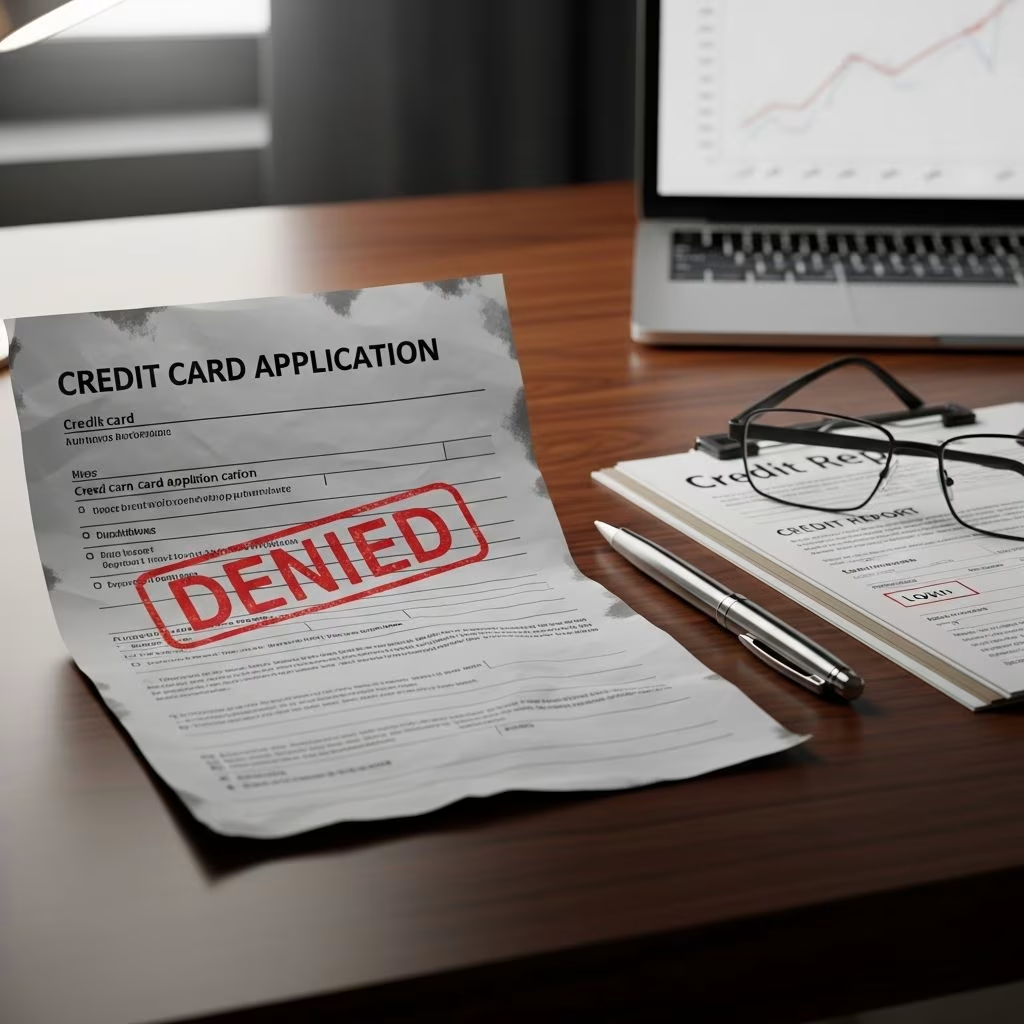
Rejection for a secured credit card can feel discouraging, especially when seeking to establish or rebuild credit. These cards require a refundable deposit as collateral, making them accessible for those with limited or poor credit histories. However, denials still occur due to various factors like insufficient income, credit history issues, or deposit concerns. This guide outlines comprehensive strategies to address denials, enhance your application, and move forward effectively.
Understanding Why Secured Cards Are Denied
Secured credit cards differ from unsecured ones by mandating a security deposit, typically matching the credit limit, which ranges from $200 to $5,000 depending on the issuer. Despite this, approvals aren’t guaranteed. Common denial reasons include low credit scores, recent bankruptcies, high debt levels, or failure to meet basic eligibility like age (18+), U.S. address, and SSN or ITIN.
Issuers perform credit checks, reviewing income, debt, and banking details. For instance, if your income doesn’t support the requested limit or if verification fails, rejection follows. Some cards, like those from major banks, emphasize creditworthiness beyond the deposit.
- Income and Debt Review: Lenders assess debt-to-income ratios; high existing obligations signal risk.
- Credit Report Issues: Unresolved delinquencies or recent inquiries can trigger denials.
- Deposit Mismatch: Inability to fund the minimum deposit immediately leads to automatic rejection.
- Basic Qualifications: Missing SSN, valid address, or bank account disqualifies applicants.
Immediate Actions After a Denial
Upon denial, issuers must provide an adverse action notice explaining reasons, often within seconds for online applications. Review this promptly to pinpoint issues. Contact the issuer directly for clarification if details are vague—this can reveal fixable problems like address mismatches.
| Denial Reason | Quick Fix | Expected Timeline |
|---|---|---|
| Low Credit Score | Dispute errors; pay down debt | 30-60 days |
| Insufficient Income | Provide updated pay stubs | Immediate reapply |
| Bank Verification Fail | Update account info | 1-2 weeks |
| Recent Bankruptcy | Wait for discharge | 6-12 months |
Building alternative credit history starts here: consider becoming an authorized user on a family member’s card, ensuring the issuer reports positively.
Reviewing and Improving Your Credit Profile
Start by accessing your free credit reports from AnnualCreditReport.com and scores from services like Experian. Scores below 580 often lead to secured card denials, though some approve with no score.
Key improvement steps:
- Dispute Inaccuracies: Errors on reports affect 25% of consumers; corrections can boost scores rapidly.
- Reduce Utilization: Keep balances under 30% of limits on existing accounts.
- Timely Payments: Payment history comprises 35% of FICO scores—set autopay.
Monitor progress monthly; scores update within 30 days of positive changes.
Strengthening Your Next Application
Before reapplying, compare cards: evaluate deposit minimums ($200 common), reporting to all three bureaus (Equifax, Experian, TransUnion), and upgrade paths where good behavior refunds deposits after 6-12 months.
Prepare documentation:
- Proof of income (pay stubs, tax returns).
- Bank statements for deposit funding.
- Housing and employment details.
Some issuers like Discover allow up to $2,500 limits based on provided info, with no minimum score. Navy Federal requires a savings account first.
Exploring Alternative Credit-Building Options
If secured cards remain elusive, consider:
- Credit-Builder Loans: Repay small loans to build history.
- Authorized User Status: Piggyback on trusted accounts.
- Retail Cards: Store cards with easier approvals for fair credit.
Avoid payday loans or high-fee alternatives that harm scores further.
Graduating from Secured to Unsecured Cards
Responsible use—low utilization, on-time payments—leads to upgrades. Issuers review accounts periodically; deposits may refund, converting to unsecured with higher limits.
Track milestones: 6 months of perfect history often triggers reviews.
Frequently Asked Questions
Can I get a secured card with no credit score?
Yes, issuers like Discover approve based on application info without requiring a score.
How long after denial can I reapply?
Typically 30 days, but fix issues first to avoid further inquiries dinging scores.
Does the deposit get returned?
Yes, upon account closure in good standing or upgrade for many cards.
Do secured cards report to credit bureaus?
Select ones reporting to all three for maximum impact.
What’s the minimum deposit?
Usually $200, matching the credit limit.
Long-Term Strategies for Credit Success
Beyond immediate fixes, adopt habits like budgeting, emergency funds, and diversifying credit types. Aim for a mix of revolving (cards) and installment (loans) debt for optimal scoring models.
Rejections are temporary setbacks; consistent effort yields results. Many transition from secured cards to premium rewards cards within 1-2 years.
References
- How to Get a Secured Credit Card — Experian. 2023. https://www.experian.com/blogs/ask-experian/how-to-get-a-secured-credit-card/
- Learn How to Get a Secured Credit Card — Chase Bank. 2024. https://www.chase.com/personal/credit-cards/education/basics/how-to-get-a-secured-credit-card
- Citi® Secured Mastercard® — Citi. 2025. https://www.citi.com/credit-cards/citi-secured-credit-card
- How Does a Secured Credit Card Work? — Navy Federal Credit Union. 2024. https://www.navyfederal.org/makingcents/credit-debt/how-does-secured-card-work.html
- Discover it® Secured Credit Card — Discover. 2025. https://www.discover.com/credit-cards/secured-credit-card/
- BankAmericard® Secured Credit Card — Bank of America. 2024. https://www.bankofamerica.com/credit-cards/products/secured-credit-card/
This article is general information, not personal financial advice. Consider your own situation, or speak with a licensed adviser, before acting on it.


