

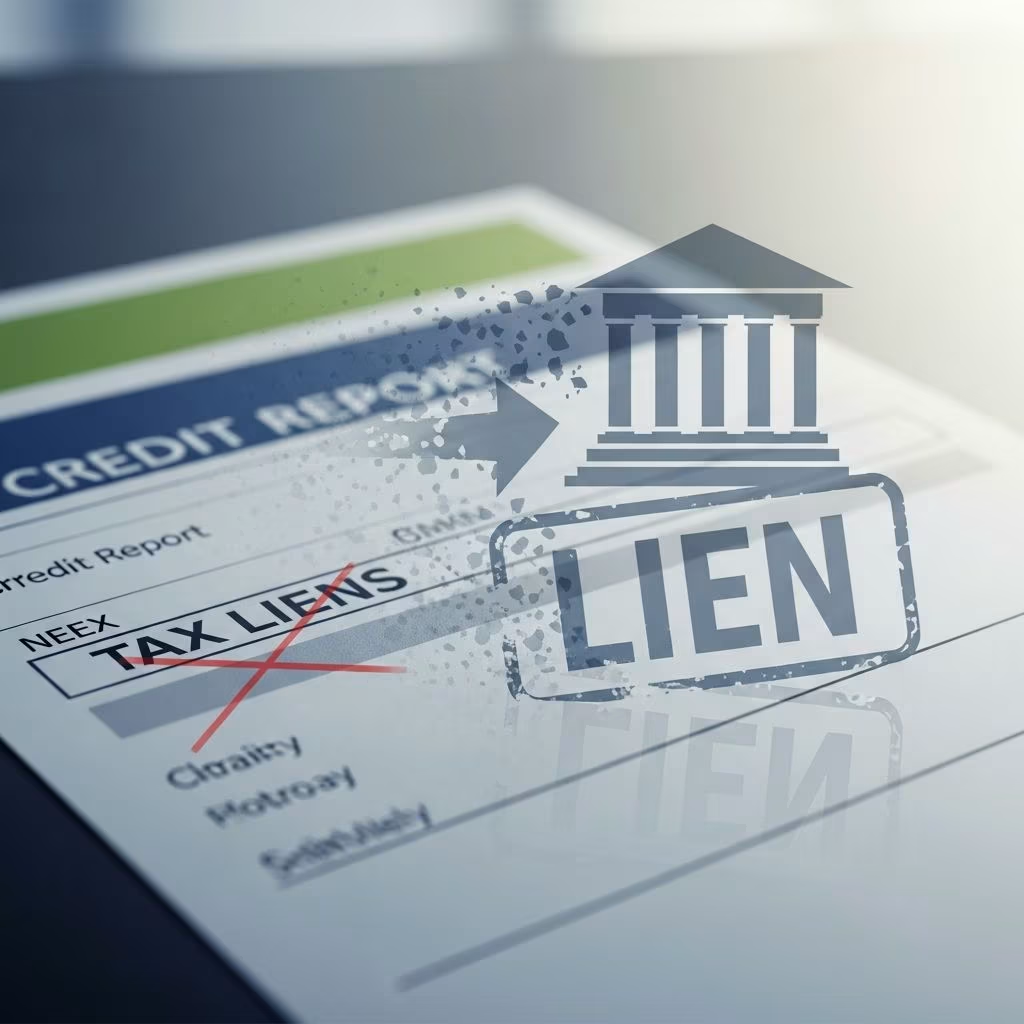
Tax liens represent a serious government claim on your assets due to unpaid taxes, but a major shift occurred in credit reporting practices. Since 2018, these liens no longer factor into your credit score calculation, offering relief to many consumers battling tax debts. This change stemmed from efforts by the major credit bureaus to refine the accuracy of reports by excluding certain public records prone to errors.
The Evolution of Tax Liens in Credit Reporting
Historically, failing to pay taxes triggered the IRS or state agencies to file a lien, publicly documenting the debt and encumbering your property. Before 2018, this information routinely appeared on credit reports from Experian, Equifax, and TransUnion, lingering for up to seven years after payment or 10 years if unresolved. Such entries dragged down credit scores significantly, signaling unreliability to lenders.
In 2017, the bureaus launched the National Consumer Assistance Plan (NCAP), targeting improvements in data reliability. They began scrubbing tax liens and civil judgments from reports, completing the process by April 2018. This move addressed frequent inaccuracies in lien data, like incomplete consumer identifiers, which led to wrongful associations. Today, even pre-2018 liens have been purged, ensuring no direct score impact.
What Exactly Is a Tax Lien?
A tax lien arises when a taxpayer ignores notices for owed federal, state, or local taxes. The IRS, for instance, assesses the debt and sends a demand letter; non-compliance prompts a Notice of Federal Tax Lien filing with local recorders[10]. This legal hold attaches to all your assets—real estate, vehicles, bank accounts—prioritizing tax repayment over other creditors.
Unlike voluntary liens from loans, tax liens are involuntary and aggressive. They don’t seize property immediately but cloud titles, complicating sales or refinances. Bankruptcy rarely discharges them, underscoring their potency. State liens operate similarly, varying by jurisdiction in filing and duration.
Why Credit Bureaus Dropped Tax Liens
The decision wasn’t arbitrary. Bureaus identified systemic flaws: over 50% of liens lacked precise personal details, risking misattribution to innocent parties. The NCAP aimed to elevate report quality, focusing on verifiable financial behaviors like payment history over public filings. Post-removal, consumers saw score boosts, particularly those with resolved old debts.
Congressional scrutiny and consumer advocacy amplified this shift, pushing for fairer reporting. The result? Cleaner reports emphasizing predictive credit data, benefiting borrowers while prompting lenders to adapt.
Indirect Ways Tax Liens Still Hurt Your Finances
Absence from credit reports doesn’t erase consequences. Liens remain public records, accessible via county clerks or databases. Savvy lenders, insurers, and landlords routinely search these during underwriting. Discovering a lien signals fiscal irresponsibility, often leading to:
- Loan denials or higher rates.
- Mortgage rejections due to title issues.
- Rental application failures.
- Employment hurdles in finance sectors.
Moreover, unresolved liens accrue penalties and interest, eroding savings. They persist for 10 years from IRS assessment unless withdrawn, with statutes of limitations occasionally expiring collection rights[10].
Steps to Address and Remove a Tax Lien
Resolving a lien starts with payment options: full settlement, installment agreements, or offers in compromise. The IRS avoids liens if you’re in a compliant payment plan. Once cleared, request a lien release certificate, filed publicly to detach it from assets.
Withdrawal programs exist for compliant taxpayers, erasing the public filing early. Check IRS Form 12277 for eligibility[10]. For credit reports showing outdated liens (rare now), dispute via bureau portals with proof of removal.
| Resolution Method | Timeline | Requirements |
|---|---|---|
| Full Payment | 30 days for release | Pay balance + penalties |
| Installment Agreement | No lien if compliant | Monthly payments setup |
| Offer in Compromise | 6-24 months | Prove hardship |
| Lien Withdrawal | 30 days | 12 months compliance |
Preventing Tax Liens Before They Happen
Proactive tax management averts liens. File returns timely, even if unable to pay, to dodge failure-to-file penalties. Explore IRS hardship options like Currently Not Collectible status if income is low[10]. Automated withholding or estimated payments keep balances minimal.
Consult tax professionals for complex situations, like business deductions or audits. Free IRS resources, including Taxpayer Advocate Service, aid navigation. Early action preserves creditworthiness and asset control.
Comparing Tax Liens to Other Derogatory Marks
| Item | On Credit Reports? | Duration | Score Impact |
|---|---|---|---|
| Tax Lien | No (post-2018) | N/A | None direct |
| Bankruptcy | Yes | 7-10 years | Severe |
| Late Payments | Yes | 7 years | Moderate |
| Collections | Yes | 7 years | High |
This table highlights tax liens’ unique status: score-neutral but reputationally damaging via public scrutiny.
Frequently Asked Questions
Will a tax lien lower my credit score today?
No, since 2018 removals, tax liens exert no direct influence on FICO or VantageScore calculations.
Can I get a mortgage with an active tax lien?
Possible but tough; liens encumber property, requiring subordination or payoff for clear title.
How do I check for tax liens on public record?
Search county recorder offices or use services like LexisNexis; IRS transcripts reveal federal ones[10].
What if a lien appears erroneously on my report?
Dispute immediately with bureaus, providing IRS release proof—most pre-2018 cases are already cleared.
Do state tax liens differ from federal?
Yes, states file independently with varying durations and rules, but bureaus exclude all post-2018.
Long-Term Financial Strategies Post-Lien
After resolution, rebuild via secured cards, on-time payments, and low utilization. Monitor reports weekly via AnnualCreditReport.com. Diversify income to buffer tax seasons. This holistic approach transforms lien fallout into financial resilience.
References
- Tax Liens Are No Longer a Part of Credit Reports — Experian. 2023-06-15. https://www.experian.com/blogs/ask-experian/tax-liens-are-no-longer-a-part-of-credit-reports/
- How to Remove Tax Lien — Lexington Law. 2024-02-10. https://www.lexingtonlaw.com/education/how-to-remove-tax-lien
- Does IRS Debt Show on Your Credit Report? — H&R Block. 2025-01-20. https://www.hrblock.com/tax-center/lifestyle/financial-education/taxes-affect-credit-score/
- How Does A Tax Lien Affect Your Credit Score? — Bankrate. 2024-11-05. https://www.bankrate.com/personal-finance/credit/how-tax-liens-affect-your-credit-score/
- Understanding a Federal Tax Lien — Internal Revenue Service (IRS.gov). 2025-03-15. https://www.irs.gov/businesses/small-businesses-self-employed/understanding-a-federal-tax-lien
- Do Tax Liens Impact Your Credit & How to Fix A Public Record — Self.inc. 2024-08-22. https://www.self.inc/blog/tax-lien-removal
This article is general information, not personal financial advice. Consider your own situation, or speak with a licensed adviser, before acting on it.


